
The Ultimate Guide to FODMAPs and Bloating: What to Eat and Avoid
Learn how a low-FODMAP diet stops bloating fast. Discover high and low FODMAP foods, step-by-step elimination phases, and how to heal your gut naturally.

disclosure This article contains affiliate links. Purchases may earn us a commission at no extra cost to you. We only recommend products we've reviewed.
The Ultimate Guide to FODMAPs and Bloating: What to Eat and Avoid
If you frequently experience uncomfortably tight abdominal distension, painful gas, or sudden digestion changes after eating seemingly healthy meals, high-FODMAP foods may be the hidden trigger. Many wholesome ingredients—such as garlic, onions, apples, and cauliflower—contain short-chain carbohydrates that can ferment rapidly inside sensitive digestive tracts.
While fiber is essential for general health, certain fermentable sugars pull excessive fluid into the small intestine and create massive amounts of gas when fermented by gut bacteria. For individuals with functional gut disorders or sensitive digestive systems, understanding how to navigate FODMAPs provides a predictable path toward lasting bloating relief.
In this comprehensive guide, we will break down the biological science behind FODMAP fermentation, detail the exact high and low FODMAP food categories, map out a step-by-step 3-phase elimination protocol, and share practical habits to rebuild your digestive resilience naturally.
What Are FODMAPs? The Science of Rapid Intestinal Fermentation
FODMAP is an acronym for Fermentable Oligosaccharides, Disaccharides, Monosaccharides, and Polyols. These are short-chain carbohydrates and sugar alcohols that are poorly absorbed in the human small intestine.
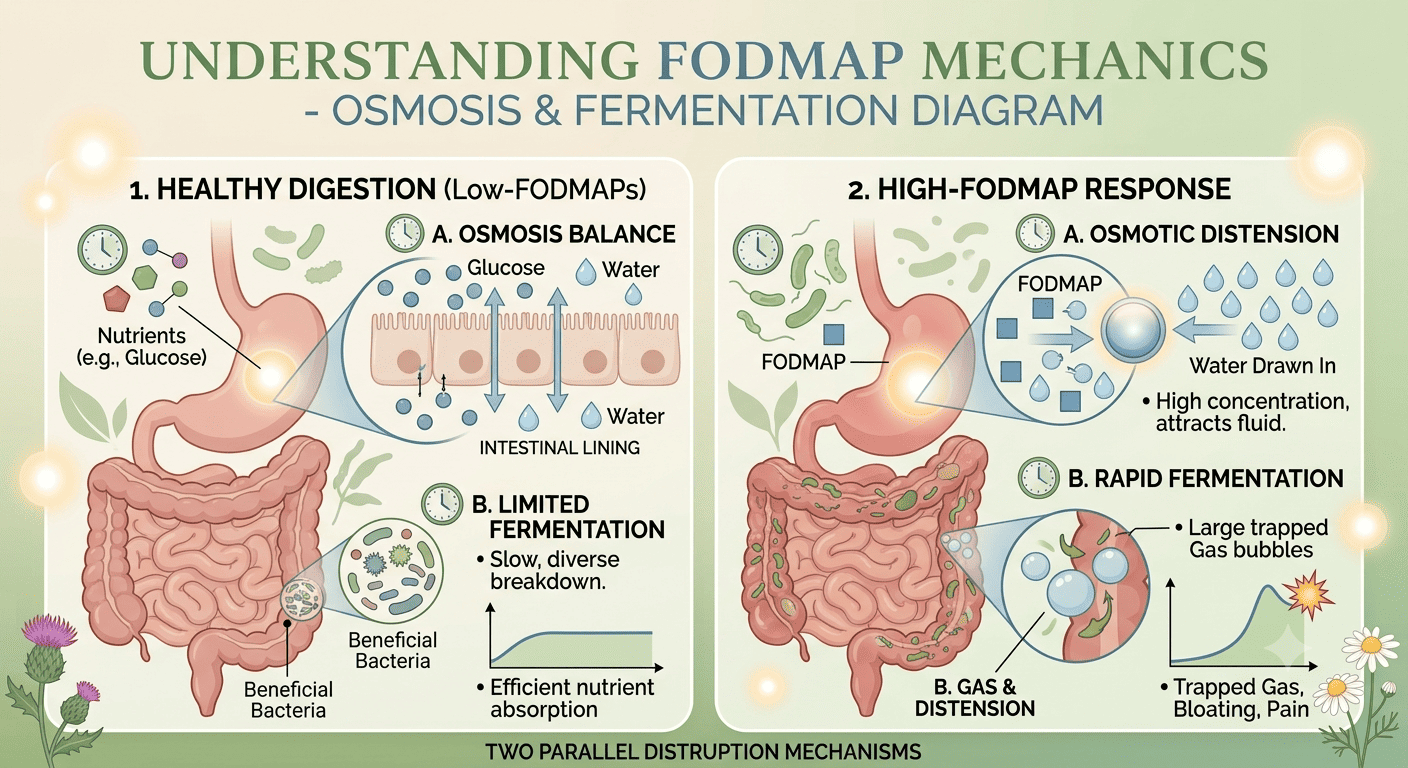
When FODMAPs escape absorption in your upper GI tract, they trigger two distinct physiological responses that cause visible stomach bloating:
1. The Osmotic Effect (Water Retention in the Small Intestine)
Small FODMAP molecules are osmotic, meaning they draw extra water into the lumen of your small intestine. This influx of fluid accelerates transit speed, leading to abdominal gurgling, watery stools, and a sensation of sloshing or heaviness high in your digestive tract.
2. Bacterial Fermentation (Gas Production in the Colon)
When unabsorbed FODMAPs travel into the large intestine, trillions of resident gut microbes feed on these simple carbohydrates. Bacteria ferment these sugars rapidly, releasing hydrogen, methane, and carbon dioxide gases within 30 to 120 minutes.
If your intestinal motility is slow, or if you have visceral hypersensitivity (overly sensitive gut nerve endings), this expanding volume of gas stretches the intestinal wall, resulting in sharp cramping and severe distension.
The primary FODMAP groups include:
- Fructose (Monosaccharide): Excess fruit sugar found in apples, pears, honey, and high-fructose corn syrup.
- Lactose (Disaccharide): Milk sugar found in unfermented dairy products like milk, soft cheeses, and ice cream.
- Fructans (Oligosaccharide): Complex chains of fructose molecules found in wheat, rye, garlic, and onions.
- Galacto-Oligosaccharides / GOS (Oligosaccharide): Found in legumes, beans, lentils, and cashews.
- Polyols (Sugar Alcohols): Sorbitol, mannitol, xylitol, and maltitol found in stone fruits (cherries, peaches) and sugar-free products.
👉 Check out this [Advanced Gut Rebuild Formula] for daily lining support and balanced inflammation levels.
High vs. Low FODMAP Foods: What to Eat and Avoid
Navigating a low-FODMAP diet does not mean starving yourself; it is about making strategic substitutions that prevent rapid fermentation while maintaining rich nutrient density.
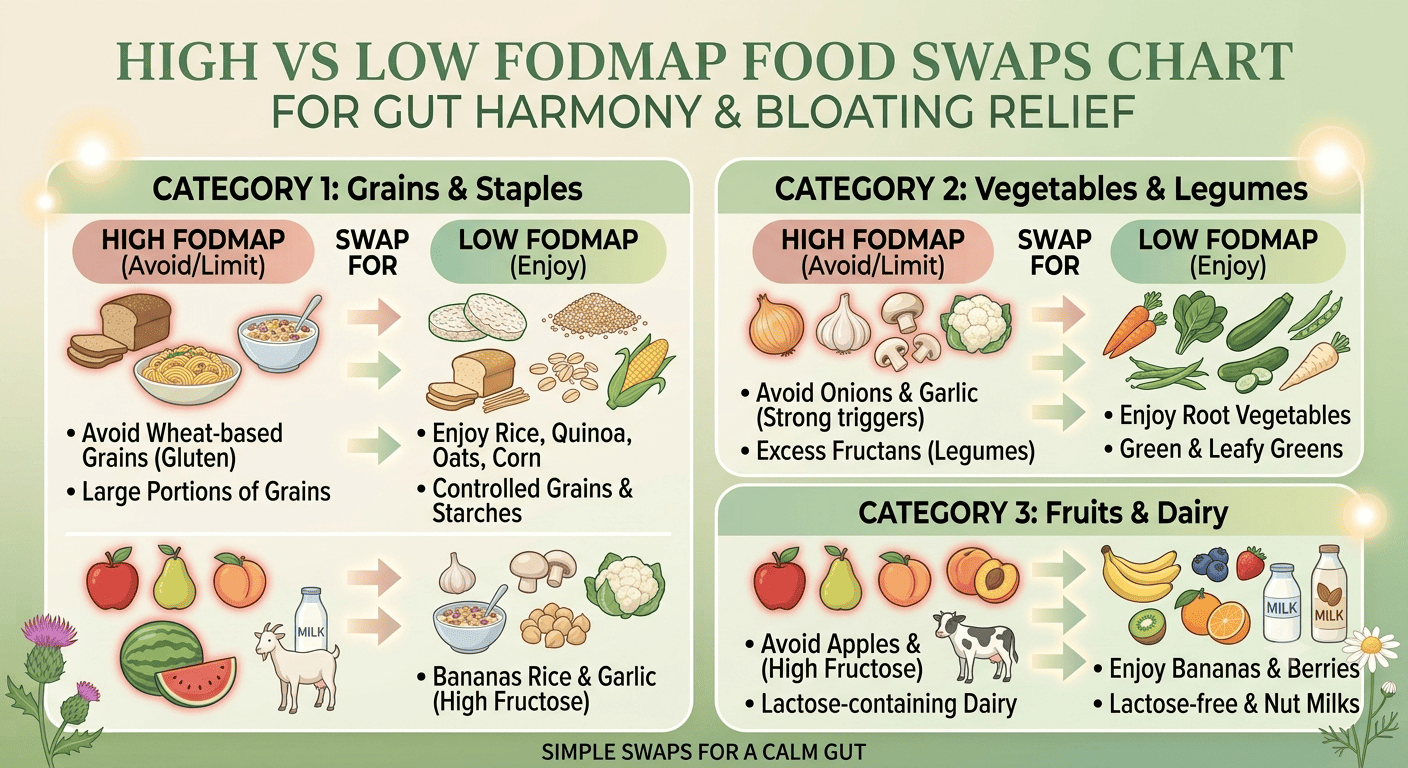
High-FODMAP Foods to Limit (Triggers)
- Vegetables: Onions, garlic, broccoli, cauliflower, Brussels sprouts, asparagus, mushrooms, and artichokes.
- Fruits: Apples, pears, watermelons, cherries, peaches, plums, and dried fruits.
- Grains: Wheat-based bread, pasta, rye, barley, and flour-based baked goods.
- Proteins & Legumes: Beans, lentils, chickpeas, soybeans, and processed meats with added onion or garlic powder.
- Dairy: Cow’s milk, soft cheeses (ricotta, cottage cheese), yogurt, and ice cream.
- Sweeteners: High-fructose corn syrup, honey, agave nectar, sorbitol, xylitol, and sugar-free gums.
Low-FODMAP Foods to Enjoy (Gut-Safe)
- Vegetables: Carrots, cucumbers, zucchini, spinach, kale, bell peppers, tomatoes, and green beans.
- Fruits: Strawberries, blueberries, raspberries, oranges, grapes, kiwi, and unripe bananas.
- Grains: Rice, oats, quinoa, buckwheat, gluten-free sourdough, and corn tortillas.
- Proteins: Fresh chicken, beef, turkey, wild salmon, eggs, and firm tofu.
- Dairy Alternatives: Lactose-free milk, almond milk, hard aged cheeses (cheddar, parmesan), and dark chocolate.
- Fats & Seasonings: Cold-pressed extra virgin olive oil, garlic-infused oil (FODMAPs are not oil-soluble), ginger, maple syrup, and fresh herbs.
The 3-Phase Low-FODMAP Protocol for Lasting Relief
A low-FODMAP lifestyle is not a permanent restrictive diet. Restricting fermentable carbohydrates long-term can reduce beneficial gut bacteria populations like Bifidobacteria. Instead, follow this clinically structured 3-phase protocol:
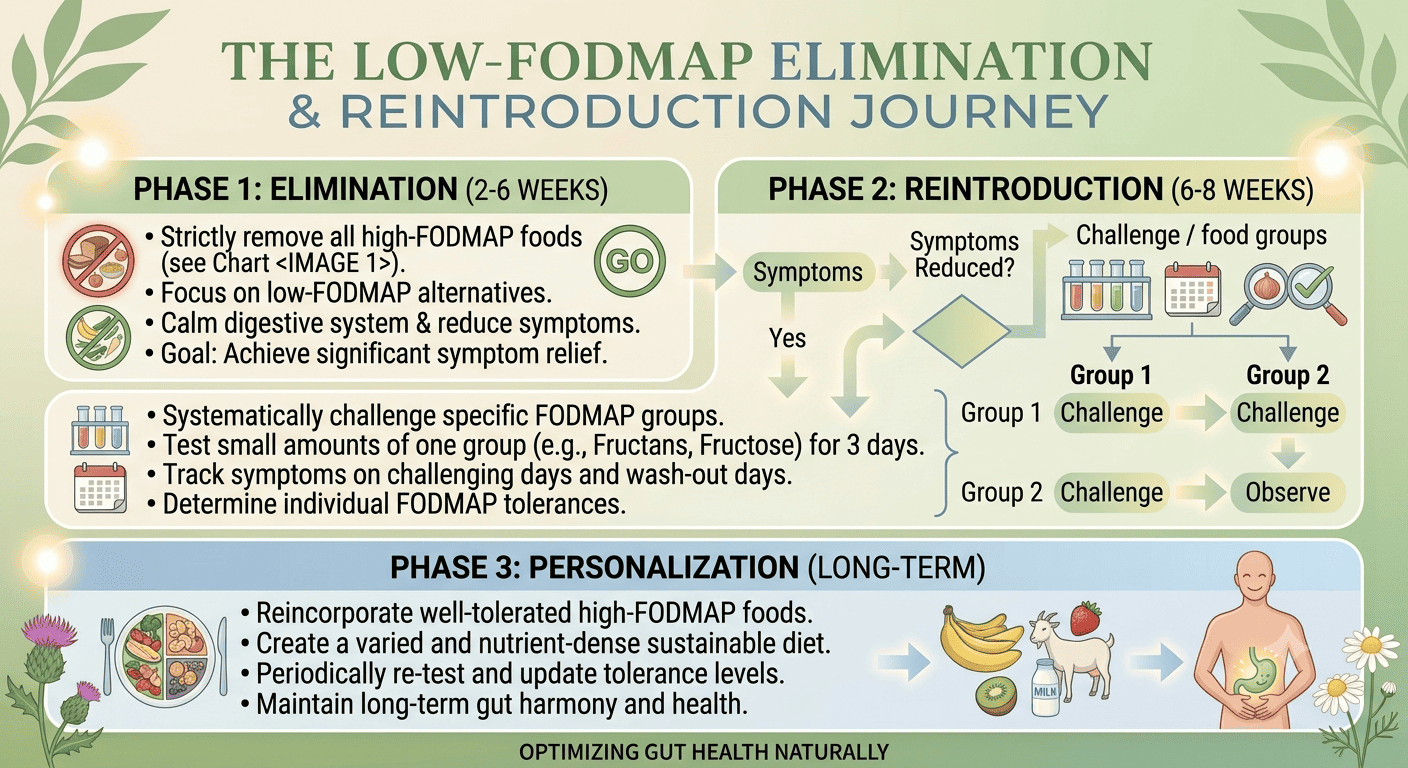
Phase 1: Strict Elimination (2 to 6 Weeks)
Replace all high-FODMAP foods with low-FODMAP alternatives. This period calms hyperactive gut nerves, reduces intestinal inflammation, and flushes trapped gas. Most individuals experience significant bloating reduction within 7 to 14 days.
Phase 2: Systematic Reintroduction (6 to 8 Weeks)
Test individual FODMAP categories one at a time over a 3-day window while keeping your baseline diet low-FODMAP. For example, test garlic on Day 1, observe symptoms on Days 2 and 3, and record your gut's reaction. This identifies your precise personal triggers and tolerance thresholds.
Phase 3: Personalized Integration (Long-Term)
Reintroduce high-FODMAP foods that you tolerated well, while limiting only the specific groups that caused distension or pain. This restores maximum dietary variety and protects long-term microbial diversity.
👉 Check out this [Advanced Gut Rebuild Formula] for daily lining support and balanced inflammation levels.
Daily Habits to Prevent FODMAP Bloating
Supporting your body with strategic lifestyle habits enhances your digestive capacity and lowers gut sensitivity:
- Cook with Garlic-Infused Oils: FODMAP carbohydrates (fructans) are water-soluble but not oil-soluble. Sauteing garlic in olive oil and straining out the solids infuses rich garlic flavor without transferring gas-producing sugars.
- Sprout or Soak Legumes: Soaking dry beans and lentils overnight in water releases water-soluble GOS carbohydrates, reducing gas potential by up to 50%.
- Support Gastric Motility: Space meals 3 to 4 hours apart to allow your Migrating Motor Complex (MMC) to clear undigested food debris from the small intestine.
- Manage Stress and Gut Nerves: The gut-brain axis directly modulates visceral sensitivity. Practicing diaphragmatic breathing before meals lowers stress signals that exacerbate osmotic swelling.
Frequently Asked Questions (FAQ)
- How fast does a low-FODMAP diet reduce stomach bloating? Many individuals notice a visible reduction in abdominal pressure and gas within 48 to 72 hours of starting Phase 1 elimination. Full symptomatic relief usually peaks around 2 to 3 weeks into the protocol.
- Is a low-FODMAP diet meant to be followed forever? No. The low-FODMAP diet is a diagnostic tool, not a permanent lifestyle. Restricting high-FODMAP foods long-term can starve beneficial gut bacteria. The end goal is to reintroduce as many healthy foods as possible during Phase 3.
- Why do healthy foods like broccoli and apples cause severe bloating? Healthy foods contain rich dietary fiber and complex FODMAP sugars (like sorbitol and fructans). If your gut microbiome is imbalanced or your small intestinal motility is slow, these sugars ferment rapidly before proper absorption.
- Can I take digestive enzymes while on a low-FODMAP diet? Yes. Taking broad-spectrum digestive enzymes containing alpha-galactosidase and lactase with meals helps break down fermentable carbohydrates, reducing gas formation during accidental high-FODMAP exposures.
- Is sourdough bread low in FODMAPs? Traditional sourdough bread made through a long fermentation process (24+ hours) is significantly lower in FODMAPs because the wild yeast and lactobacilli consume the fructans in wheat flour during rising.
- Are all fruits high in FODMAPs? No. While high-fructose fruits like apples, pears, and watermelons are high-FODMAP, berries (strawberries, blueberries), oranges, grapes, and kiwi are low-FODMAP in standard serving sizes.
- Does cooking high-FODMAP vegetables reduce their gas potential? Boiling high-FODMAP vegetables can cause some water-soluble FODMAPs to leach into the cooking liquid. However, simple baking or steaming does not alter FODMAP levels enough to prevent gas in highly sensitive individuals.
- What is the difference between FODMAP intolerance and a food allergy? A food allergy involves an IgE immune system reaction that can be life-threatening. FODMAP intolerance is a mechanical malabsorption issue in the digestive tract that causes temporary discomfort, gas, and swelling without triggering immune anaphylaxis.
- Can probiotics help me tolerate high-FODMAP foods better? Yes. Probiotics containing Bifidobacterium and Lactobacillus strains help reinforce the gut barrier, modulate visceral sensitivity, and reduce methane-producing bacteria over time, improving your overall carbohydrate tolerance.
- When should I seek medical advice about bloating? Consult a doctor if your bloating is accompanied by unexplained weight loss, persistent severe pain, blood in the stool, chronic diarrhea, or high fever to rule out conditions like Celiac disease or Inflammatory Bowel Disease (IBD).
Give Your Digestive System the Targeted Relief It Deserves
As we explored in this guide, managing frustrating bloating requires identifying and balancing your body's specific fermentable triggers. Whether you are navigating the initial elimination phase of a low-FODMAP protocol or rebuilding your dietary tolerance, providing your body with the right enzyme and microbial support is essential.
To ensure your gastrointestinal tract breaks down complex carbohydrates smoothly without instant fermentation, integrating a targeted daily formula is key. We recommend supporting your journey with the [Advanced Liver & Digestive Support Blend]. Formulated with premium digestive cofactors, alpha-galactosidase, and soothing botanicals, it provides daily protection against post-meal heaviness, osmotic swelling, and gas.
👉 Check out this [Advanced Gut Rebuild Formula] for daily lining support and balanced inflammation levels.
keep reading
Gut Health & Supplements
DigestiStart Review: Can This Herbal Formula Help Restore Digestive Health & Relieve Bloating?
Gut Health & Supplements
The Ultimate Guide to GERD: Causes, Symptoms & Natural Relief
Gut Health & Supplements