
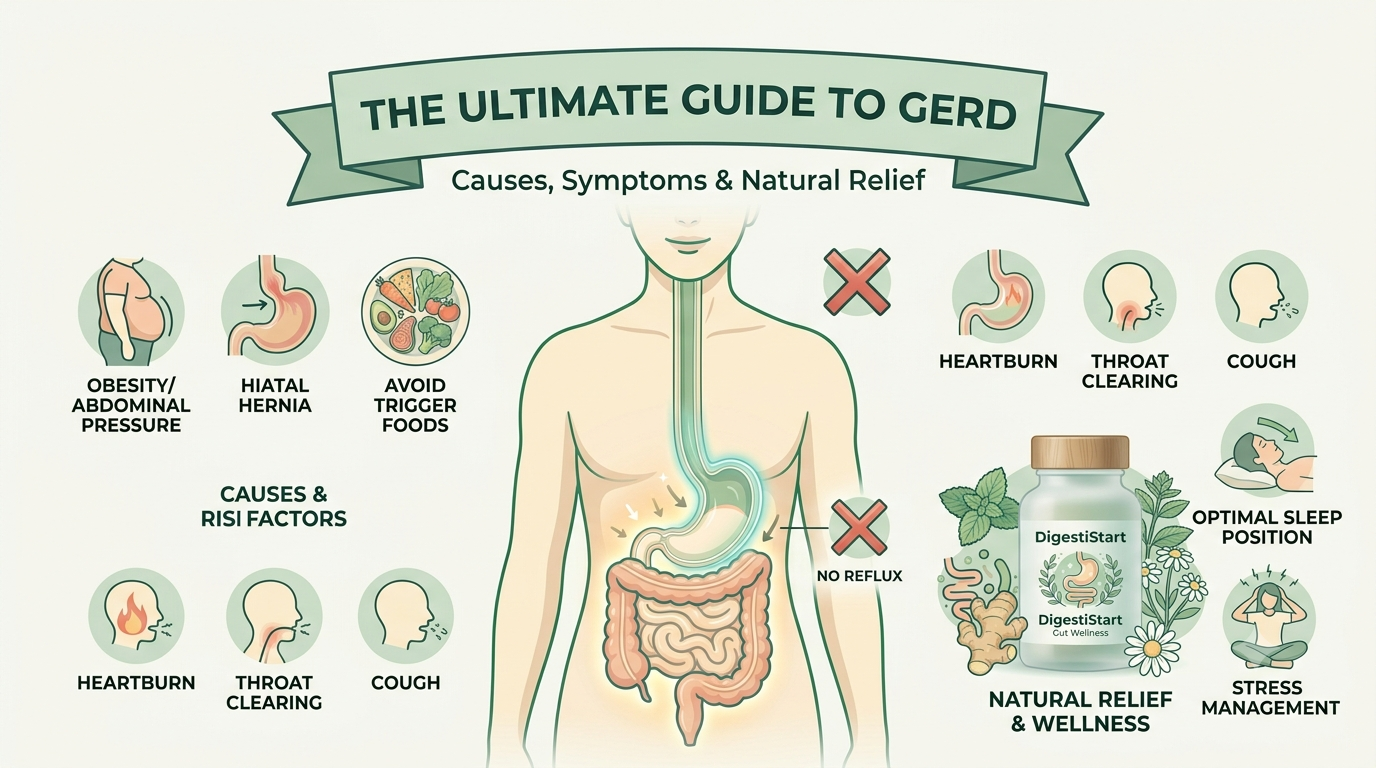
The Ultimate Guide to GERD: Causes, Symptoms & Natural Relief
Learn everything about GERD and acid reflux: primary causes, common symptoms, long-term risks, and evidence-based natural strategies to restore your gut health.
disclosure This article contains affiliate links. Purchases may earn us a commission at no extra cost to you. We only recommend products we've reviewed.
The Ultimate Guide to Gastroesophageal Reflux Disease (GERD): Causes, Symptoms, Natural Remedies, and Long-Term Relief
Dealing with constant chest burning, a bitter taste in your mouth, or an uncomfortable fullness after meals can make daily life exhausting. Digestive health issues affect millions of people worldwide, but when acid reflux transitions from an occasional annoyance into a persistent daily struggle, it is often diagnosed as Gastroesophageal Reflux Disease (GERD).
In this comprehensive guide, we will break down everything you need to know about GERD. We will explore its underlying biological mechanisms, primary causes, subtle symptoms, long-term risks, and evidence-based strategies—including dietary adjustments, lifestyle modifications, and natural botanical support—to help restore your digestive comfort and regain control over your gut health.
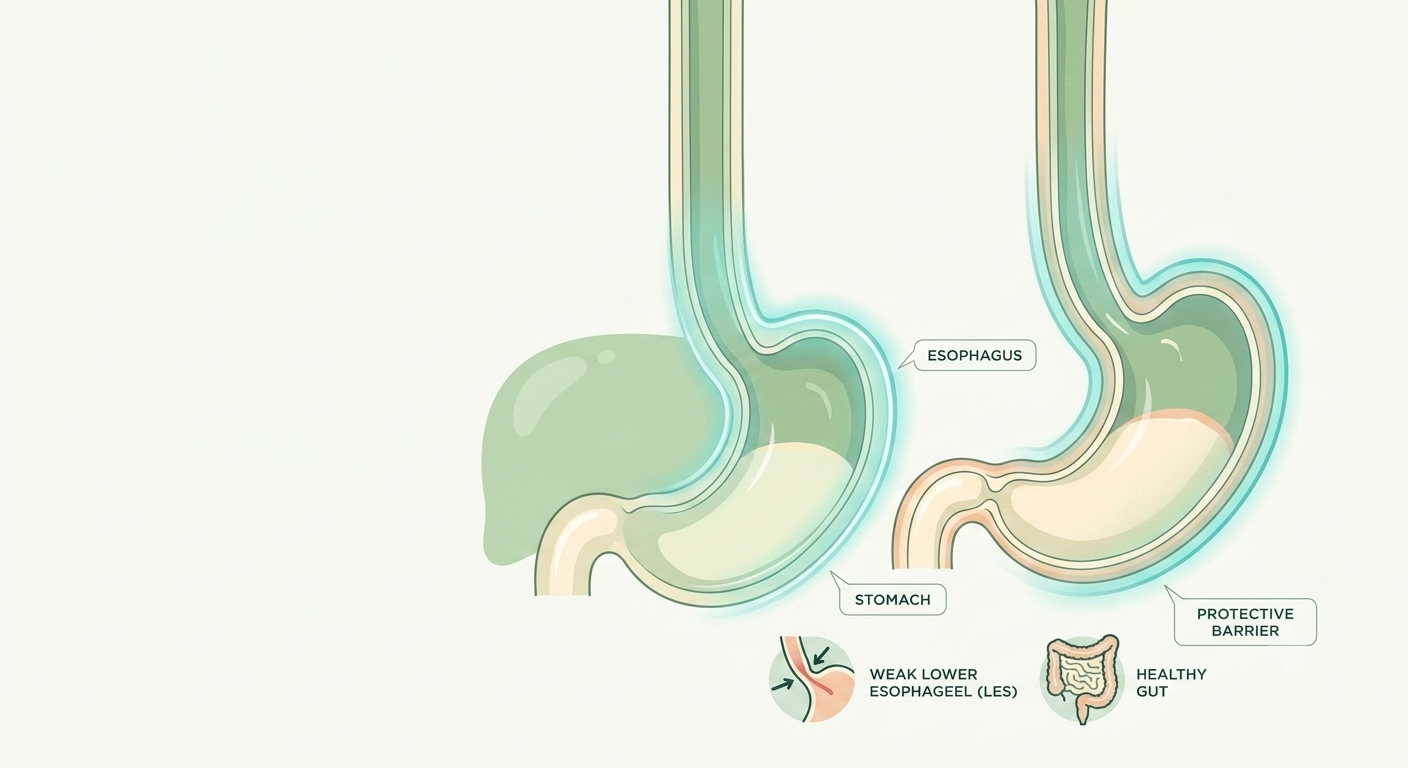
Medical illustration of esophagus, stomach, and lower esophageal sphincter (LES) showing GERD mechanism.
👉 Check out this [Advanced Gut Rebuild Formula] for daily lining support and balanced inflammation levels.
What Is Gastroesophageal Reflux Disease (GERD)?
Gastroesophageal Reflux Disease (GERD) is a chronic digestive disorder characterized by the frequent backflow of stomach acid into the esophagus. The esophagus is the muscular tube that connects your throat to your stomach. Under normal circumstances, food travels down the esophagus, and a specialized ring of muscle at the bottom—called the lower esophageal sphincter (LES)—opens to allow food into the stomach and then tightly closes.
When the LES functions properly, stomach contents and acidic gastric juices remain safely contained inside the stomach. However, in individuals with GERD, the LES weakens, relaxes inappropriately, or fails to maintain adequate pressure. This structural failure allows caustic stomach acid, digestive enzymes, and partially digested food to surge back up into the esophagus, causing chemical irritation, inflammation, and discomfort.
The Key Difference Between Heartburn and GERD
It is common for people to use the terms "heartburn" and "GERD" interchangeably, but medically, they are not the same thing:
- Heartburn: Heartburn is a symptom—a burning sensation behind the breastbone caused by acid irritation. Almost everyone experiences mild heartburn occasionally after eating spicy, fatty, or excessively large meals.
- GERD: GERD is a chronic medical condition. It is defined by experiencing acid reflux persistently—typically two or more times per week—or experiencing reflux that causes significant esophageal tissue inflammation and negative impacts on daily quality of life.
The Root Causes and Risk Factors Behind GERD
Understanding why GERD develops is the first step toward finding sustainable relief. While a weakening lower esophageal sphincter is the primary culprit, several physiological and environmental factors contribute to this digestive breakdown:
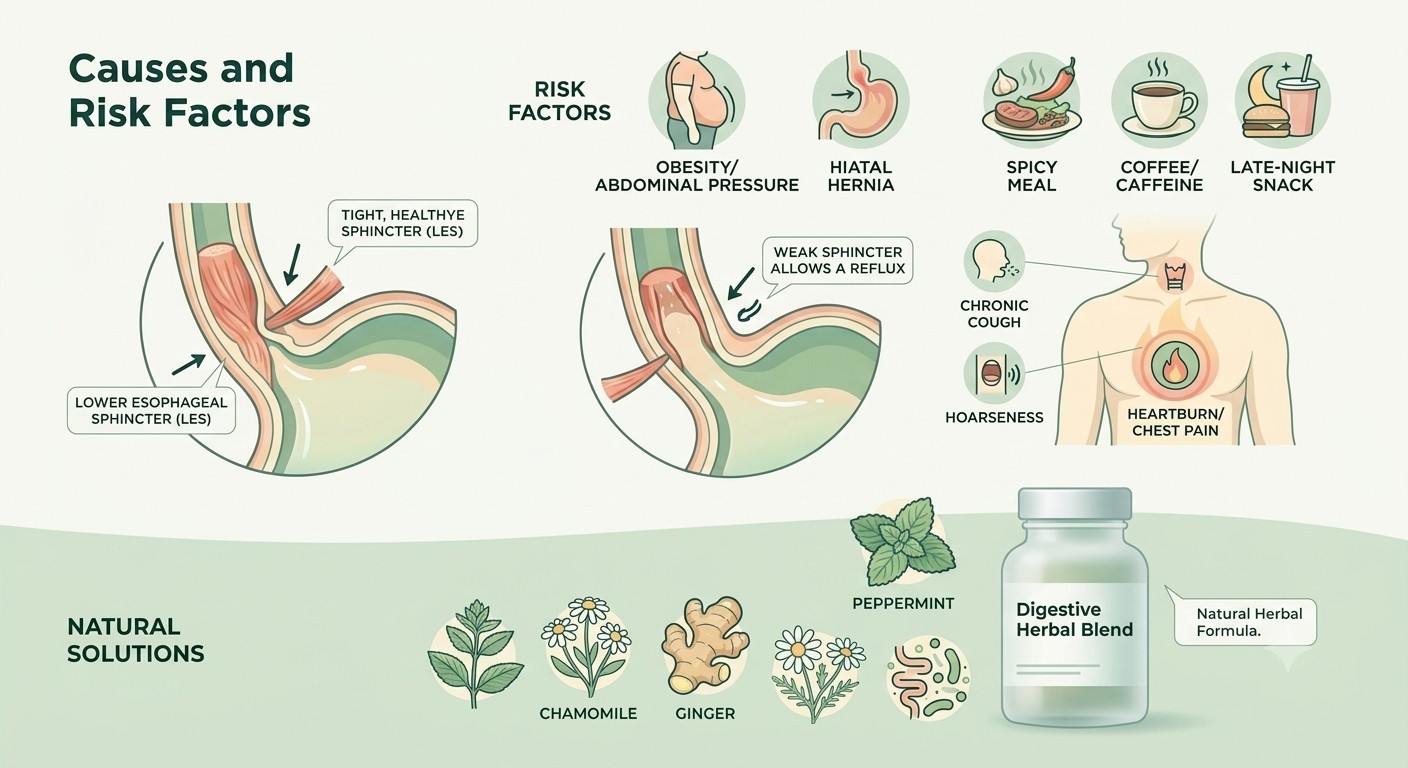
Illustration showing healthy esophagus versus acid reflux in GERD
1. Lower Esophageal Sphincter (LES) Dysfunction
The LES relies on muscle tone to create a secure seal. Certain habits, foods, and medications reduce muscle tension in the LES, leaving it open when it should be closed.
2. Hiatal Hernia
A hiatal hernia occurs when the upper portion of the stomach pushes upward through the diaphragm (the muscular wall separating the abdomen from the chest). Because the diaphragm normally helps support the LES, a hiatal hernia disrupts this natural anatomical barrier, making acid reflux far more likely.
3. Sluggish Gastric Emptying (Gut Paralysis)
When your stomach takes too long to process and pass food into the small intestine, internal pressure builds up within the abdominal cavity. This elevated gastric pressure forces acid upward against the LES valve. Poor stomach motility and "sluggish gut" issues are frequently linked to chronic bloating and reflux.
4. Obesity and Increased Abdominal Pressure
Carrying excess visceral fat around the abdomen exerts physical pressure directly onto the stomach. This mechanical pressure squeezes stomach contents upward into the esophageal canal.
5. Pregnancy and Hormonal Shifts
During pregnancy, elevated levels of the hormone progesterone act as a smooth muscle relaxant, loosening the LES. Additionally, as the fetus grows, it pushes against the mother’s stomach, creating physical conditions for reflux.
6. Dietary Triggers and Lifestyle Choices
Certain dietary habits directly contribute to acid reflux episodes:
- High-fat and fried foods (which delay gastric emptying)
- Highly acidic foods (citrus fruits, tomatoes, vinegar)
- Chocolate, peppermint, and caffeine (which chemically relax the LES)
- Alcohol consumption and cigarette smoking
- Eating large meals immediately before lying down
Recognizing Symptoms: From Typical to Atypical Signs
The symptoms of GERD vary from person to person. While some individuals experience obvious chest pain, others suffer from quiet, "silent reflux" symptoms that damage the throat without causing traditional heartburn.
Common (Typical) Symptoms
- Heartburn (Pyrosis): A painful burning sensation moving from the upper abdomen up into the chest, often worsening after eating or when lying flat.
- Regurgitation: The unpleasant sensation of acid, bile, or sour-tasting liquid backing up into the throat or mouth.
- Dysphagia: Difficulty swallowing or feeling like food is stuck in your throat.
- Chest Discomfort: Pain in the center of the chest, which can sometimes mimic the sensations of a serious heart condition.
Atypical and "Silent Reflux" Symptoms
- Chronic Dry Cough: Acid vapors entering the upper airways can trigger persistent, unexplained coughing.
- Hoarseness and Throat Clearing: Morning hoarseness caused by nighttime acid vapors irritating the vocal cords (laryngopharyngeal reflux).
- Unexplained Asthma or Wheezing: Inhaling microscopic droplets of stomach acid into the lungs can irritate airway passages.
- Dental Erosion: Stomach acid reaching the mouth erodes protective tooth enamel over time.
Potential Long-Term Complications of Untreated GERD
Ignoring persistent acid reflux is dangerous. Over time, recurring contact with harsh hydrochloric acid harms the delicate lining of the esophagus, potentially leading to serious medical complications:
- Esophagitis: Acute or chronic inflammation of the esophageal lining, leading to painful ulcers, bleeding, and open sores.
- Esophageal Stricture: Chronic acid damage creates scar tissue. Over time, this scar tissue narrows the esophageal passage, making swallowing solid food painful and difficult.
- Barrett’s Esophagus: In response to chronic acid injury, the normal squamous cells of the lower esophagus are replaced by intestinal-type glandular cells. Barrett’s esophagus is a precancerous condition that requires regular endoscopic monitoring.
- Increased Risk of Esophageal Adenocarcinoma: Individuals with long-standing, unmanaged Barrett's esophagus face an elevated risk of developing esophageal cancer.
How GERD Is Diagnosed
If you suffer from frequent digestive distress, a healthcare professional may use several diagnostic approaches to evaluate your condition:
- Upper Endoscopy (EGD): A thin, flexible tube with a camera is passed down the throat to inspect the esophagus and stomach for inflammation or tissue damage.
- Esophageal pH Monitoring: A small probe measures acid levels inside the esophagus over a 24-hour period to correlate acid events with your symptoms.
- Esophageal Manometry: This test measures the rhythmic muscle contractions of your esophagus during swallowing and evaluates the resting pressure of your lower esophageal sphincter.
Natural Strategies, Lifestyle Changes, and Gut Health Support
Managing GERD effectively requires a holistic approach that addresses dietary habits, lifestyle choices, and underlying digestive health.
1. Optimize Your Eating Habits
- Eat Smaller Meals: Overloading the stomach increases internal pressure. Eat smaller, nutrient-dense portions throughout the day.
- Chew Thoroughly: Chewing initiates mechanical digestion and mixes food with saliva, which contains protective enzymes and natural bicarbonate.
- Avoid Late-Night Meals: Finish eating at least three hours before going to sleep to allow your stomach to empty naturally.
2. Adjust Your Sleep Ergonomics
- Elevate the Head of Your Bed: Raising the head of your bed by 6 inches using bed risers allows gravity to keep stomach acid where it belongs while you sleep.
- Sleep on Your Left Side: Anatomically, sleeping on your left side keeps the junction between the stomach and esophagus above the level of gastric acid.
3. Support Natural Digestive Motility with Herbal Supplements
Supporting natural stomach motility and soothing the digestive tract lining with targeted botanical ingredients can help reduce pressure on the lower esophageal sphincter.
Many people turn to natural, stimulant-free herbal formulas to support bowel regularity, reduce chronic bloating, and encourage optimal colon health.
👉 Check out this [Advanced Gut Rebuild Formula] for daily lining support and balanced inflammation levels.
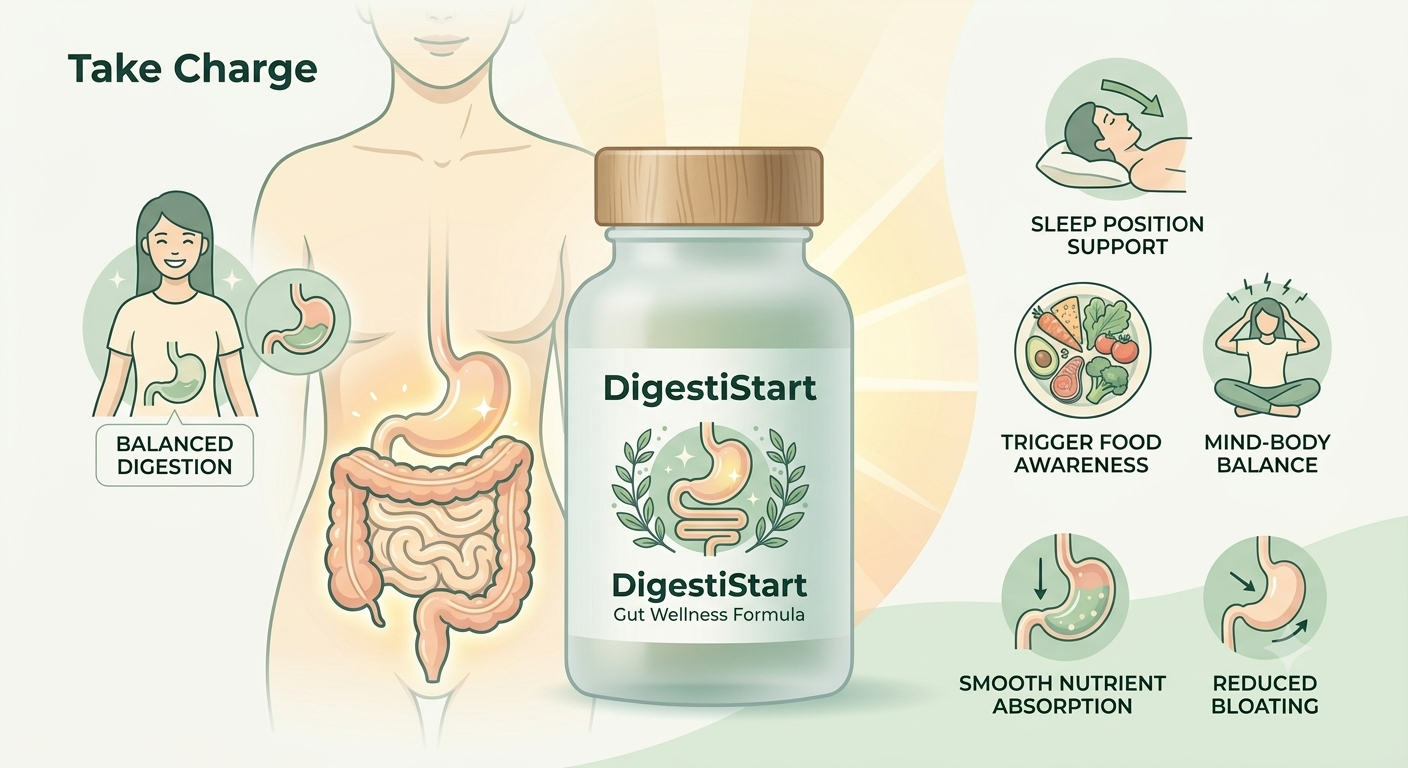
Holistic digestive wellness approach showing herbal supplement bottle and lifestyle tips for GERD relief
Frequently Asked Questions (FAQ)
1. What is the primary cause of Gastroesophageal Reflux Disease (GERD)?
GERD occurs when the lower esophageal sphincter (LES)—a ring of muscle that acts as a valve between your esophagus and stomach—becomes weak or relaxes inappropriately. This flaw allows harsh gastric acid and stomach contents to flow back up into the esophagus. Factors like hiatal hernias, chronic abdominal pressure, obesity, smoking, and poor digestive motility significantly contribute to this dysfunction.
2. How do I know if I have GERD or just temporary heartburn?
Occasional heartburn is mild, temporary, and usually happens after eating a heavy or spicy meal. GERD, on the other hand, is a chronic condition defined by experiencing persistent acid reflux two or more times a week. If symptoms like painful chest burning, acid regurgitation, or throat irritation recur constantly despite diet changes, it is likely GERD.
3. Can natural herbal supplements help manage GERD and digestive discomfort?
Yes, many individuals use targeted botanical supplements alongside dietary modifications. Natural herbs can help support gut lining integrity, soothe stomach irritation, and promote healthy stomach emptying. Improving overall digestive motility often reduces the pressure that pushes acid upward into the esophagus.
4. What daily dietary changes offer the fastest relief from acid reflux?
To reduce acid reflux episodes naturally, try adopting these daily habits:
- Eat smaller, more frequent meals instead of large, heavy feasts.
- Avoid trigger foods like fried items, chocolate, peppermint, garlic, and citrus.
- Stay upright for at least 3 hours after eating, avoiding late-night snacking.
- Elevate the head of your bed by 6 inches to let gravity prevent reflux while sleeping.
5. What complications can arise if GERD is left untreated?
Ignoring chronic GERD can lead to severe health issues over time. Long-term acid exposure can inflame the esophagus (esophagitis), form painful ulcers, or cause esophageal strictures (narrowing of the food pipe). In severe cases, it can lead to Barrett's esophagus—a condition where the tissue lining changes, slightly increasing the risk of esophageal cancer.
👉 Check out this [Advanced Gut Rebuild Formula] for daily lining support and balanced inflammation levels.
keep reading
Gut Health & Supplements
DigestiStart Review: Can This Herbal Formula Help Restore Digestive Health & Relieve Bloating?
Gut Health & Supplements
DigestiStart Review: Benefits, Ingredients & Results
Microbiome & Weight Loss