
Food Intolerance vs. Food Allergy: How Gut Barrier Dysfunction Triggers Hidden Food Sensitivities
Food intolerance vs food allergy: Learn how gut barrier dysfunction, enzyme deficiency, and dysbiosis trigger severe food sensitivities. Read our clinical review.
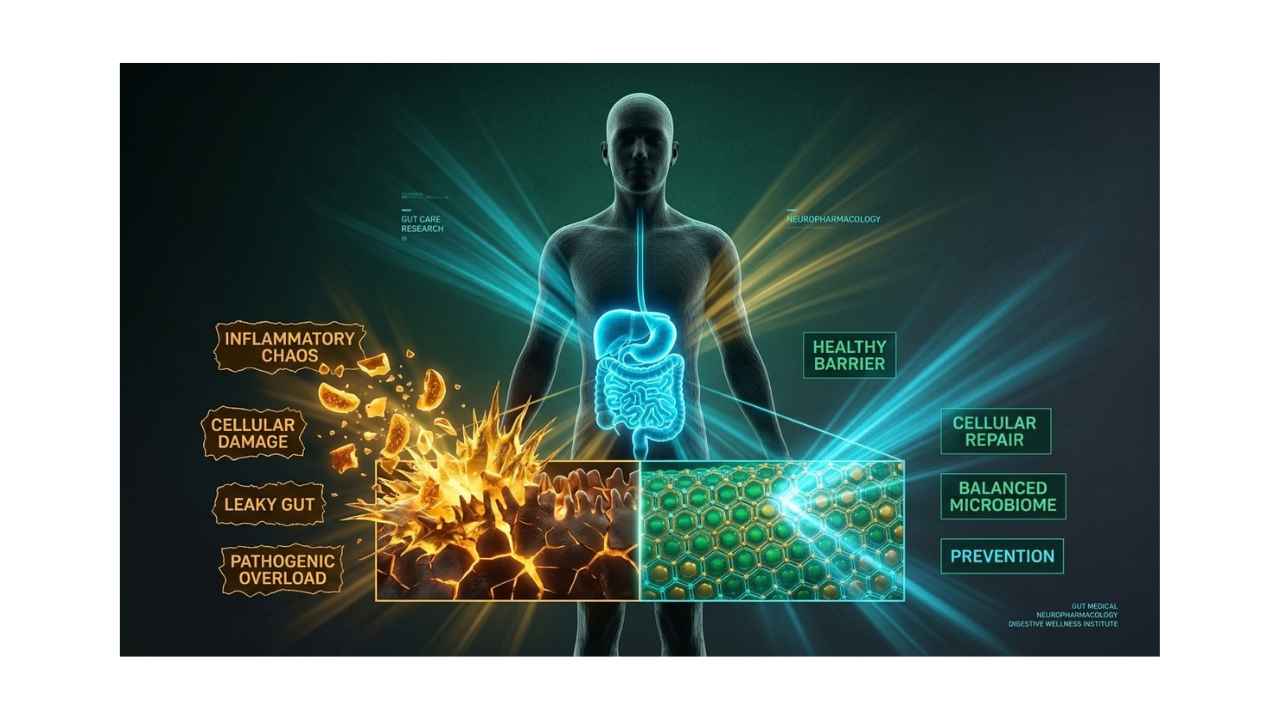
disclosure This article contains affiliate links. Purchases may earn us a commission at no extra cost to you. We only recommend products we've reviewed.
Food Intolerance vs. Food Allergy: How Gut Barrier Dysfunction Triggers Hidden Food Sensitivities
For millions of adults over 40, eating meals that once caused zero discomfort suddenly triggers painful abdominal bloating, unpredictable motility, brain fog, and systemic fatigue. When seeking answers, patients are frequently caught in a confusing diagnostic loop, struggling to distinguish between a food allergy, a food sensitivity, and a food intolerance.
While conventional medicine often treats these reactions as static, unchangeable conditions, modern gastroenterology reveals a deeper root cause: gut barrier permeability (leaky gut) and microbiome dysbiosis.
When your intestinal lining loses its structural integrity and your beneficial microflora fails to synthesize essential digestive enzymes, your immune system and digestive tract become hyper-reactive to everyday foods.
In this clinical review, we break down the biochemical differences between food allergies and food intolerances, explain the physiological breakdown of the gut mucosal barrier, and outline a targeted 3-step protocol to repair gut integrity and restore oral tolerance.
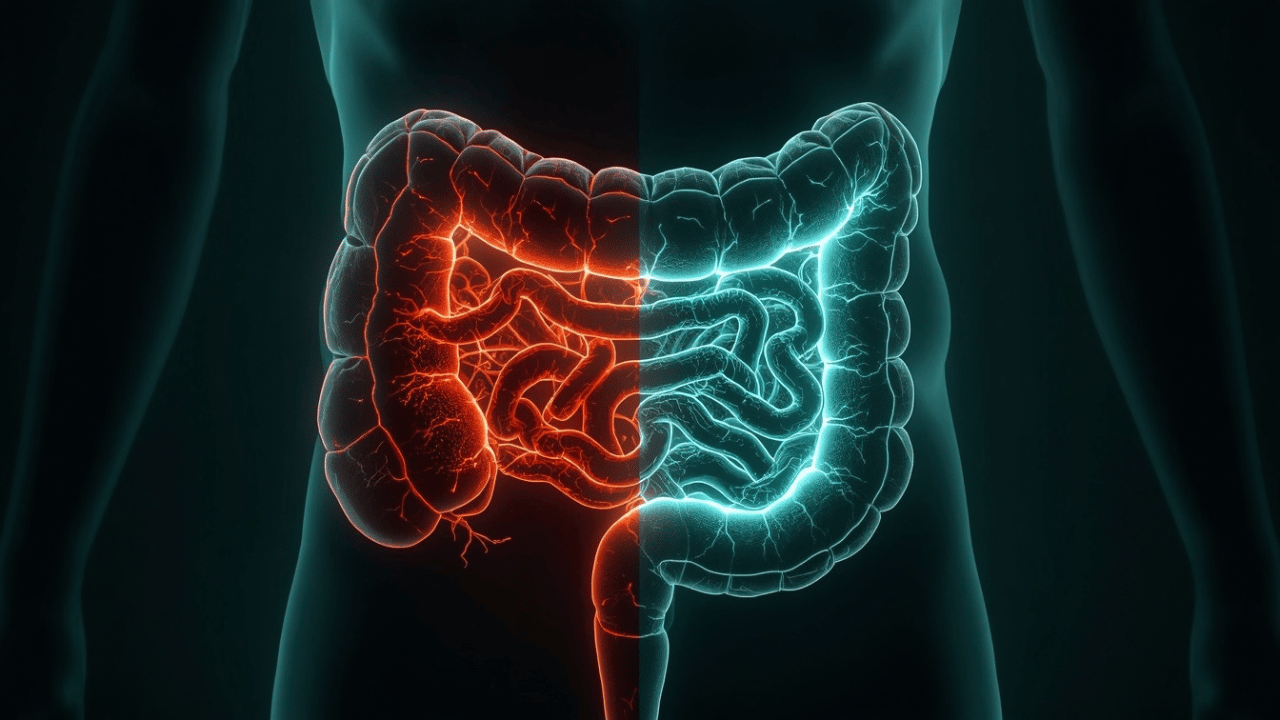 Cellular visualization of the gut mucosal barrier—comparing hyper-permeable tight junctions (leaky gut) with a fully sealed, healthy intestinal epithelial layer.
1. Food Intolerance vs. Food Allergy: The Biochemical Distinction
To resolve chronic digestive distress, one must first understand the fundamental physiological line separating an immune-mediated food allergy from a metabolic or mucosal food intolerance.
A true food allergy is driven primarily by the adaptive immune system via IgE antibodies. When exposed to microscopic trace amounts of allergen proteins—such as peanuts or shellfish—the body triggers immediate mast cell degranulation and massive histamine release. This reaction occurs within minutes to two hours post-ingestion and can be life-threatening.
Conversely, a food intolerance or food sensitivity does not involve immediate anaphylactic pathways. It stems from a metabolic or structural failure within the digestive tract, such as enzyme insufficiency, brush-border degradation, or gut dysbiosis. Symptoms are dose-dependent, often delayed by 2 to 48 hours, and cause severe, chronic systemic inflammation rather than acute anaphylaxis.
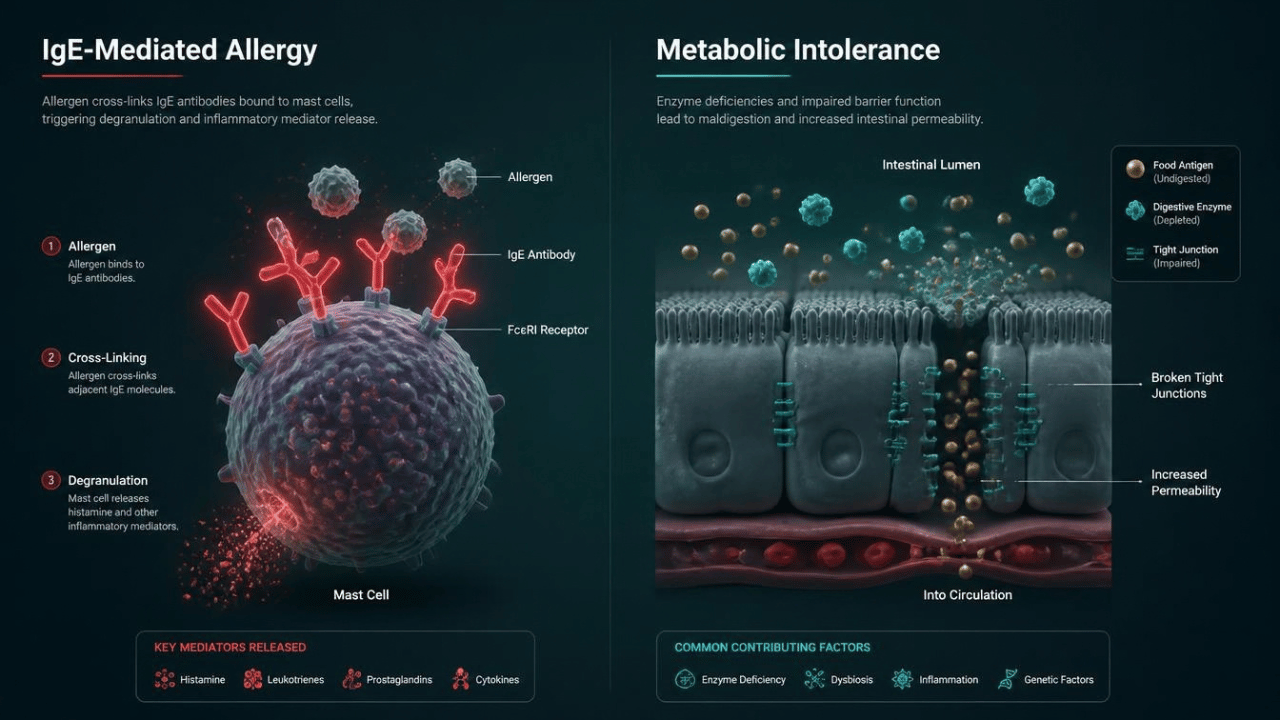
Clinical pathway comparison—contrasting immediate IgE-mediated immune response (Allergy) with delayed mucosal permeability and enzyme insufficiency (Intolerance).
2. The Mechanics of Intestinal Permeability (Leaky Gut) and Systemic Sensitivity
The human intestinal epithelium is a single-cell layer responsible for a complex dual task: absorbing vital nutrients while acting as an impenetrable wall against toxins, pathogens, and undigested dietary proteins.
Cells within this lining are bound together by protein complexes known as tight junctions (comprising occludin, claudin, and zonula occludens proteins).
When factors like chronic stress, overuse of NSAIDs, processed diets, or microbiome dysbiosis upregulate zonulin (the protein controlling tight junction opening), these cellular gates open excessively. Undigested macromolecules pass directly into the submucosa and bloodstream.
Once inside systemic circulation, these benign food particles are flagged by dendritic cells and IgG/IgA immunoglobulins as foreign invaders. This triggers low-grade, chronic systemic inflammation, manifesting clinically as sudden food sensitivities, joint stiffness, skin rashes, and debilitating brain fog.
3. Enzyme Deficiencies and Microbiome Dysbiosis: The Double Threat
Beyond mechanical barrier breaches, food intolerances are heavily driven by enzymatic failures within the brush border and the gut microbiome:
- Lactose Intolerance & Brush Border Exhaustion: Lactase is an enzyme produced by the microvilli of the small intestine. When mucosal inflammation damages these microvilli, lactase production plummets. Unabsorbed lactose passes into the colon, where opportunistic bacteria ferment it, creating hydrogen gas, methane, severe bloating, and osmotic diarrhea.
- Histamine Intolerance & DAO Suppression: Diamine Oxidase (DAO) is the primary enzyme responsible for breaking down dietary histamine (found in aged cheeses, wine, and fermented foods). Dysbiosis and localized mucosal inflammation severely impair DAO secretion, causing dietary histamine to accumulate and mimic allergy-like symptoms, including flushing, migraines, and rapid heart rate.
- Short-Chain Fatty Acid (SCFA) Depletion: Beneficial gut microbes ferment dietary fibers into butyrate, the primary energy source for colonocytes. Butyrate directly upregulates tight junction protein expression. A microbiome deficient in butyrate-producing strains leads to a structurally weak, highly reactive gut barrier.
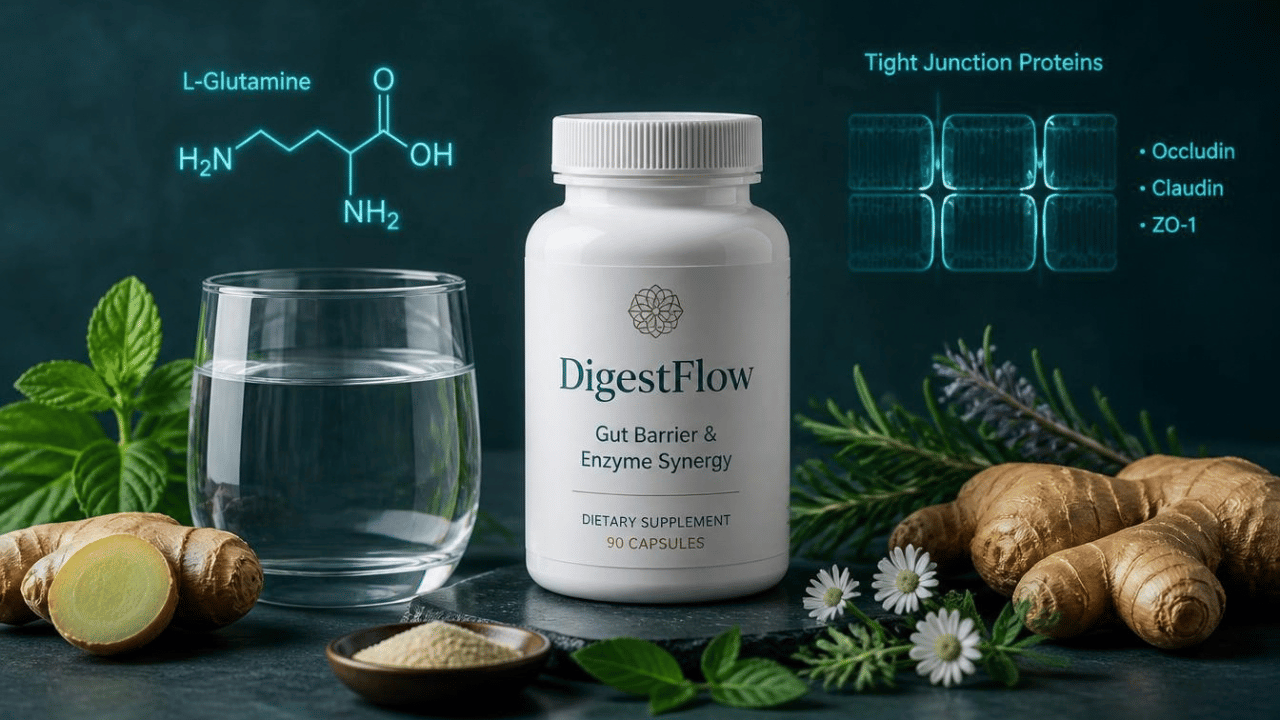 Daily clinical protocol pairing tight-junction structural support with targeted enzyme synthesis to soothe mucosal inflammation and restore oral tolerance.
4. The 3-Step Clinical Protocol: Rebuilding Barrier Integrity and Oral Tolerance
Restoring digestive harmony does not require living on an overly restrictive, perpetual elimination diet. The goal is to repair the biological infrastructure so your body can tolerate a diverse range of whole foods.
Step 1: Remove Barrier Disruptors & Soothe Mucosa
Temporarily eliminate hyper-reactive trigger foods while removing gut-barrier irritants like industrial seed oils, refined sugars, and unnecessary NSAIDs. Introduce soothing demulcent compounds to support the mucosal layer.
Step 2: Seal Tight Junctions & Stimulate Brush-Border Enzymes
Support cellular repair of the mucosal lining using targeted amino acids like L-Glutamine, zinc carnosine, and SCFA-boosting prebiotics that stimulate tight junction assembly and restore endogenous enzyme synthesis.
Step 3: Reseed Dysbiotic Flora with Targeted Spore & Human-Grade Strains
Reintroduce resilient, strain-specific probiotics that outcompete gas-producing opportunistic pathogens, regulate localized immune responses, and upregulate natural DAO and lactase support mechanisms.
5. Frequently Asked Questions (Clinical FAQ)
What is the main difference between a food allergy and a food intolerance?
A food allergy involves an IgE-mediated immune reaction that can be immediate and life-threatening, whereas a food intolerance is a digestive or metabolic failure (such as enzyme deficiency) causing delayed non-fatal symptoms like bloating and fatigue.
Can a leaky gut cause sudden food sensitivities?
Yes. When tight junctions in the intestinal lining break down, undigested food proteins leak into the bloodstream, triggering systemic IgG immune responses and new sensitivities to previously harmless foods.
Why do I suddenly have lactose intolerance as an adult?
Adult-onset lactose intolerance occurs due to natural genetic downregulation of the lactase enzyme, compounded by mucosal inflammation or dysbiosis that damages the lactase-producing microvilli in the small intestine.
Is a food sensitivity test (IgG) accurate?
IgG blood tests measure exposure and temporary immune memory rather than true clinical allergy. High IgG levels often simply reflect increased intestinal permeability (leaky gut) to frequently consumed foods.
How does gut dysbiosis decrease digestive enzyme production?
Pathogenic bacterial overgrowth creates localized mucosal inflammation, damaging the brush border of the small intestine where enzymes like lactase and diamine oxidase (DAO) are synthesized.
What is Histamine Intolerance and how does it relate to gut health?
Histamine intolerance occurs when the gut produces insufficient Diamine Oxidase (DAO) enzymes to break down dietary histamine, leading to allergy-like symptoms such as hives, flushing, headaches, and digestive cramps.
How long does it take to repair a leaky gut lining?
With a targeted clinical protocol—combining tight-junction nutrients, anti-inflammatory dietary changes, and strain-specific probiotics—epithelial cellular repair typically begins within 21 to 30 days, with substantial barrier recovery occurring by 60 to 90 days.
Can probiotics help with food intolerances?
Yes. Specific probiotic strains modulate gut immune responses, produce short-chain fatty acids like butyrate that seal tight junctions, and help ferment complex carbohydrates before they cause gas and bloating.
What is zonulin and why is it important in leaky gut?
Zonulin is a biomarker protein that regulates the opening and closing of tight junctions between intestinal cells. High zonulin levels indicate hyper-permeable intestinal lining and active leaky gut.
Why do elimination diets only offer temporary relief?
Elimination diets remove trigger foods to reduce immediate symptoms, but they do not heal the underlying leaky gut or reseed beneficial microflora. Without structural repair, new food intolerances will continue to develop.
Can food sensitivities cause chronic joint pain and brain fog?
Absolutly. When undigested food particles leak into systemic blood circulation, they trigger systemic inflammatory cytokines (like TNF-alpha) that cross the blood-brain barrier and inflame joint tissue.
How does stress worsen food intolerances?
Chronic stress elevates cortisol and CRF (corticotropin-releasing factor), which directly increases mast cell degranulation and opens intestinal tight junctions, accelerating leaky gut.
What role does Butyrate play in gut barrier health?
Butyrate is a key short-chain fatty acid that serves as the primary fuel source for colon cells, directly stimulating the synthesis of tight junction proteins and reducing mucosal inflammation.
How do I know if my bloating is from gas-producing bacteria or lactose intolerance?
Lactose intolerance typically produces rapid osmotic diarrhea and lower abdominal cramps shortly after consuming dairy, whereas bacterial overgrowth (like SIBO) produces upper abdominal distension and bloating after almost any carbohydrate.
How does the DigestFlow 180-day guarantee support my gut barrier recovery?
Restoring intestinal lining integrity, re-establishing brush border enzymes, and rebuilding oral tolerance requires consistent nutritional support. The 180-day risk-free guarantee gives you a full 6 months to evaluate your digestive transformation with complete peace of mind.
The Verdict: Swiss Clinical Summary
Are food intolerances and a permeable gut barrier a permanent life sentence? Absolutely not. While an irritated mucosal lining and enzyme deficiencies can severely restrict your diet, trigger chronic bloating, and cause systemic fatigue, the intestinal epithelium is one of the most rapidly regenerating tissues in the human body.
By removing barrier-disrupting irritants, supplying key mucosal amino acids, and reseeding the microbiome with resilient probiotic strains, you can seal tight junctions, restore natural enzyme synthesis, and regain full oral tolerance to a diverse diet.
Our Recommendation
- Best used for: Eliminating food sensitivities, restoring intestinal lining integrity, supporting natural enzyme synthesis (lactase and DAO), and ending post-meal inflammation.
- Action Plan: Implement a targeted gut-lining support protocol alongside strain-specific probiotics, eliminate seed oils and mucosal irritants, and maintain consistent meal spacing to allow migratory motor complex (MMC) cleansing waves.
👇 Learn how to rebuild your gut barrier and eliminate food sensitivities here: 👉 https://digestflow.purehabits.online
Disclaimer: This content is for educational purposes only and does not constitute medical advice. Consult with a qualified healthcare professional before beginning any new supplementation or dietary protocol, especially if you have pre-existing health conditions or take medication.
keep reading
Gut Health & Supplements
DigestiStart Review: Can This Herbal Formula Help Restore Digestive Health & Relieve Bloating?
Gut Health & Supplements
The Ultimate Guide to GERD: Causes, Symptoms & Natural Relief
Gut Health & Supplements