
Food Sitting in Stomach for Hours? Delayed Gastric Emptying Symptoms & How to Speed Up Digestion
Feel like food is sitting in your stomach like a heavy rock? Learn the symptoms of delayed gastric emptying, early satiety causes, and natural prokinetic support.

disclosure This article contains affiliate links. Purchases may earn us a commission at no extra cost to you. We only recommend products we've reviewed.
featured in this review
DigestiStart
Advanced bioactive botanical formula that activates smooth muscle peristalsis, clears pelvic venous congestion, and eliminates stubborn bloating without harsh laxatives.
Food Sitting in Stomach for Hours? Delayed Gastric Emptying Symptoms & How to Speed Up Digestion
You eat a modest, healthy lunch, but five hours later, you still feel stuffed, uncomfortably heavy, and visibly distended. For millions of people, this persistent sensation of food sitting in the stomach for hours like a heavy rock turns every meal into a physical burden. Even a small bowl of soup or a light salad can trigger early satiety, mild nausea, and a suffocating fullness right under the breastbone.
When food fails to leave the stomach at a normal pace, the standard reaction is to blame "indigestion" or take an antacid.
However, antacids only neutralize stomach acid; they do not physically move contents through the pyloric valve. When your digestive tract exhibits sluggish propulsion, you are experiencing the classic symptoms of delayed gastric emptying and enteric hypomotility.
Understanding the neuromuscular mechanisms behind gastric retention is the first step toward restoring smooth digestive momentum.
What Is Delayed Gastric Emptying?
Under normal physiological conditions, the stomach churns solid food into a smooth liquid called chyme and gradually releases it into the small intestine (duodenum) within 90 to 120 minutes.
When gastroduodenal motility slows down, food remains trapped in the gastric reservoir for four, six, or even eight hours.
Gastric retention typically falls into two categories:
- 1. Functional Gastric Stasis (Sluggish Motility): The gastric nerves and smooth muscles lack sufficient rhythmic tone, causing slow transit without complete physical blockage. This is the most widespread cause of chronic post-meal heaviness.
- 2. Clinical Gastroparesis: A severe medical condition characterized by partial stomach paralysis, often associated with vagus nerve damage or metabolic disorders.
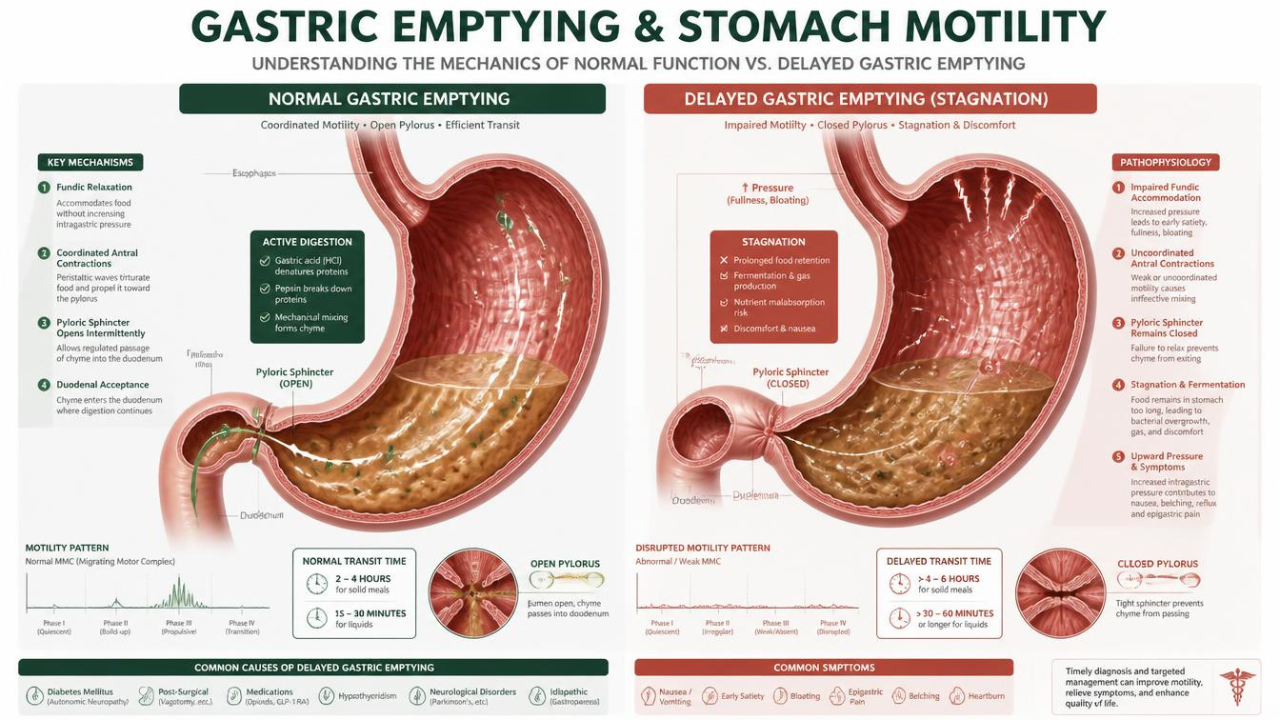
Figure 1: Gastric Motility Mechanics — How weak antral contractions and pyloric spasms cause food to sit in the stomach for hours.
Why Laxatives and Antacids Never Fix Heavy Stomach Fullness
Laxatives stimulate the lower colon or draw water into the large bowel, completely bypassing the stomach pouch. Antacids suppress the very gastric acid needed to break down protein and signal the pylorus to open. To clear stagnant food from the upper GI tract, you must address gastroduodenal peristalsis and smooth muscle tone.
Functional Sluggish Motility vs. Gastroparesis vs. Acid Reflux
Not all upper abdominal discomfort is the same. Distinguishing between functional stagnation and other conditions helps identify the correct solution:
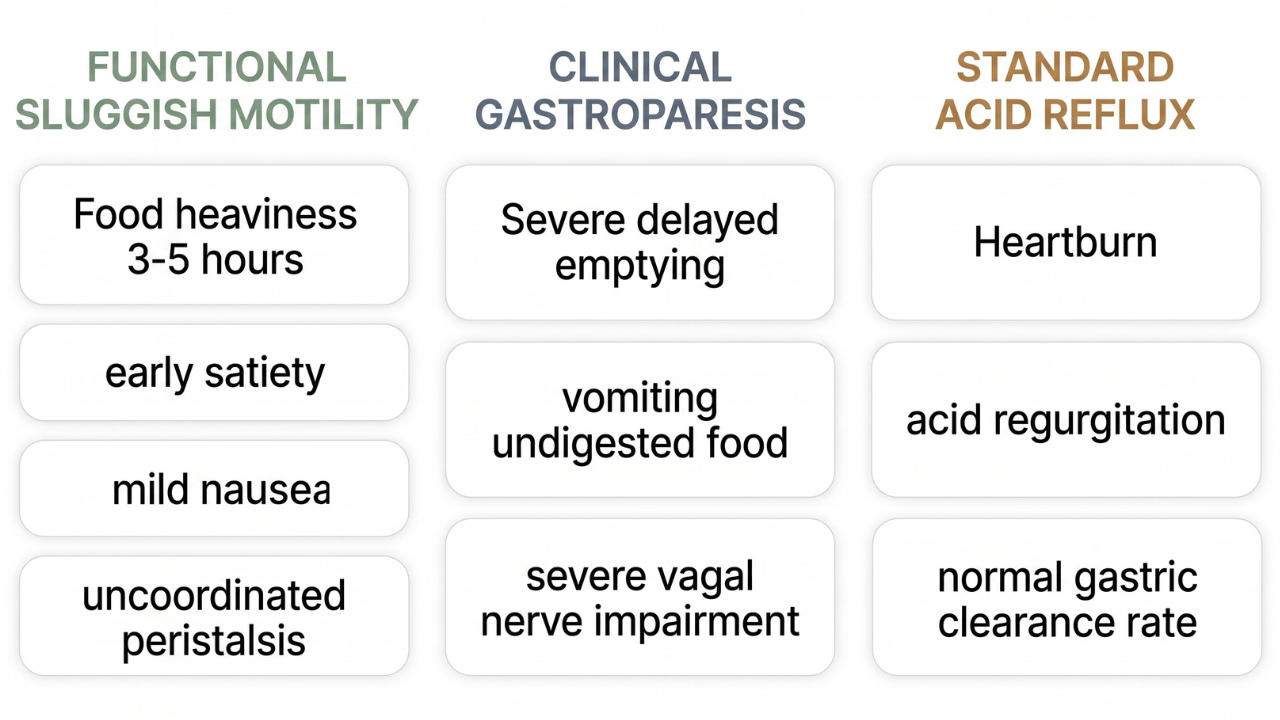
Table 1: Differential Assessment — Functional Sluggish Digestion vs. Gastroparesis vs. GERD.
5 Underlying Causes of Food Stagnation in the Stomach
When your stomach cannot clear its contents into the duodenum, several physiological roadblocks are usually present:
1. Sluggish Migrating Motor Complex & Enteric Hypo-Motility
Between digestive cycles, the gut relies on strong electrical sweeping waves to clear out residual debris. When this pacemaker activity weakens, fluids pool, food ferments, and severe stomach bloating after eating sets in rapidly.
2. Visceral Nerve Spasms and Trapped Epigastric Gas
When uncoordinated smooth muscle contractions pinch the upper gastrointestinal lumen, gas becomes locked beneath the diaphragm. This causes intense loud stomach gurgling and trapped gas alongside sharp discomfort near the rib cage.
3. Vagus Nerve Dysregulation and High Stress
Chronic mental stress, burnout, and sympathetic nervous overdrive suppress vagal tone. This shuts down digestive acid and enzyme secretion, freezing the stomach into stress-induced gut stagnation.
4. Pelvic Venous Congestion and Splenic Flexure Trapping
When the lower abdominal venous network is congested, blood flow to the upper digestive organs drops. This mechanical drag creates severe splenic flexure discomfort, making the entire abdomen feel rigid.
5. Nighttime Digestive Stalling
Going to bed with a full stomach when evening melatonin rises and gastric motility naturally drops causes food to ferment overnight, resulting in severe evening distension and morning tightness.
👉 Explore this Advanced Botanical Digestive Formula formulated with standardized Cnidium Monnieri and Polygala to ignite smooth peristaltic contractions and clear heavy food stagnation.
4 Clinical Habits to Accelerate Gastric Clearance Naturally
- Adopt Upright Post-Meal Ambulation: Take a gentle 10 to 15-minute walk after eating. Walking uses gravity and diaphragmatic excursion to assist the stomach antrum in grinding food and propelling chyme through the pyloric sphincter.
- Practice Inter-Meal Spacing: Avoid constant snacking. Leaving 4 to 5 hours between meals gives the stomach adequate time to empty completely and execute its natural cleansing waves.
- Favor Warm, Cooked Foods Over Raw Cold Meals: Cold, raw salads and iced drinks cause localized smooth muscle vasoconstriction, slowing down enzymatic activity and extending gastric emptying times.
- Integrate Prokinetic Carminative Botanicals: Therapeutic herbs like standardized ginger root, Cnidium Monnieri, and Polygala Tenuifolia stimulate cholinergic neurotransmission, accelerating gastric transit safely.
Frequently Asked Questions (FAQ)
1. Why does my stomach feel full and heavy hours after eating just a small meal?
Feeling full for hours after a modest meal (early satiety) is a hallmark sign of delayed gastric emptying. The stomach walls fail to relax properly to accommodate food, and weak antral contractions delay releasing chyme into the duodenum.
2. How long should food normally stay in your stomach before emptying?
In healthy individuals, a light meal begins exiting the stomach within 30 minutes and clears completely within 2 to 3 hours. Dense meals high in fats or heavy fibers can take 3 to 4 hours. Retention past 4 to 5 hours indicates sluggish gastric motility.
3. What is the main difference between delayed gastric emptying and gastroparesis?
Delayed gastric emptying is a broad term describing slow gastric transit, often functional and reversible. Gastroparesis is a clinical diagnosis of neuromuscular partial stomach paralysis, typically diagnosed via a gastric emptying scan (scintigraphy).
4. Can sluggish stomach emptying cause nausea and dizziness after meals?
Yes. When food sits stagnant in the stomach, pressure builds against the upper gastric fundus. This activates visceral mechanoreceptors that send distress signals via the vagus nerve to the brain's vomiting center, causing post-meal nausea and lightheadedness.
5. Why does food sitting in the stomach cause upper abdominal bloating?
When food remains stagnant at body temperature (37°C / 98.6°F), gastric acid and digestive enzymes lose efficiency. Resident bacteria begin fermenting the carbohydrates, creating expanding pockets of trapped gas that distend the epigastric region.
6. Can low stomach acid (hypochlorhydria) delay stomach emptying?
Yes. Adequate hydrochloric acid is required to signal the pyloric sphincter to relax. Without sufficient acidity, the pylorus remains tightly constricted, trapping food inside the stomach pouch.
7. Does drinking large amounts of water with meals slow down gastric emptying?
Drinking excessive cold water during meals dilutes gastric enzymes and over-distends the stomach chamber, triggering uncoordinated muscular contractions that prolong emptying time.
8. Why do antacids make delayed gastric emptying worse over time?
Antacids neutralize stomach acid, which reduces the chemical trigger needed for protein digestion and pyloric sphincter opening, worsening food stagnation.
9. Can high stress or anxiety cause food to stop digesting?
Yes. Sympathetic nervous system activation diverts blood away from the gastrointestinal tract and suppresses vagal nerve signaling, shutting down gastric motor function.
10. How do GLP-1 medications impact gastric emptying?
GLP-1 receptor agonist medications intentionally slow gastric emptying to promote satiety and stabilize blood sugar. In some individuals, this delay can become overly pronounced, resulting in severe fullness, nausea, and sulfur burps.
11. What sleeping position helps food move through the stomach at night?
Sleeping on your left side allows gravity to assist the anatomical curve of the stomach, keeping stomach acid below the gastroesophageal junction while facilitating natural pyloric emptying.
12. Does eating fiber help or hurt delayed gastric emptying?
While fiber is essential for colon health, excessive insoluble fiber requires heavy mechanical churning. In individuals with delayed emptying, large amounts of raw fiber can form compact masses (bezoars) and worsen fullness.
13. How does walking after a meal stimulate gastric transit?
Gentle walking stimulates the parasympathetic nervous system and engages core musculature, providing gentle mechanical pressure that helps the stomach pump chyme into the small intestine.
14. What foods are easiest to digest when dealing with slow stomach emptying?
Pureed soups, soft-cooked root vegetables, lean proteins (such as white fish or eggs), and thoroughly cooked grains empty from the stomach much faster than raw vegetables, tough red meats, and fried foods.
15. How do prokinetic botanicals accelerate stomach emptying naturally?
Prokinetic botanicals enhance acetylcholine release at the enteric neuromuscular junction. This strengthens the contractile force of the stomach antrum and coordinates pyloric relaxation without the side effects of pharmaceutical prokinetics.
Restore Gastric Rhythm: Clear Food Stagnation and Reclaim Digestive Lightness
Living with the exhausting feeling of food sitting in your stomach for hours is not something you have to tolerate as your normal state.
By focusing on restoring natural gastroduodenal motility, stimulating neuromuscular tone, and supporting vagal nerve balance, you empower your stomach to break down food efficiently and sweep it downward on schedule.
🌿 Accelerate Gastric Emptying with DigestiStart: The advanced botanical prokinetic matrix formulated to stimulate smooth peristaltic pacing, relieve upper stomach heaviness, and restore comfortable digestion without harsh laxatives.
Check Official Availability & Claim Your Supply of DigestiStart Today →
keep reading
Gut Health & Supplements
DigestiStart Review: Can This Herbal Formula Help Restore Digestive Health & Relieve Bloating?
Gut Health & Supplements
The Ultimate Guide to GERD: Causes, Symptoms & Natural Relief
Gut Health & Supplements