
Gas in Belly: Why You’re So Bloated and How to Find Instant Relief
Struggling with uncomfortable gas in your belly? Discover the root causes of abdominal gas accumulation and learn proven strategies for instant discomfort relief.
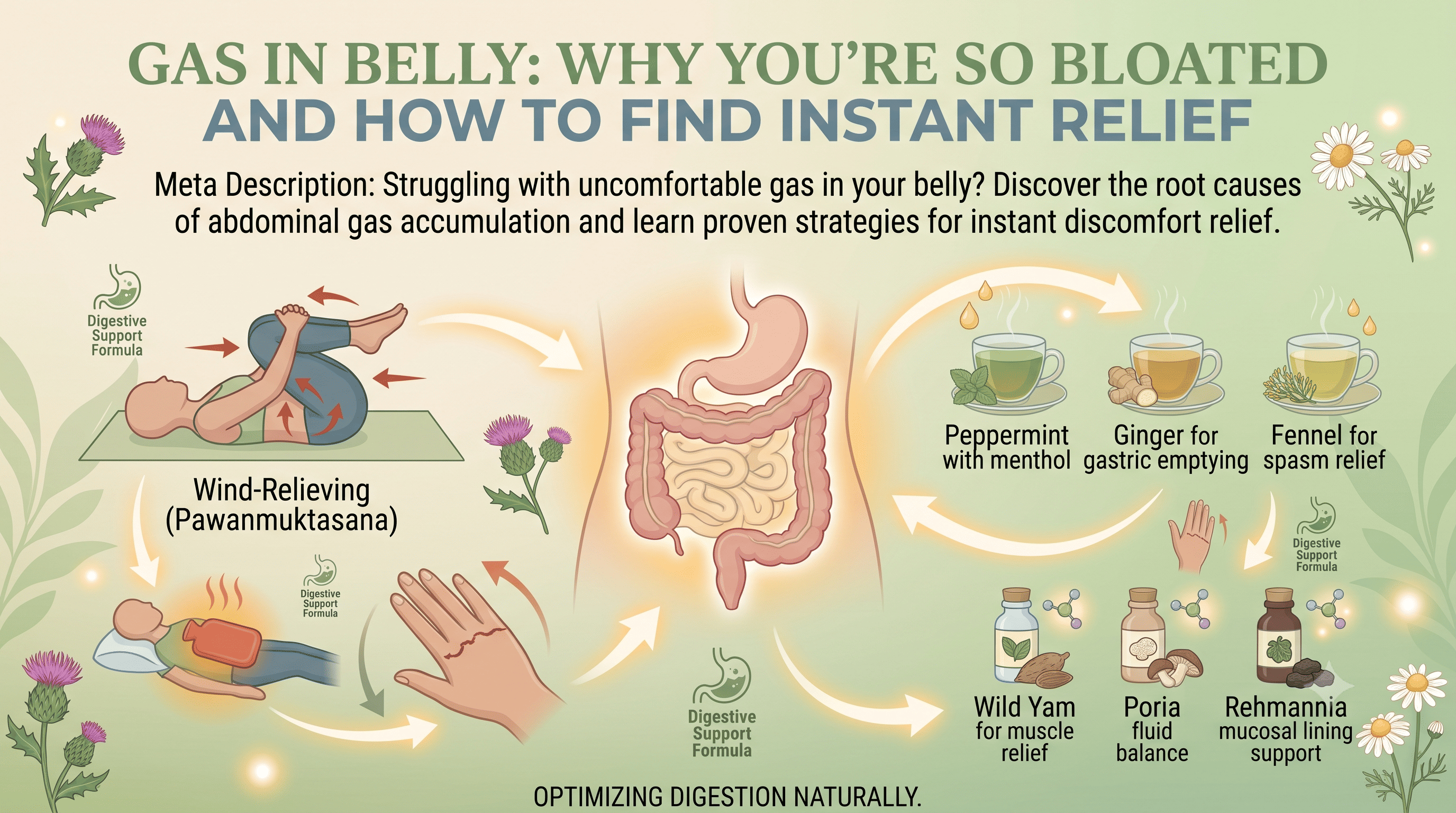
disclosure This article contains affiliate links. Purchases may earn us a commission at no extra cost to you. We only recommend products we've reviewed.
Gas in Belly: Why You’re So Bloated and How to Find Instant Relief
That sudden, sharp pressure in your midsection—accompanied by a sensation of your stomach expanding like a balloon—is more than just inconvenient. Trapped gas in the belly can cause acute physical pain, intense cramping, and an overwhelming feeling of fullness that makes sitting comfortably or focusing on daily tasks nearly impossible.
While trapped intestinal gas is extremely common, understanding why air and metabolic gases accumulate in your digestive tract is the secret to getting fast, targeted relief. Gas does not appear out of nowhere; it is the direct byproduct of swallowed air, incomplete meal breakdown, or rapid microbial fermentation deep within your gut.
In this comprehensive guide, we will explore the biological root causes of excessive gas buildup, map out immediate physical and natural tactics to release trapped pressure within minutes, and share long-term habits to keep your stomach calm and comfortable.
What Causes Gas to Get Trapped in Your Belly?
To eliminate abdominal gas effectively, you must first identify the physiological mechanism driving your discomfort.
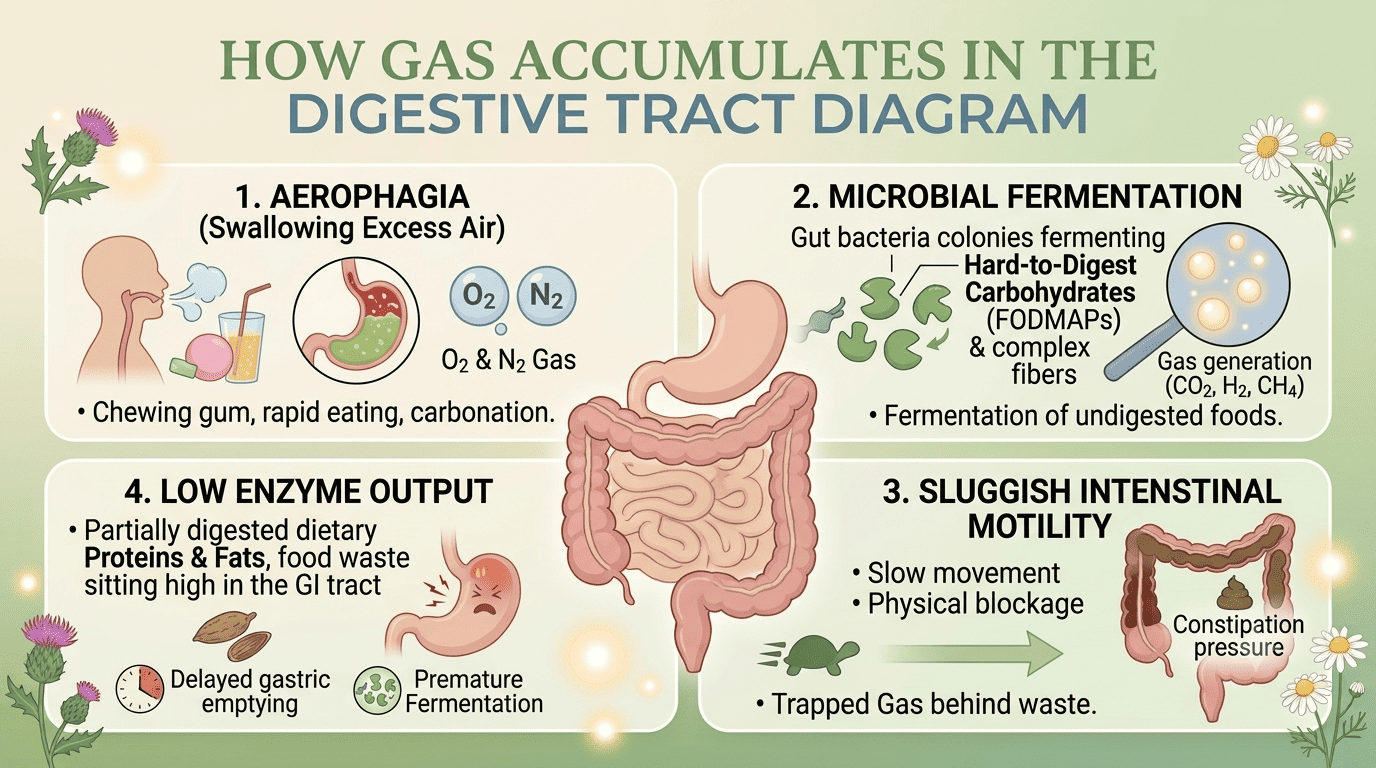
1. Aerophagia (Swallowing Excess Air)
Every time you eat, drink, or talk, you swallow small amounts of air. However, eating too rapidly, chewing gum, drinking carbonated beverages, or drinking through a straw significantly increases the volume of air entering your stomach. When this oxygen and nitrogen mixture cannot be expelled through burping, it travels down into the intestines, becoming trapped in the folds of your digestive tract.
2. Microbial Fermentation in the Colon
When dietary carbohydrates, hard-to-digest starches, or complex fibers pass through your stomach and small intestine without being completely broken down, they enter the large intestine intact. Trillions of gut bacteria feed on these undigested compounds, fermenting them into carbon dioxide, hydrogen, and methane gas.
3. Sluggish Intestinal Motility and Constipation
If your bowels move slowly, stool lingers in the colon longer than it should. This physical blockage acts as a dam, trapping gas pockets behind waste. The longer stool remains in the gut, the more time resident bacteria have to ferment waste, leading to a continuous cycle of expanding abdominal pressure.
4. Low Enzyme Output and Acid Insufficiency
Inadequate stomach acid or low pancreatic enzyme production leaves dietary proteins and fats partially digested. This mechanical failure delays gastric emptying, causing food to sit in the stomach and upper intestine where it begins to ferment prematurely.
👉 Check out this [Advanced Gut Rebuild Formula] for daily lining support and balanced inflammation levels.
5 Instant Relief Tactics for Trapped Gas Discomfort
When abdominal pressure strikes, relying on passive waiting can mean hours of discomfort. These five evidence-based techniques help move trapped gas bubbles through your intestinal tract quickly:
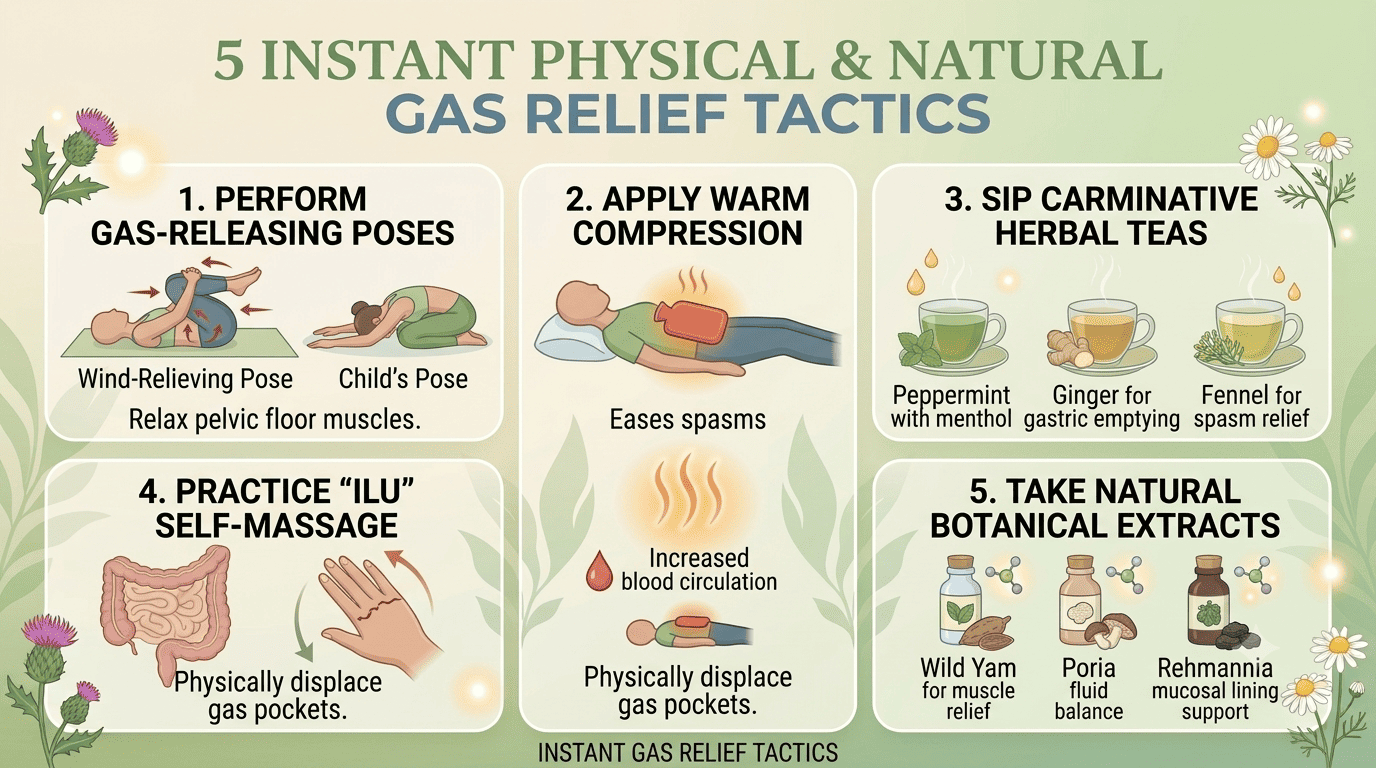
1. Perform Gas-Releasing Physical Poses
Changing your physical orientation unkinks the twists of your intestines, allowing gravity and muscle tension to guide gas toward elimination:
- Wind-Relieving Pose (Pawanmuktasana): Lie flat on your back, draw both knees up to your chest, and hug them tightly. Gently rock side to side for 60 seconds to exert gentle pressure on the colon.
- Child's Pose (Balasana): Kneel on the floor, fold forward over your thighs, and extend your arms on the ground ahead of you. Deep breathing in this position relaxes the pelvic floor muscles.
2. Apply Warm Compression to the Abdomen
Applying a hot water bottle or warm heating pad over your abdomen for 15 to 20 minutes increases local blood circulation and relaxes the smooth muscle tissue lining your intestinal walls. This eases painful intestinal spasms and allows trapped gas bubbles to merge and pass smoothly.
3. Sip Warm Botanical Carminative Teas
Carminative herbs contain natural aromatic volatile oils that soothe inflamed GI tissue and prevent gas formation:
- Peppermint Tea: Rich in menthol, which relaxes intestinal smooth muscle.
- Ginger Tea: Accelerates gastric emptying and eases upper GI tightness.
- Fennel Seed Tea: Contains anethole, a botanical compound that relaxes gut spasms and reduces gas pressure.
4. Practice the "ILU" Abdominal Self-Massage
Manually massaging your stomach along the anatomical track of your large intestine can physically displace trapped gas pockets:
- I: Lightly stroke up the right side of your lower abdomen toward your ribcage.
- L: Stroke across the top of your stomach from your right ribcage to your left.
- U: Stroke down the left side of your abdomen toward your hip bone.
5. Take Natural Botanical Extracts
Herbal remedies have been utilized for centuries to reduce abdominal bloating and promote healthy fluid dynamics:
- Wild Yam: Relaxes intestinal muscle spasms and eases lower stomach cramping.
- Poria Cocos: A traditional mushroom extract that supports fluid balance and reduces digestive dampness.
- Rehmannia Root: Soothes mucosal irritation and supports overall GI tract resilience.
👉 Check out this [Advanced Gut Rebuild Formula] for daily lining support and balanced inflammation levels.
24-Hour Action Plan to Clear Gas and Reset Digestion
If you are dealing with persistent abdominal distension that refuses to clear, use this structured 24-hour protocol to restore comfort:
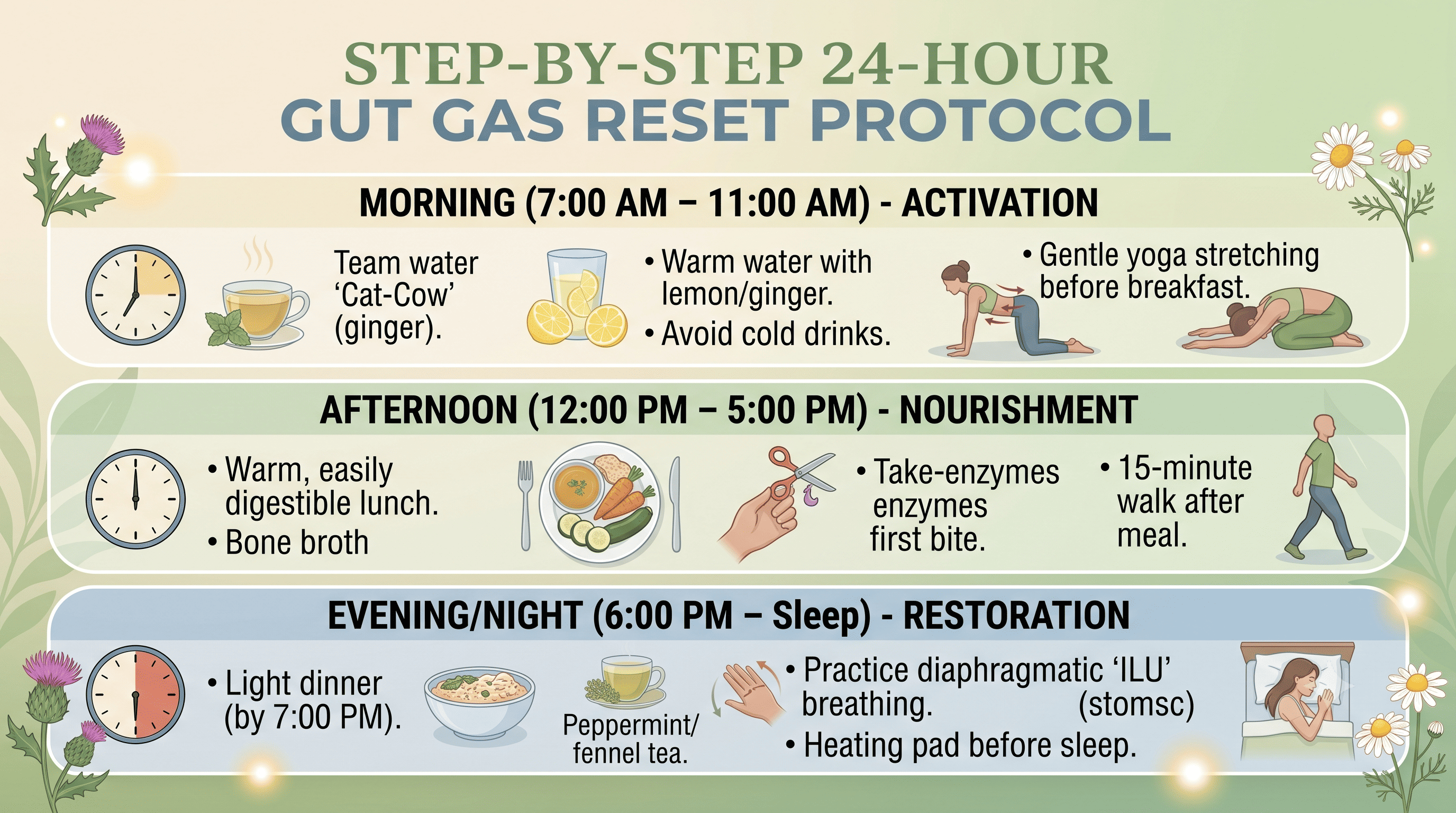
- Morning Activation (7:00 AM – 11:00 AM): Begin your day with 16 oz of warm water mixed with fresh lemon juice. Avoid cold or icy drinks, which can trigger intestinal spasms. Perform 5 minutes of gentle yoga stretching before eating.
- Afternoon Nourishment (12:00 PM – 5:00 PM): Eat a warm, easily digestible lunch (such as bone broth soup with well-cooked carrots and zucchini). Take a broad-spectrum digestive enzyme with your meal. Take a 15-minute walk outside after finishing.
- Evening Restoration (6:00 PM – 10:00 PM): Keep dinner light and low in fermentable fibers. Sip warm fennel or peppermint tea 30 minutes after eating. Apply a warm heating pad to your stomach before sleep, and practice slow diaphragmatic breathing.
Daily Habits to Prevent Gas Build-Up Long-Term
Stopping gas before it starts requires addressing everyday eating and lifestyle habits:
- Slow Down and Chew Food: Chewing each bite 20 to 30 times breaks down food mechanically and saturates it with digestive enzymes before swallowing.
- Limit Carbonation and Chewing Gum: Swap sparkling water and sodas for still, filtered water infused with mint or cucumber.
- Space Out Your Meals: Give your stomach 3 to 4 hours between meals to allow your Migrating Motor Complex (MMC) to sweep undigested food and gas down the GI tract.
- Support Bowel Regularity: Ensure daily, complete bowel movements by maintaining consistent hydration and consuming adequate soluble fiber.
Frequently Asked Questions (FAQ)
- How long does it take to get rid of trapped gas in the belly? Targeted physical tactics like gas-releasing yoga poses, carminative teas, or abdominal massage can provide noticeable pressure relief within 10 to 30 minutes. Complete clearing of fermented gas typically takes a few hours.
- Why does trapped gas cause severe, sharp stomach pain? Gas bubbles can expand inside tight bends of the colon (such as the splenic flexure under your left ribcage). As the gas expands, it stretches the sensitive nerve endings in the intestinal wall, sending sharp pain signals to the brain.
- Can drinking hot water help release trapped gas? Yes. Warm or hot water relaxes the smooth muscles of the gastrointestinal tract and stimulates the gastrocolic reflex, encouraging the intestines to contract gently and move trapped gas and waste forward.
- What is the difference between stomach gas and intestinal gas? Stomach gas is usually caused by swallowed air (aerophagia) and is typically expelled through burping. Intestinal gas is generated by bacterial fermentation of undigested food in the colon and is released through flatulence.
- Why do I get so bloated and full of gas after eating vegetables? Certain vegetables—like broccoli, cabbage, cauliflower, and onions—are high in complex sugars called raffinose and fructans. If your body produces insufficient enzymes to break these down, gut bacteria ferment them rapidly, creating large volumes of gas.
- Can stress cause gas to build up in the stomach? Yes. Stress activates the sympathetic nervous system, slowing down digestion and intestinal motility. When food sits stagnant in the gut, bacteria have more time to ferment it, while stress simultaneously makes gut nerves hyper-sensitive to normal gas volumes.
- Does walking really help pass trapped gas? Absolutely. Physical movement massages the abdominal organs, stimulates peristalsis (the wave-like muscle contractions of the gut), and uses gravity to help shift trapped gas pockets through the bends of the intestine.
- Is it bad to hold in gas when you feel bloated? Yes. Voluntarily holding in gas increases intra-abdominal pressure, causes painful cramping, and can lead to reabsorption of certain gas byproducts into circulation, worsening overall abdominal distension.
- Can digestive enzymes stop gas before it starts? Yes. Broad-spectrum digestive enzymes taken at the beginning of a meal break down complex starches, proteins, and fats in the stomach, preventing undigested food from reaching the colon where gas-producing bacteria ferment it.
- When should I see a doctor about abdominal gas? Consult a healthcare professional if your gas and bloating are persistent, worsening, or accompanied by severe abdominal pain, unexplained weight loss, chronic diarrhea, fever, nausea, or blood in your stool.
Reclaim Daily Comfort with Proven Digestive Support
As we explored in this guide, getting rid of trapped gas in the belly requires addressing both immediate physical pressure and underlying digestive efficiency. By combining quick-acting relief techniques with consistent daily habits, you can stop gas buildup and enjoy light, comfortable digestion after every meal.
To ensure your gastrointestinal system breaks down meals smoothly and keeps intestinal motility active, incorporating a high-potency daily supplement is essential. We recommend supporting your wellness routine with the [Advanced Liver & Digestive Support Blend]. Formulated with premium botanical extracts, natural enzymes, and soothing herbs, it provides daily protection against trapped gas, abdominal tightness, and sluggish digestion.
👉 Check out this [Advanced Gut Rebuild Formula] for daily lining support and balanced inflammation levels.
keep reading
Gut Health & Supplements
DigestiStart Review: Can This Herbal Formula Help Restore Digestive Health & Relieve Bloating?
Gut Health & Supplements
The Ultimate Guide to GERD: Causes, Symptoms & Natural Relief
Gut Health & Supplements