
Gut Health and Immunity: How Probiotics Fortify Your Intestinal Barrier and Restore Immune Function
Learn how 70% of your immune system lives in your gut microbiome. Discover how targeted probiotics for immune function repair tight junctions, boost sIgA, and shield your body.
disclosure This article contains affiliate links. Purchases may earn us a commission at no extra cost to you. We only recommend products we've reviewed.
Gut Health and Immunity: How Probiotics Fortify Your Intestinal Barrier and Restore Immune Function
When seasonal bugs sweep through your environment, or when you find yourself constantly battling low-grade fatigue, skin flare-ups, and lingering systemic inflammation, it is easy to assume that your immune system is simply "genetically weak." Millions of individuals attempt to resolve chronic susceptibility to infections by megadosing synthetic Vitamin C, drinking aggressive herbal tonics, or relying on short-term immune boosters.
However, modern mucosal immunology and gastroenterology reveal a fundamentally different reality: your primary immune shield is not located in your throat, your lungs, or your bloodstream—it is embedded directly within your digestive tract.
In clinical health, over 70% of your entire immune system’s cellular architecture resides within the gut membrane. When the delicate balance of your gut microbiome collapses into dysbiosis or when the structural integrity of your intestinal lining weakens, your body loses its primary defense mechanism.
In this comprehensive clinical review, we examine the physiological cellular mechanics connecting gut health and immunity, why a damaged intestinal barrier leaves your systemic defense exhausted, and how targeted probiotics for immune function work to seal your biological shield.
Cellular defense mapping—visualizing how beneficial probiotic microbes interact with mucosal immune receptors to train systemic defense pathways.
The Biological Architecture: Why 70% of Immunity Lives in the Gut
To understand how to improve immune system performance on a root-cause level, one must first look at the anatomical boundary separating the outer world from your internal physiology. Your gastrointestinal tract is technically an external tube running through your body. The single-cell layer of the intestinal epithelium represents the largest contact surface between your internal tissue and external environmental agents, spanning a surface area comparable to a tennis court.
Lying immediately beneath this paper-thin cellular barrier is the Gut-Associated Lymphoid Tissue (GALT). The GALT represents the largest concentration of immune tissue in the entire human organism, containing the vast majority of your body's T-cells, B-cells, plasma cells, and macrophages.
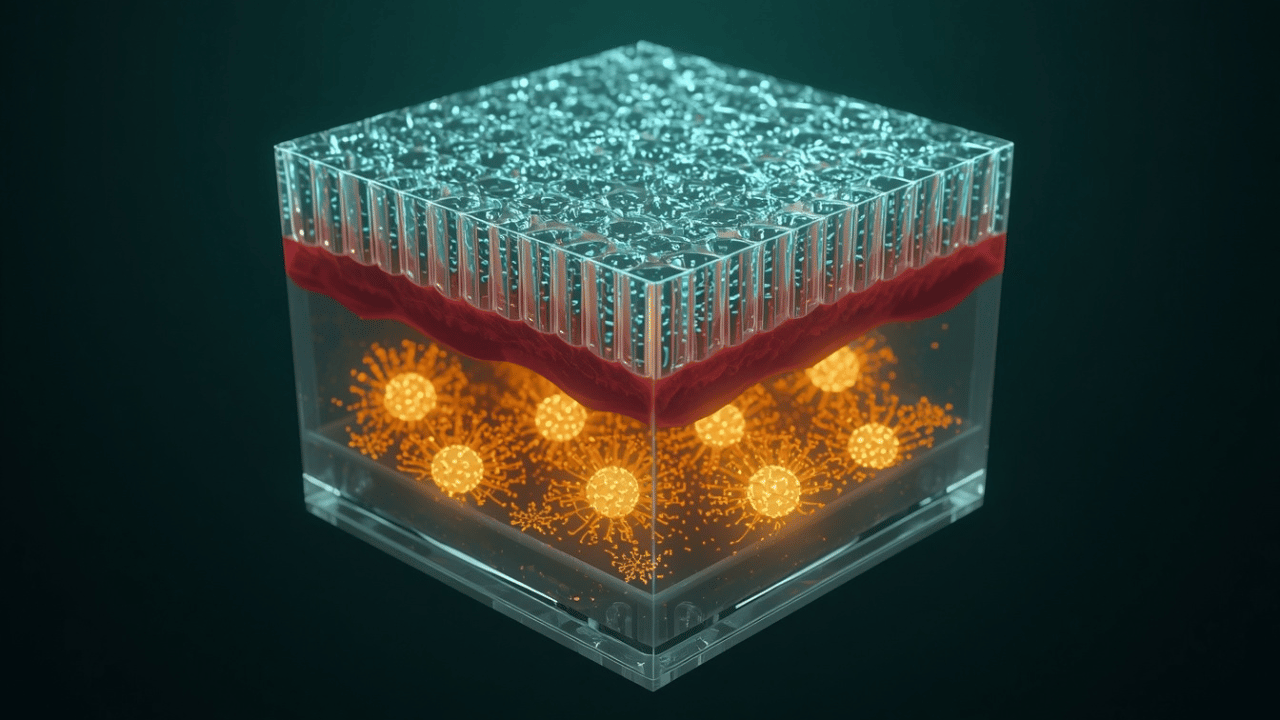
The cellular stack—mapping the mucosal layer, tight junction epithelium, and underlying Gut-Associated Lymphoid Tissue (GALT).
Under healthy conditions, the interaction between your commensal gut microbiota and the GALT functions as a continuous, highly sophisticated military training academy:
- Immune Tolerance vs. Aggression: Commensal bacteria constantly communicate with dendritic cells, teaching the immune system to tolerate harmless dietary proteins and friendly microbes while remaining hyper-reactive to dangerous viral or bacterial invaders.
- Secretory Immunoglobulin A (sIgA) Synthesis: Friendly micro-organisms stimulate plasma cells in the GALT to secrete sIgA—specialized mucosal antibodies that neutralize pathogens in the gut lumen before they can penetrate the bloodstream.
- Regulatory T-Cell (Treg) Induction: Specific bacterial metabolites, particularly short-chain fatty acids (SCFAs), trigger the production of regulatory T-cells that prevent autoimmune cross-reactivity and shut down excess systemic inflammation.
The Pathophysiology of Dysbiosis and Intestinal Permeability
When the gut microbiome undergoes severe dysbiosis—caused by ultra-processed diets, chronic stress, environmental toxins, or overuse of broad-spectrum antibiotics—this delicate immunological orchestration breaks down.
When beneficial bacterial colonies decline, opportunistic pathogens and lipopolysaccharides (LPS—endotoxins derived from the outer membrane of Gram-negative bacteria) begin to proliferate. These endotoxins release inflammatory cytokines that directly break down tight junction proteins (Occludin, Claudin, and Zonula Occludens-1), creating microscopic gaps between intestinal cells.
The Downstream Cascade of "Leaky Gut" Immune Overload:
- Systemic Endotoxemia: Unfiltered bacterial fragments, un-metabolized food macromolecules, and toxic metabolic byproducts leak directly through compromised tight junctions into systemic circulation.
- Continuous Toll-Like Receptor (TLR) Activation: Circulating endotoxins bind to TLR4 receptors throughout the body, triggering a perpetual cascade of nuclear factor kappa B (NF-κB) activation.
- Immune Cell Exhaustion: Because the gut barrier is leaking continuously, immune cells are forced to fight an unending, multi-front war. This constant activation exhausts reserve capacity, leaving the body ill-equipped when genuine pathogens (such as respiratory viruses) invade the respiratory or systemic tracts.
- Low-Grade Chronic Inflammation: The combination of circulating LPS and exhausted regulatory T-cells leads to systemic, low-grade tissue inflammation, manifesting as joint pain, brain fog, skin flare-ups, and chronic physical fatigue.
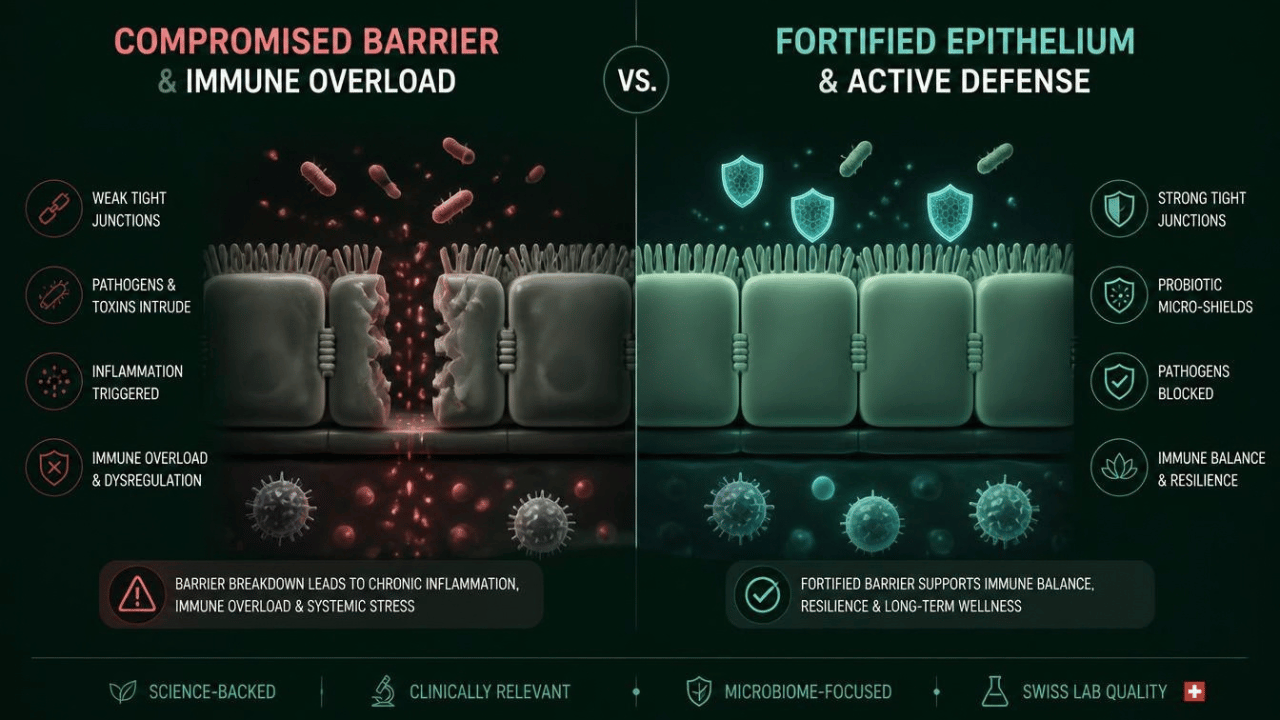
Structural contrast—illustrating how bacterial endotoxin leakage across damaged tight junctions causes immune exhaustion, compared to the protective sealing effect of targeted probiotics.
Mechanisms of Action: How Probiotics Fortify Immune Function
Deploying targeted, high-potency probiotics for immune function does not simply "add good bacteria" to your digestive tract; it initiates a cascade of structural, biochemical, and immunological repair mechanisms.
Reinforcement of Physical Tight Junctions
Specific clinical strains actively upregulate the gene expression of tight junction proteins. By stimulating the production of Zonula Occludens-1 (ZO-1) and Claudins, probiotics physically repair the microscopic gaps between enterocytes, effectively halting the influx of endotoxins into systemic circulation.
Elevation of Secretory IgA (sIgA) Output
Commensal micro-organisms engage toll-like receptors on epithelial cells in a non-inflammatory manner, sending signaling cascades to the GALT. This signals plasma cells to ramp up production of sIgA. Elevated mucosal sIgA acts as a physical molecular net, trapping respiratory and GI viruses in mucosal secretions so they can be safely cleared.
SCFA Production and Epigenetic Immune Modulation
Probiotic bacteria ferment prebiotics and dietary fibers to synthesize short-chain fatty acids, predominantly Acetate, Propionate, and Butyrate. Butyrate serves as the primary energy fuel for colonocytes and acts as a histone deacetylase (HDAC) inhibitor. This epigenetic action turns off pro-inflammatory cytokine genes (such as TNF-alpha and IL-6) while expanding immunosuppressive Treg cells.
The 3-Step Clinical Protocol for Intestinal Immune Repair
Restoring the gut-immune axis requires an intentional, step-by-step therapeutic approach rather than random supplementation.
Step 1: Remove Inflammatory Mucosal Disruptors
Eliminate dietary factors that directly degrade the mucosal layer and disrupt tight junctions. This includes cutting out artificial emulsifiers, excess refined sugars, industrial seed oils, and unnecessary non-steroidal anti-inflammatory drugs (NSAIDs).
Step 2: Seal and Rebuild the Epithelial Barrier
Provide structural substrates that support enterocyte regeneration. Incorporate L-Glutamine, Zinc Carnosine, and polyphenol-rich compounds that calm mucosal tissue and prepare the epithelial surface for bacterial colonization.
Step 3: Repopulate with Acid-Resistant Targeted Probiotics
Introduce multi-strain, clinically validated immune probiotics designed to survive stomach acid and bile salts. Delivering viable, active strains straight to the lower GI tract rapidly re-establishes competitive exclusion against pathogens, restores optimal sIgA output, and fortifies systemic defense.

Daily gut barrier and immune fortifying protocol featuring targeted acid-resistant probiotic delivery.
Frequently Asked Questions (Clinical FAQ)
What is the primary link between gut health and immunity?
Over 70% of the body's immune cells reside in the Gut-Associated Lymphoid Tissue (GALT) located directly beneath the intestinal lining, making the gut the body's primary immune command center.
How do probiotics for immune function differ from standard probiotics?
Immune-specific probiotics utilize strains clinically shown to survive stomach acid, stimulate sIgA antibody production, upregulate tight junction proteins, and balance pro- vs. anti-inflammatory cytokines.
Can a "leaky gut" cause frequent colds and viral infections?
Yes. When tight junctions breakdown, the continuous influx of toxins into the bloodstream exhausts systemic immune reserves, leaving the body vulnerable to external pathogens.
What is Secretory IgA (sIgA) and why is it important?
sIgA is the principal antibody found in mucosal secretions. It neutralizes viruses, bacteria, and toxins directly in the gut lumen before they can penetrate epithelial tissue.
How long does it take for probiotics to improve immune function?
While acute digestive improvements can occur within 7 to 14 days, structural modulation of immune cell signaling and sIgA enhancement generally takes 30 to 60 days of daily use.
What role do short-chain fatty acids (SCFAs) play in gut immunity?
SCFAs like butyrate provide energy to enterocytes, strengthen tight junctions, and expand regulatory T-cells (Tregs) that suppress excess systemic inflammation.
Can stress weaken gut barrier immunity?
Yes. Stress releases cortisol and corticotropin-releasing hormone (CRH), which directly increase intestinal permeability, deplete mucosal sIgA, and disrupt microbial diversity.
How does dysbiosis lead to systemic chronic inflammation?
Dysbiosis allows Gram-negative bacterial fragments (LPS) to cross a leaky intestinal barrier into the blood, triggering systemic inflammatory signaling via TLR4 receptors.
Are high-dose probiotics always better for immunity?
Not necessarily. Strain specificity, acid resistance, and formulation synergy are far more critical for immune modulation than sheer Colony Forming Unit (CFU) count.
What foods support gut health and immunity naturally?
Polyphenol-rich foods (dark berries, green tea), fermented foods (kefir, sauerkraut), and prebiotic soluble fibers (asparagus, garlic, chia seeds) feed beneficial microbes.
Can antibiotic use impair long-term immune performance?
Yes. Broad-spectrum antibiotics wipe out commensal bacterial populations, reducing sIgA output and opening ecological niches for opportunistic pathogens to cause mucosal damage.
What are the signs that my immune issues stem from my gut?
Frequent infections accompanied by chronic bloating, irregular bowel habits, food sensitivities, skin breakouts, or persistent fatigue strongly indicate a gut-immune origin.
How does Digest Flow protect probiotic strains through stomach acid?
Digest Flow utilizes acid-resistant capsule technology and targeted buffering matrices to ensure viable probiotic strains reach the small intestine and colon intact.
Is it safe to take probiotics daily for immune support?
Yes. Daily administration maintains consistent bacterial colonization, continuous sIgA stimulation, and ongoing tight junction maintenance.
How does the GutBarrier 180-day guarantee support my healing journey?
Full structural restoration of tight junctions and immune cell reprogramming takes time. The 180-day risk-free guarantee allows you six full months to experience complete digestive and immune renewal.
The Verdict: Swiss Clinical Summary
Relying on temporary immune stimulants while ignoring underlying intestinal permeability is like trying to bail water out of a leaking boat. True physical resilience, vibrant energy, and unshakeable immune protection require sealing your biological barrier at its foundation.
By restoring your microbial balance with targeted probiotics for immune function, strengthening mucosal tight junctions, and calming chronic systemic inflammation, you can build a defense shield that protects your health for years to come.
Our Recommendation
- Best used for: Fortifying intestinal barrier integrity, boosting mucosal sIgA defense, eliminating chronic post-meal fatigue, and preventing recurrent immune depletion.
- Action Plan: Combine targeted daily supplementation of Digest Flow with a polyphenol-dense whole-food diet, adequate sleep, and daily stress management.
Disclaimer: This content is for educational purposes only and does not constitute medical advice. Consult with a qualified healthcare professional before beginning any new supplementation or dietary protocol, especially if you have pre-existing health conditions or take medication.
keep reading
Gut Health & Supplements
DigestiStart Review: Can This Herbal Formula Help Restore Digestive Health & Relieve Bloating?
Gut Health & Supplements
The Ultimate Guide to GERD: Causes, Symptoms & Natural Relief
Gut Health & Supplements