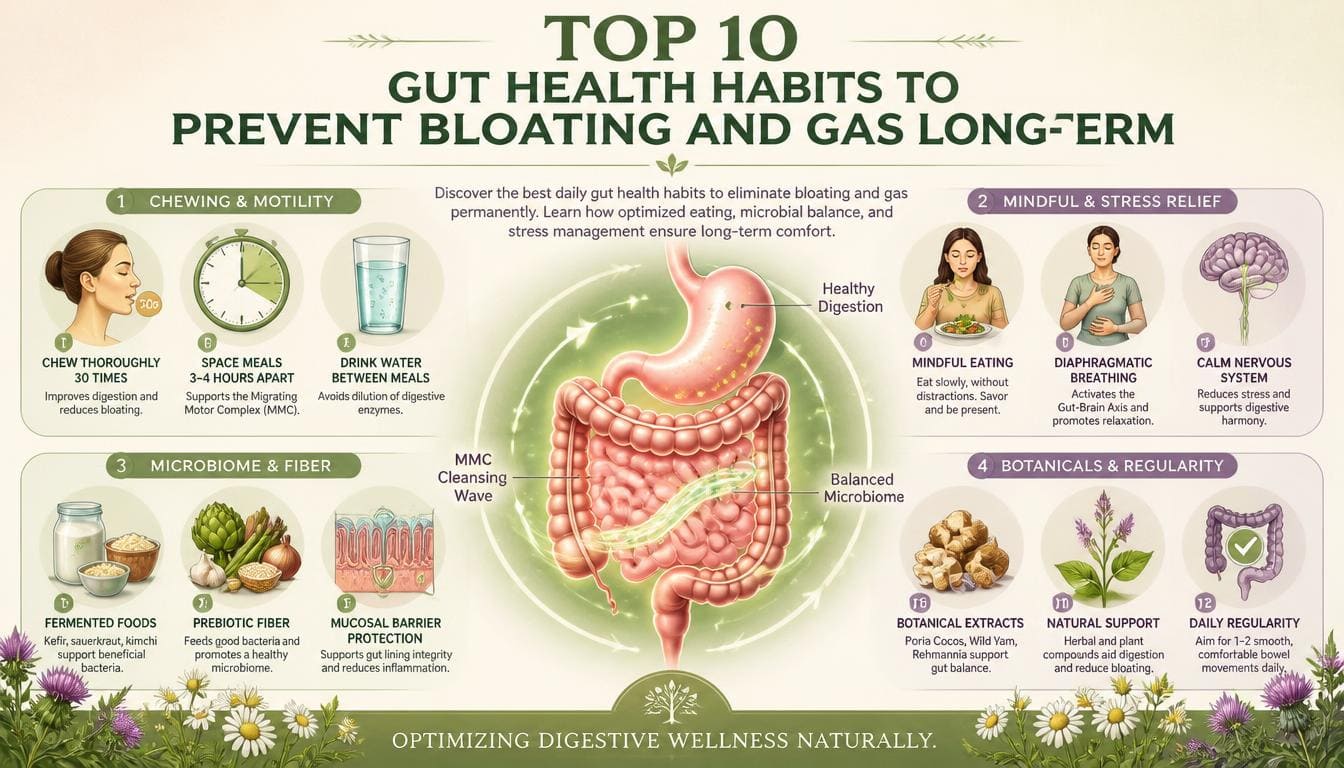
Top 10 Gut Health Habits to Prevent Bloating and Gas Long-Term
Discover 10 essential gut health habits to eliminate bloating and gas permanently. Learn how optimized eating, microbial balance, and stress management ensure long-term comfort.
disclosure This article contains affiliate links. Purchases may earn us a commission at no extra cost to you. We only recommend products we've reviewed.
Top 10 Gut Health Habits to Prevent Bloating and Gas Long-Term
Waking up with a flat stomach only to feel uncomfortably tight, swollen, and gaseous by mid-afternoon is a frustrating and all-too-common experience. For many, abdominal bloating is treated as an inevitable consequence of eating, managed only by reacting with short-term remedies after the discomfort has already started.
However, chronic bloating and excessive gas are not unavoidable; they are distinct biological signals that your digestive tract is struggling to process, break down, or eliminate compounds efficiently. While previous guides in this series focused on immediate relief, sustainable comfort requires a shift in focus toward long-term gut health optimization. By establishing proactive habits that support enzyme production, microbial balance, and intestinal motility, you can address the root causes of abdominal distension.
In this ultimate guide, we will break down the physiology of long-term bloating prevention, explore 10 evidence-based habits that ensure lasting gut harmony, address common pitfalls, and provide a comprehensive strategy to maintain a calm, comfortable stomach permanently.
Understanding Long-Term Bloating Prevention Mechanisms
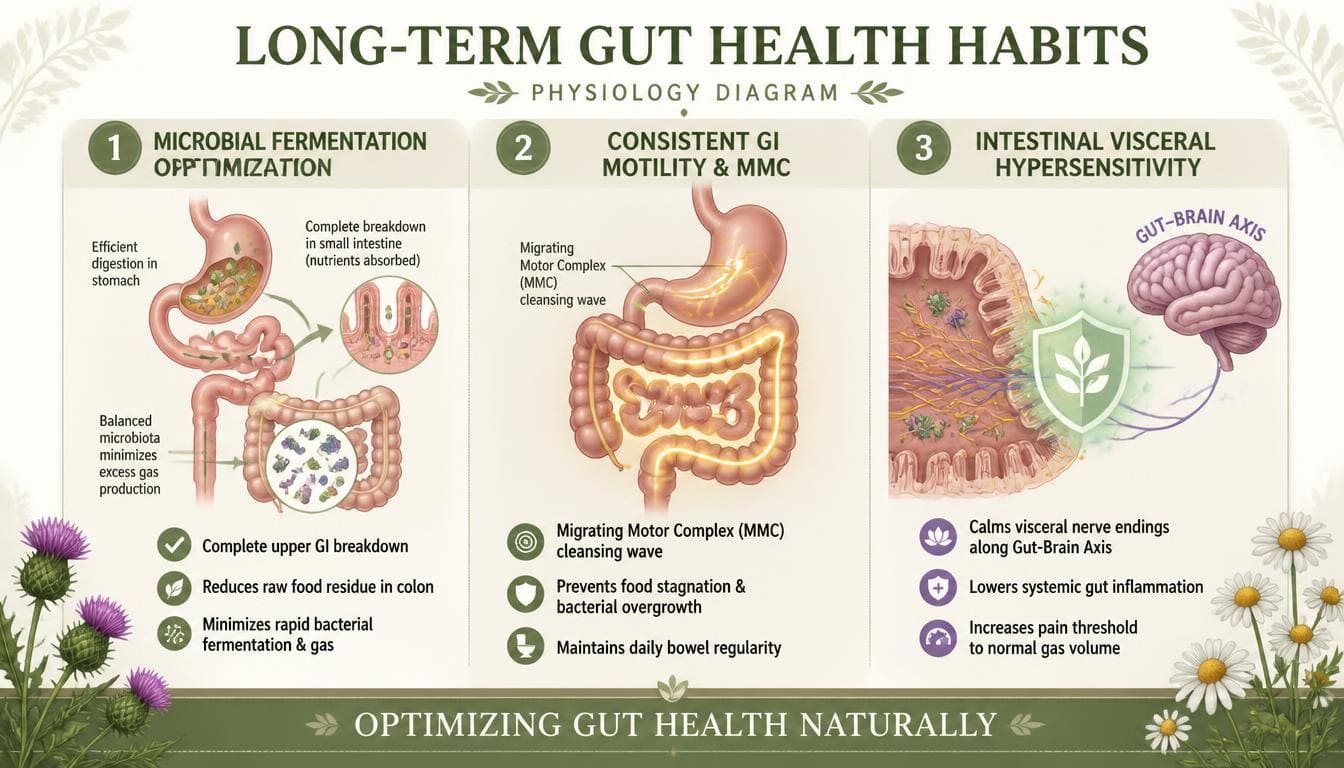
Achieving permanent relief requires managing three core physiological drivers: microbial fermentation, gastrointestinal motility, and intestinal sensitivity.
1. Microbial Fermentation Optimization
Bloating is rarely caused by gas alone, but by excessive and premature gas production. Optimized habits ensure dietary compounds are completely digested in the upper GI tract, minimizing the amount of unabsorbed residue that reaches the large intestine where bacteria ferment it rapidly.
2. Consistent Gastrointestinal Motility (MMC)
The Migrating Motor Complex (MMC) is a "cleansing wave" that sweeps the stomach and small intestine during fasting periods between meals. Maintaining daily bowel regularity is essential; optimized habits keep stool moving and prevent constipation-induced pressure.
3. Intestinal Visceral Hypersensitivity Calming
Habits that lower inflammation and balance the gut-brain axis reduce the sensitivity of nerve endings in the intestinal wall, mitigating pain signals even when normal gas is produced.
👉 Check out this [Advanced Gut Rebuild Formula] for daily lining support and balanced inflammation levels.
Top 10 Gut Health Habits for Bloating Prevention
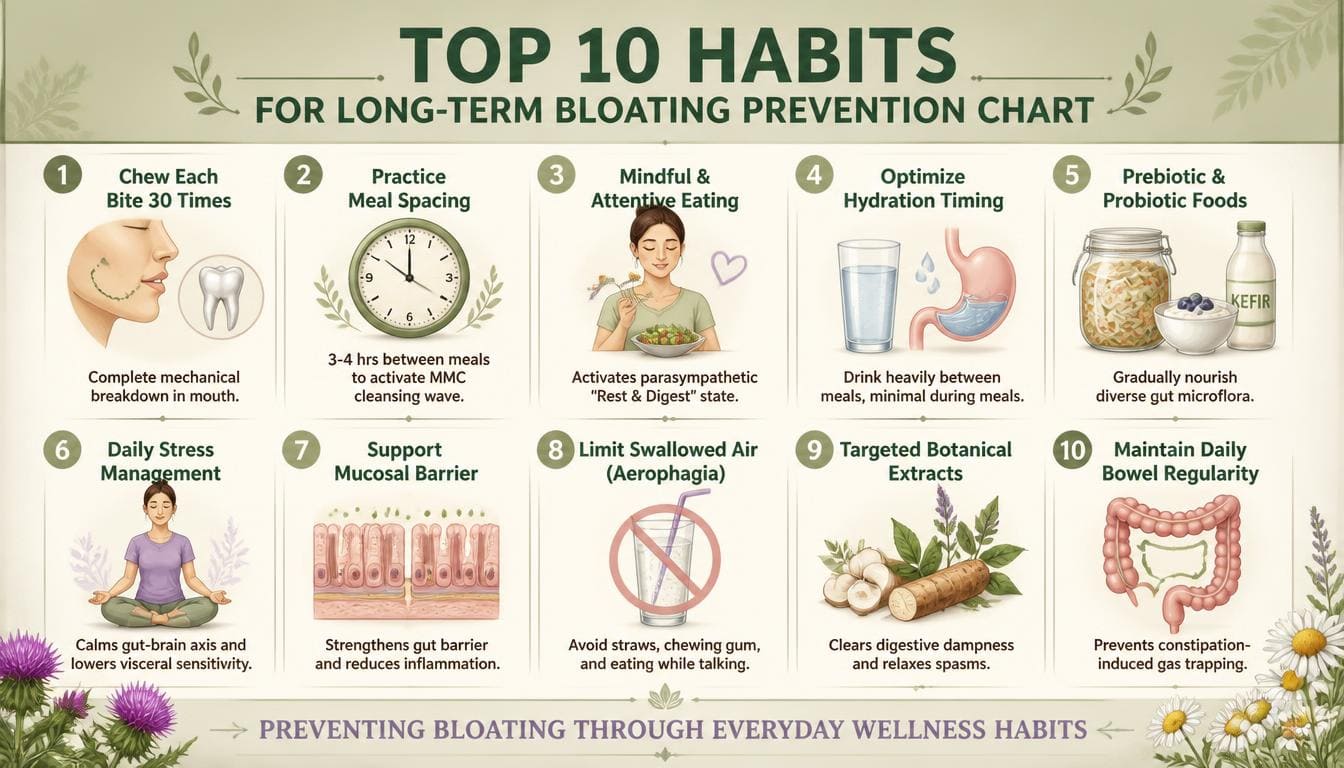
To eliminate long-term bloating, integrate these ten proven evidence-based strategies into your everyday lifestyle.
1. Adopt the "Chew Each Bite 30 Times" Habit
Digestion begins in the mouth. Chewing food thoroughly saturates it with salivary amylase, beginning the breakdown process before food hits the stomach. This critical mechanical action reduces the enzymatic workload on the pancreas, significantly decreasing the volume of partially digested residue that reaches the lower intestine to undergo rapid fermentation.
2. Embrace "Meal Spacing" and Intermittent Rest
Consistent snacking disables the Migrating Motor Complex (MMC). Space meals at least 3 to 4 hours apart to allow this essential digestive cleaning process to sweep undigested food, bacteria, and trapped gas through the small intestine. Aim for at least 12 hours of overnight digestive rest (the "Digestive Rest Habit").
3. Practice Mindful and Attentive Eating
Eating rapidly, on the go, or while distracted shifts your nervous system into "fight or flight," slowing peristalsis and enzyme secretion. Establish a ritual of sitting down, focusing on your meal, and slowing your eating pace to activate the "Rest and Digest" parasympathetic state.
4. Optimize Daily Hydration Timing
While staying hydrated is critical for softening stool, drinking massive quantities of liquids during meals can dilute crucial stomach acid and digestive enzymes, slowing meal processing. Create a habit of hydrating heavily between meals and minimizing fluid intake during active digestion.
5. Gradually Integrate Targeted Prebiotic and Probiotic Foods
To ensure diverse, efficient gut microbiota that manage gas production, consume consistent, varied amounts of soluble fiber and fermented foods. Introduce items like Jerusalem artichokes, sauerkraut, and kéfir slowly to prevent initial gas flare-ups.
6. Prioritize Daily Stress Management Rituals
Chronic stress is a leading cause of slow motility and visceral hypersensitivity. Implement 5–10 minutes of diaphragmatic breathing, deep meditation, or gentle yoga daily to calm the gut-brain axis and increase the pain threshold in the gut wall.
7. Support Intestinal Mucosal Barrier Integrity
A "leaky gut" allows undigested molecules to escape into systemic circulation, heightening inflammation and gut sensitivity. Integrate gut-healing habits like consistent glutamine support, antioxidant intake, and avoiding intestinal irritants to strengthen this barrier.
8. Limit Air Swallowing (Aerophagia) Triggers
Minimize habits that cause you to swallow excess air, such as chewing gum, drinking through straws, consuming carbonated beverages, or talking excessively while eating. This air can bypass the stomach and become painfully trapped in intestinal bends.
9. Manage Microbial Dampness with Targeted Botanicals
In Traditional Chinese Medicine, an accumulation of "dampness" in the digestive tract leads to persistent bloating, sluggishness, and nutrient malabsorption. Integrate synergistic botanicals into your wellness routine to clear this dampness and balance gut fluids:
- Poria Cocos: Traditionally used to clear dampness and support fluid dynamics in the digestive tract.
- Wild Yam: Helps soothe smooth intestinal muscle spasms and eases abdominal pressure.
- Rehmannia Root: Supports gut lining integrity and cools localized digestive heat.
10. Maintain Consistent Daily Bowel Regularity
Chronic constipation act as a dam, physically trapping gas pockets behind stool waste. Establish predictable daily bowel movements through the synergistic habits of consistent hydration, adequate soluble fiber, light physical movement, and proper evacuation posture.
👉 Check out this [Advanced Gut Rebuild Formula] for daily lining support and balanced inflammation levels.
24-Hour Habit Reset Action Plan
If you are suffering from persistent bloating and want to reset your digestion using optimized daily habits, follow this structured 24-hour protocol:
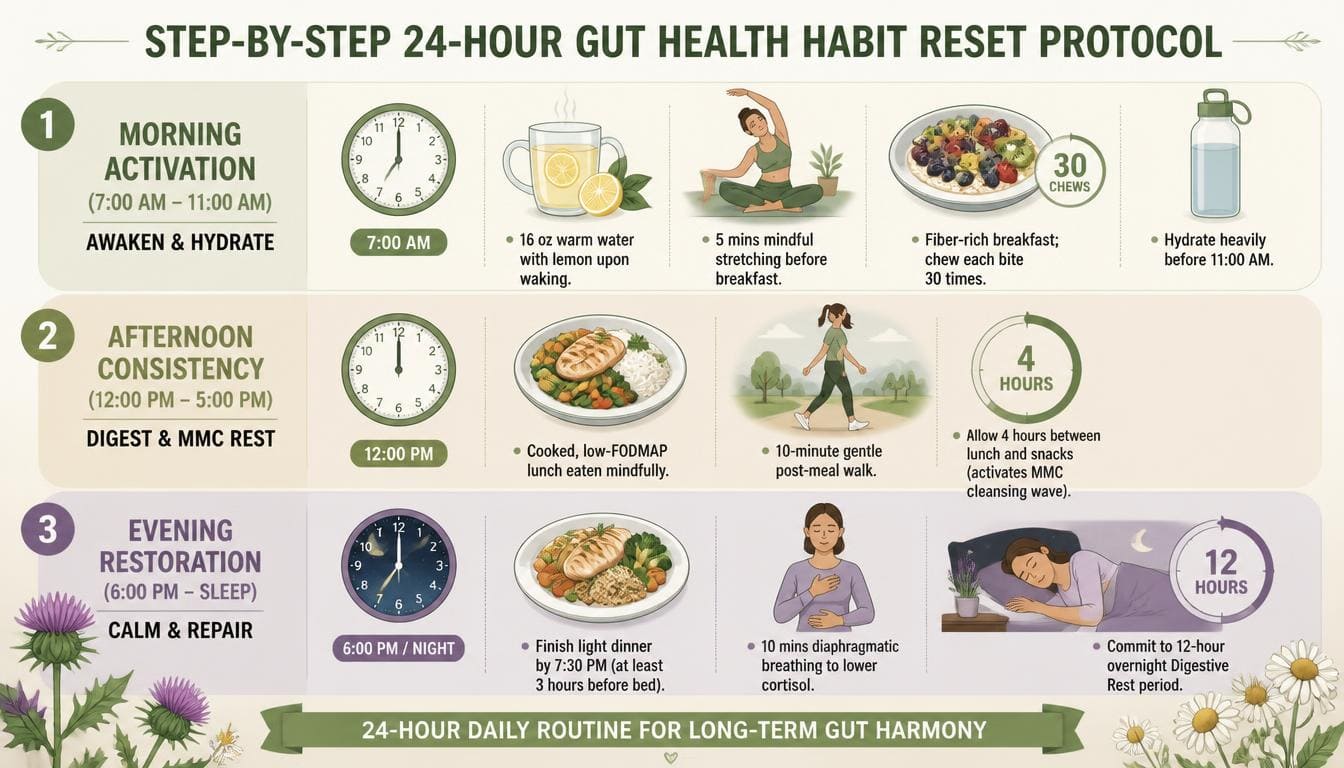
- Morning Activation (7:00 AM – 11:00 AM): Drink 16 oz of warm water with fresh lemon to stimulate gastrointestinal transit. Perform 5 minutes of mindful stretching before breakfast. Ensure your breakfast is rich in soluble fiber and chew every bite 30 times. Hydrate heavily before 11 AM.
- Afternoon Consistency (12:00 PM – 5:00 PM): Eat a cooked, easily digestible, low-FODMAP lunch mindfully, taken at a set time. Take a brief, 10-minute mindful walk after eating. Ensure a full 4 hours pass before consuming anything else to activate the MMC.
- Evening Restoration (6:00 PM – Sleep): Finish your light dinner by 7:30 PM (at least 3 hours before bed). Spend 10 minutes practicing deep diaphragmatic breathing before sleeping. Commit to the overnight 12-hour Digestive Rest period.
Frequently Asked Questions (FAQ)
1. How long does it take for gut health habits to prevent bloating long-term? While immediate changes in chewing and meal spacing can bring noticeable relief within a few days, complete long-term optimization—including balancing microbiota and calming visceral hypersensitivity—typically requires 4 to 8 weeks of consistent, dedicated habit maintenance.
2. Can healthy foods cause severe bloating? Yes. High-FODMAP (fermentable oligosaccharides, disaccharides, monosaccharides, and polyols) foods like onions, apples, broccoli, and lentils can cause severe gas generation if enzyme output is low or microbial imbalance (like SIBO) is present. Healthy habits focus on enzymatic support and slowly integrating these fibrous foods.
3. Why does drinking water during meals increase bloating? Diluting stomach acid and digestive enzymes during active digestion slows nutrient breakdown. Establishing the habit of hydrating heavily between meals ensures enzyme activity remains high and meal residue processes efficiently.
4. How does chewing food 30 times help prevent gas? Complete mechanical breakdown in the mouth increases the surface area for enzyme action and saturates food with salivary amylase, leading to more complete digestion in the upper stomach and less unabsorbed residue reaching the colon for rapid fermentation.
5. Does meal spacing disable natural digestive cleansing? No. Consistent snacking disables the Migrating Motor Complex (MMC), the natural cleansing wave. Meal spacing ensures the MMC has adequate time to sweep undigested food and bacteria from the small intestine, preventing premature fermentation and stagnation.
6. Can stress really cause chronic abdominal distension? Absolutely. Chronic stress alters gut motility, decreases enzyme output, increases intestinal permeability (Leaky Gut), and lower visceral sensitivity thresholds, making even normal gas volumes feel extremely painful and expanded.
7. Is probiotic supplementation essential for long-term bloating relief? Not always. While probiotics can support microbial balance over weeks, long-term habits that nourish existing gut flora (through varied soluble fiber) and maintain consistent motility are often more foundational than supplemental bacteria.
8. Why is slow and attentive eating critical for gut harmony? Eating mindfully activates the parasympathetic "Rest and Digest" nervous system, increasing enzyme production and intestinal motility. Rapid, distracted eating slows these vital functions.
9. Can I increase fiber intake too quickly and cause more bloating? Yes. Rapidly integrating large amounts of fiber (especially insoluble fiber) before enzyme output is high or motility is established can lead to massive fermentation-induced gas spikes. Establish hydration and chewing habits before aggressively adding fiber.
10. How do Traditional Botanical Extracts like Poria Cocos support long-term relief? Traditional botanicals are utilized for their carminative (gas-expelling), prokinetic (motility-enhancing), and inflammation-lowering compounds, offering standardized, high-potency support without requiring large fluid volumes. Extracts like Poria, Wild Yam, and Rehmannia soothe intestinal spasms and clear digestive dampness daily.
Reclaim Daily Comfort with Proven Digestive Habits
Chronic abdominal bloating and gas are fundamentally preventable by addressing their anatomical and microbial root causes. By establishing proactive, supportive habits that ensure efficient digestion, balanced gut microflora, consistent intestinal motility, and a calm gut-brain axis, you can restore permanent comfort.
To complement your proactive daily habits and ensure your digestive tract breaks down meals effortlessly while maintaining smooth intestinal transit, integrating a high-potency supplement is essential. We recommend supporting your wellness journey with the [Advanced Liver & Digestive Support Blend]. Formulated with premium botanicals, targeted active enzymes, and gut-soothing herbs, it provides daily defense against trapped gas, post-meal heaviness, and abdominal tightness.
👉 Check out this [Advanced Gut Rebuild Formula] for daily lining support and balanced inflammation levels.
keep reading
Gut Health & Supplements
DigestiStart Review: Can This Herbal Formula Help Restore Digestive Health & Relieve Bloating?
Gut Health & Supplements
The Ultimate Guide to GERD: Causes, Symptoms & Natural Relief
Gut Health & Supplements