
How to Get Rid of Bloating Fast: 7 Natural Remedies That Actually Work
Discover how to get rid of bloating fast with 7 science-backed natural remedies. Learn how to relieve trapped gas, support digestion, and stop stomach bloating quickly.
disclosure This article contains affiliate links. Purchases may earn us a commission at no extra cost to you. We only recommend products we've reviewed.
How to Get Rid of Bloating Fast: 7 Natural Remedies That Actually Work
Feeling uncomfortably full, puffy, or tight around your abdomen right after a meal is one of the most common digestive complaints today. Whether you are struggling to button your pants after dinner or experiencing sharp gas pains before an important meeting, stomach bloating can disrupt your day and drain your energy.
While occasional bloating is a normal part of human digestion, severe or frequent abdominal distension often signals an underlying imbalance in your digestive mechanics, gut microbiome, or lifestyle habits. The good news is that you do not have to wait hours for discomfort to pass. By understanding the biological triggers behind gas buildup and fluid retention, you can use targeted, science-backed natural strategies to restore comfort quickly.
In this comprehensive guide, we will explore why bloating happens, break down seven fast-acting remedies to relieve abdominal pressure, provide a step-by-step recovery protocol for heavy meals, and outline daily habits to prevent bloating from returning.
What Relieves Bloating Fast? Understanding the Root Causes
Before diving into fast-acting solutions, it is essential to distinguish between the two primary types of bloating: gas-based distension and fluid retention. While both cause a feeling of tightness in the midsection, their root causes and treatments differ significantly.
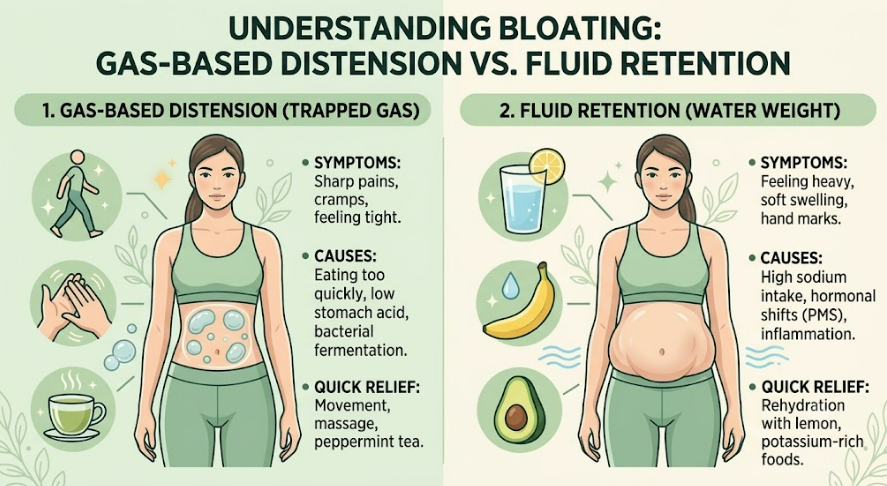
1. Gas-Based Distension and Fermentation
When your digestive system fails to break down food completely in the stomach and small intestine, undigested carbohydrates reach the large intestine intact. There, trillions of gut bacteria ferment these sugars, producing gases such as hydrogen, methane, and carbon dioxide.
If your gastric motility (the speed at which food moves through your digestive tract) is slow, these gases become trapped in the bends of your colon. The resulting pressure builds up against the abdominal wall, causing visible swelling, sharp pain, and audible rumbling.
Common drivers of gas-based bloating include:
- Eating Too Quickly: Swallowing excess air (aerophagia) while rushing through meals.
- Low Stomach Acid (Hypochlorhydria): Insufficient acid prevents proper protein breakdown, delaying stomach emptying.
- Gut Dysbiosis: An overgrowth of gas-producing bacteria in the small intestine (SIBO) or colon.
- Enzyme Deficiencies: Inability to break down lactose, fructose, or complex fiber (FODMAPs).
2. Fluid Retention and Systemic Swelling
Unlike trapped gas, fluid retention occurs when your body holds onto excess water in the tissues surrounding your abdomen. This often happens after consuming high-sodium meals, during hormonal fluctuations, or due to chronic systemic inflammation.
When sodium levels spike without adequate potassium and water intake, the body holds water to maintain osmotic balance, leaving you feeling heavy and puffy.
👉 Check out this [Advanced Gut Rebuild Formula] for daily lining support and balanced inflammation levels.
How to Relieve Bloating Quickly: 7 Science-Backed Remedies
When acute abdominal discomfort strikes, you need strategies that work rapidly to relax smooth digestive muscles, move trapped air, and balance fluids. Here are seven evidence-backed remedies designed for quick relief.
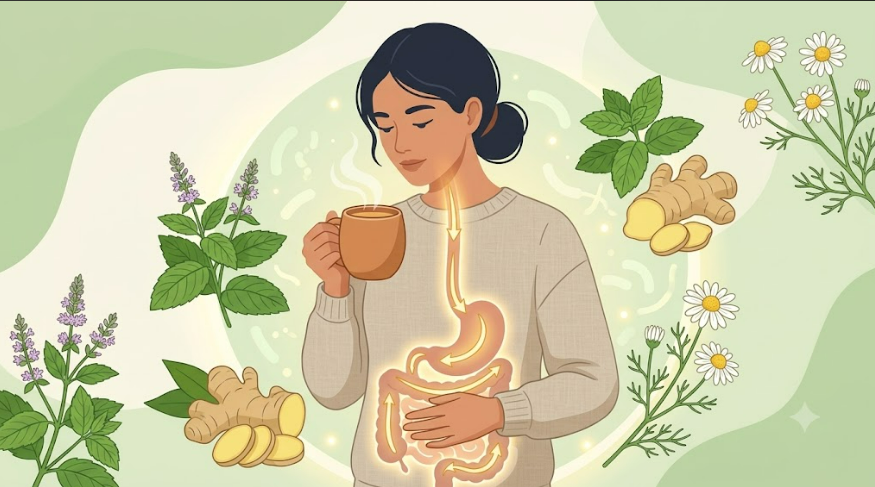
1. Sip Peppermint or Ginger Tea
Warm herbal infusions are among the fastest and gentlest ways to ease a spastic digestive tract.
- Peppermint (Mentha piperita): Contains L-menthol, an active compound with documented antispasmodic properties. Menthol relaxes the smooth muscles of the gastrointestinal tract, reducing muscle spasms and allowing trapped gas to pass through the intestines without causing sharp cramps.
- Ginger (Zingiber officinale): Acts as a natural prokinetic agent. Gingerols and shogaols stimulate stomach contractions, accelerating gastric emptying. By pushing food out of the stomach and into the small intestine faster, ginger prevents food from sitting idle and fermenting.
How to Use: Steep one tea bag or fresh slices of ginger/peppermint leaves in hot water for 8 to 10 minutes. Sip slowly while sitting upright after meals.
2. Practice Gentle Movement and Posture Adjustments
Slouching on the couch or lying down immediately after eating compresses the abdominal cavity, trapping gas bubbles in the anatomical bends of the colon.
Light physical activity uses gravity and muscle contractions to encourage peristalsis—the wave-like muscle movements that propel food and gas through the gut.
- 15-Minute Digestive Walk: A low-intensity stroll after eating speeds up gastric emptying and helps release trapped intestinal air.
- Yoga Poses for Gas Release:
- Wind-Relieving Pose (Pawanmuktasana): Lying on your back, bring your knees toward your chest and hug them gently to apply light pressure on the abdomen.
- Child's Pose (Balasana): Kneel on the floor, fold your torso forward over your thighs, and extend your arms. This relaxes the pelvic floor and abdominal wall.
- Seated Torso Twist: Sitting upright, gently rotate your upper body to one side to massage internal organs and promote motility.
3. Perform a Clockwise Abdominal Massage
Abdominal massage physically moves trapped gas along the anatomical path of the large intestine.
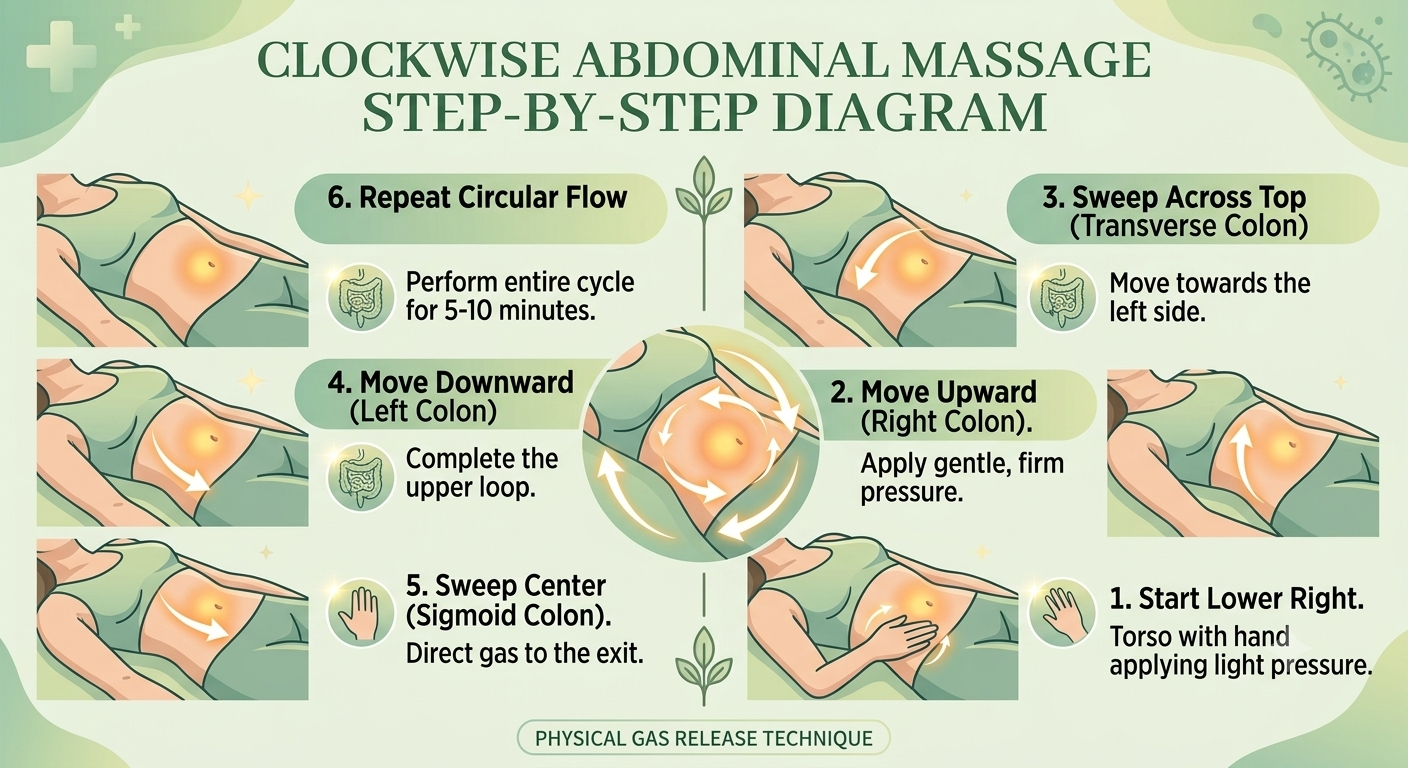
Follow this simple step-by-step technique:
- Step 1: Lie flat on your back on a comfortable surface with your knees slightly bent.
- Step 2: Place your fingertips on the lower right side of your abdomen (near your hip bone).
- Step 3: Apply gentle, firm pressure and move upward toward your right ribcage.
- Step 4: Sweep across the top of your stomach just beneath your ribs to the left side.
- Step 5: Move downward toward your left hip bone, sweeping toward the center of your pelvis.
- Step 6: Repeat this clockwise circular pattern for 5 to 10 minutes.
4. Use Targeted Digestive Enzyme Supplements
If you frequently experience bloating within 30 to 60 minutes of eating, your pancreas may not be producing enough digestive enzymes to match your meal volume or composition.
Taking a broad-spectrum digestive enzyme supplement provides your body with the tools needed to break down macronutrients before they reach gas-producing bacteria:
- Protease: Breaks down complex dietary proteins.
- Lipase: Assists in fat digestion to prevent delayed gastric emptying.
- Amylase & Glucoamylase: Carbohydrate-cleaving enzymes.
- Lactase: Breaks down milk sugars (lactose).
- Alpha-Galactosidase: Specifically breaks down complex oligosaccharides found in beans, legumes, and cruciferous vegetables (broccoli, cabbage).
👉 Check out this [Advanced Gut Rebuild Formula] for daily lining support and balanced inflammation levels.
5. Rehydrate with Lemon Water and Electrolytes
When experiencing fluid retention bloating, drinking more water might feel counterintuitive. However, dehydration causes the body to store water as a defensive measure.
Drinking room-temperature water mixed with squeezed fresh lemon juice accomplishes two things:
- Flushes Excess Sodium: Hydration encourages the kidneys to excrete excess sodium through urine, reducing fluid buildup in abdominal tissues.
- Stimulates Bile Production: The citric acid in lemon juice stimulates liver bile production and stomach acid secretion, setting the stage for smoother fat breakdown.
Adding a pinch of unrefined sea salt or potassium-rich coconut water helps restore electrolyte balance without causing additional swelling.
6. Consider Activated Charcoal or Natural Absorbents
For acute, intense gas pressure caused by food sensitivities, food-grade activated charcoal can provide rapid relief.
Activated charcoal has a porous structure that binds to gas-producing byproducts and toxins in the gastrointestinal tract, preventing them from interacting with the gut lining and causing swelling.
Safety Note: Because activated charcoal is highly absorbent, it can also bind to essential nutrients and prescription medications. Use it sparingly, away from meals and oral medications (at least 2 hours apart).
7. Support Your Microbiome with Probiotic and Botanical Formulas
While instant remedies handle immediate symptoms, resolving chronic bloating requires addressing gut dysbiosis—an imbalance between beneficial and opportunistic gut microbes.
- Probiotic Strains: Strains such as Bifidobacterium infantis, Lactobacillus plantarum, and Bifidobacterium lactis have been shown in clinical trials to reduce abdominal distension, regulate bowel frequency, and lower gas production.
- Botanical Carminatives: Herbal extracts like fennel seed, chamomile, and cumin contain volatile oils that soothe inflamed mucous membranes and reduce intestinal smooth muscle spasms.
How to Get Rid of Stomach Bloating Fast After Heavy Meals
If a rich, heavy, or high-sodium meal leaves you feeling overwhelmed, follow this structured 3-phase recovery routine over the next two hours:
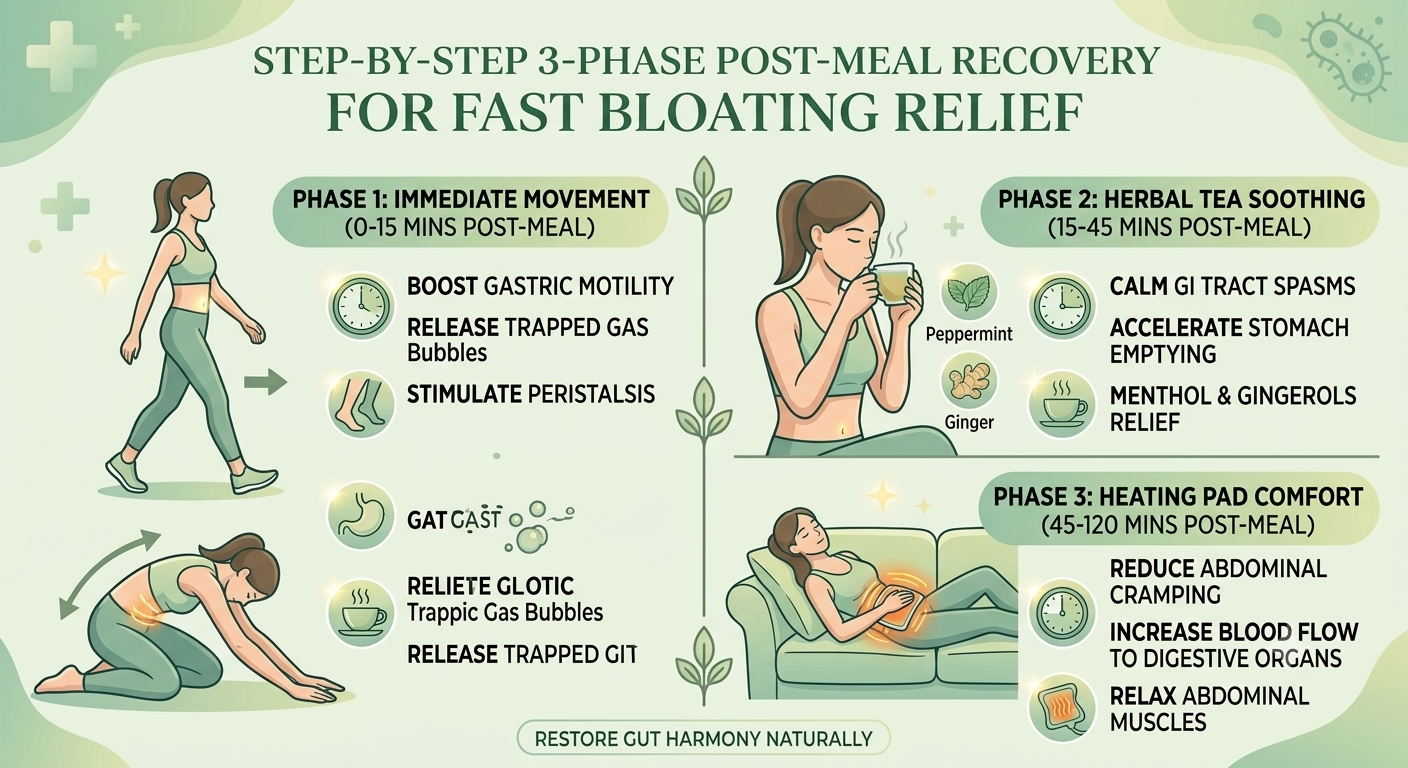
- Phase 1: Immediate Movement (0–15 mins post-meal): Stay upright to avoid acid reflux. Avoid tight waistbands and take a gentle 10-minute walk to boost gastric motility and stimulate peristalsis.
- Phase 2: Herbal Tea Soothing (15–45 mins post-meal): Sip 8 oz of warm peppermint or ginger tea to calm GI tract spasms and accelerate stomach emptying.
- Phase 3: Heating Pad Comfort (45–120 mins post-meal): Apply a warm heating pad to your lower abdomen for 15 minutes to increase blood flow, relax abdominal muscles, and reduce cramping.
Long-Term Habits to Prevent Bloating Before It Starts
Quick remedies are essential for acute relief, but preventing bloating requires tweaking daily dietary habits:
- Chew Food Thoroughly: Digestion begins in the mouth. Chewing each bite 20 to 30 times breaks down food mechanically and mixes it with salivary amylase, reducing the workload on your stomach.
- Identify FODMAP Triggers: High-FODMAP foods draw water into the gut and ferment rapidly. Common triggers include garlic, onions, wheat, beans, apples, and artificial sweeteners (sorbitol, xylitol).
- Manage Stress and the Vagus Nerve: Chronic stress activates the sympathetic nervous system ("fight or flight"), shutting down digestive secretions and slowing motility. Practicing deep diaphragmatic breathing before meals activates the parasympathetic state ("rest and digest").
- Avoid Carbonated Beverages: Sparkling water, sodas, and beer introduce carbon dioxide directly into your digestive tract, guaranteeing gas buildup.
Frequently Asked Questions (FAQ)
- How long does it take to get rid of bloating? Acute gas bloating caused by trapped air or mild indigestion often improves within 30 to 60 minutes when using warm carminative teas, light movement, and abdominal massage. Bloating stemming from fluid retention, hormonal shifts, or severe constipation may take several hours or up to a day to resolve fully.
- Can drinking water help ease bloating quickly? Yes. Drinking plain, room-temperature or warm water helps flush out excess sodium responsible for fluid retention. It also keeps dietary fiber moving smoothly through your colon, preventing constipation-related gas buildup.
- Why does my stomach get bloated every time I eat? Frequent post-prandial (after-meal) bloating often points to low stomach acid, digestive enzyme insufficiency, gut dysbiosis, or food intolerances. If bloating occurs consistently regardless of what you eat, consult a healthcare professional to rule out underlying conditions.
- Does apple cider vinegar help with bloating? Raw apple cider vinegar (ACV) diluted in water before meals may assist individuals with low stomach acid by lowering gastric pH. This helps digest proteins more efficiently and signals the stomach to empty into the small intestine faster.
- Is peppermint tea better than ginger tea for gas relief? Both are excellent but work differently. Peppermint tea is best for relieving smooth muscle cramps and trapped gas in the lower digestive tract. Ginger tea is superior for accelerating stomach emptying when you feel overfull or nauseous.
- Can walking after eating really reduce stomach swelling? Yes. A low-intensity 10-to-15-minute walk stimulates gut motility and peristalsis—the mechanical waves that push trapped gas bubbles through the colon—preventing localized gas accumulation.
- How do digestive enzymes stop bloating before it starts? Digestive enzyme supplements break down complex proteins, fats, and hard-to-digest carbohydrates in the stomach. By preventing undigested food particles from reaching the large intestine, you reduce the amount of fuel available for gas-producing bacteria.
- What is the difference between bloating from gas and water weight? Gas-based bloating feels hard, tight, or crampy, often accompanied by visible stomach extension that comes and goes throughout the day. Water retention feels soft, puffy, and heavy, often affecting the fingers, ankles, and face in addition to the abdomen.
- Can stress alone cause severe abdominal bloating? Absolutely. The brain and gut communicate through the vagus nerve. When stress activates the "fight or flight" mode, digestive organ motility slows down, digestive enzyme production decreases, and swallowed air accumulates, leading to rapid bloating.
- When should I see a doctor about abdominal bloating? While occasional bloating is harmless, seek medical evaluation if your symptoms are accompanied by severe or persistent pain, unexplained weight loss, chronic diarrhea, fever, blood in the stool, or recurring vomiting.
👉 Check out this [Advanced Gut Rebuild Formula] for daily lining support and balanced inflammation levels.
keep reading
Gut Health & Supplements
DigestiStart Review: Can This Herbal Formula Help Restore Digestive Health & Relieve Bloating?
Gut Health & Supplements
The Ultimate Guide to GERD: Causes, Symptoms & Natural Relief
Gut Health & Supplements