
Loud Stomach Gurgling & Trapped Gas in Upper Abdomen: Causes, Borborygmi & How to Restore Motility
Struggling with loud stomach bubbling, gurgling, and painful trapped gas in your upper abdomen? Discover what causes borborygmi and how to clear trapped wind fast.

disclosure This article contains affiliate links. Purchases may earn us a commission at no extra cost to you. We only recommend products we've reviewed.
featured in this review
DigestiStart
Advanced bioactive botanical formula that activates smooth muscle peristalsis, clears pelvic venous congestion, and eliminates stubborn bloating without harsh laxatives.
Loud Stomach Gurgling & Trapped Gas in Upper Abdomen: Causes, Borborygmi & How to Restore Motility
Few symptoms are as socially embarrassing and physically frustrating as loud, uncontrollable stomach noises during a quiet meeting, accompanied by an intense feeling of trapped gas in the upper abdomen. For millions of people, even drinking a glass of water or eating a modest meal triggers violent bubbling sensations, tight epigastric distension, and pressure right beneath the rib cage.
The standard assumption is that stomach gurgling is simply hunger or harmless swallowed air.
However, when loud abdominal churning occurs consistently after meals or alongside stubborn fullness, the root issue is rarely just trapped wind. It points to a breakdown in neuromuscular digestive coordination known as borborygmi combined with stalled enteric motility.
When the digestive tract loses its downward rhythmic contractions, gas, bile, and fluid become trapped in localized segments, creating high-resonance bubbling sounds and persistent upper abdominal bloating.
What Causes Loud Stomach Gurgling and Bubbling (Borborygmi)?
The clinical term for audible digestive churning is borborygmi. Acoustically, these sounds are generated when liquid chyme, digestive secretions, and gas pockets are forced through the hollow muscular tube of the gastrointestinal tract.
In a healthy digestive system, smooth muscle contractions propel this mixture quietly and methodically downward. However, excessive noise and pressure develop through two distinct pathways:
- 1. Enteric Hypo-Motility with Localized Spasm: When intestinal transit stalls, gas cannot evacuate downward. As intestinal smooth muscle initiates forceful, uncoordinated contractions to push against stagnant fluid pools, the resulting turbulence creates loud gurgling, splashing, and popping sensations.
- 2. Rapid Microbial Fermentation: When opportunistic bacteria colonize the upper small intestine, they rapidly ferment undigested carbohydrates. This produces sudden surges of hydrogen and methane gases that churn violently through liquid digestive juices.
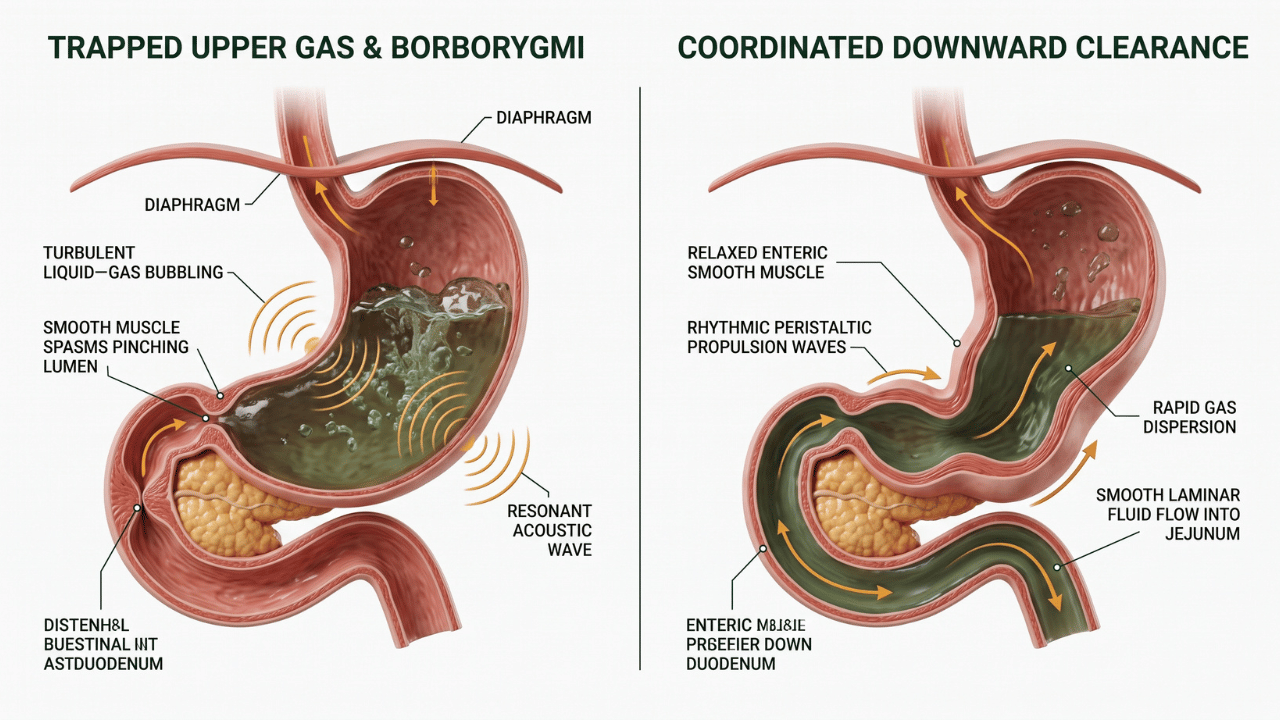
Figure 1: Pathophysiology of Borborygmi — How trapped gas pockets, delayed clearance, and uncoordinated smooth muscle contractions create high-resonance intestinal sounds.
The Hidden Trap: Why Antacids Fail to Silence Stomach Noises
When upper abdominal gurgling and pressure peak, many reach for antacids or gas drops. While simethicone breaks surface tension on large bubbles, it does not address the underlying muscular stall. Without restoring downward peristaltic drive, the gas quickly reforms, leaving the upper abdomen painfully distended.
Trapped Gas in Upper Abdomen vs. Lower Gut Bloating
Understanding where gas is trapped in your digestive tract is essential for choosing the right recovery strategy:
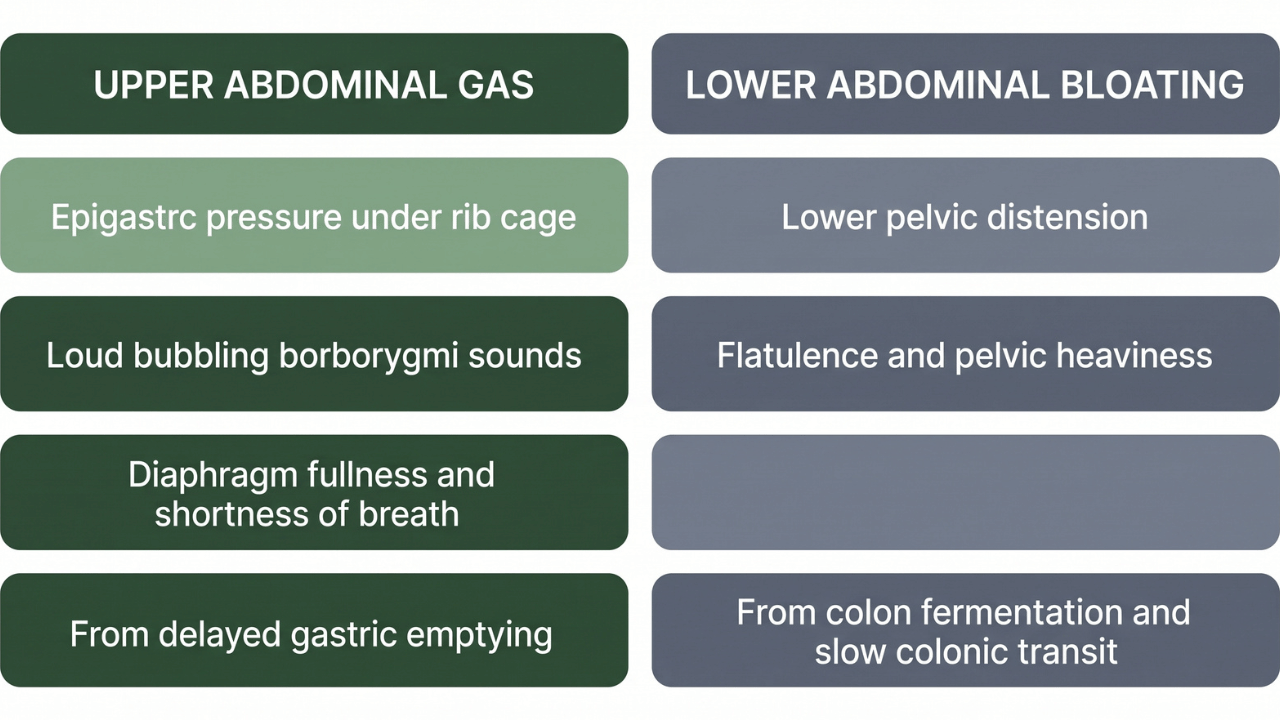 Table 1: Clinical Differentiation — Upper GI Trapped Gas Mechanics vs. Lower Colonic Bloating.
4 Hidden Triggers of Upper GI Gas Pressure & Sluggish Transit
If your digestive tract struggles with loud bubbling and trapped wind high in the stomach, four physiological mechanisms are typically responsible:
1. Migrating Motor Complex (MMC) Inactivity
Between meals, the digestive tract depends on an electrical sweeping wave called the Migrating Motor Complex to clear residual fluid, cellular debris, and gas bubbles. If frequent grazing or high stress shuts down the MMC, fluids stagnate and gas accumulates rapidly, amplifying stomach bloating after eating.
2. Visceral Hypersensitivity and Enteric Spasms
When the enteric nervous system becomes irritated, intestinal smooth muscles undergo irregular spasms rather than rhythmic peristalsis. These spasms create narrow pinch points where gas becomes mechanically trapped under the rib cage, often leading to acute splenic flexure discomfort.
3. Sympathetic Stress Overdrive
Elevated cortisol and adrenaline constrict mesenteric blood vessels and inhibit vagus nerve signaling. This reduces digestive enzyme secretion and freezes smooth muscle motility, causing noticeable stress-induced gut stagnation and loud churning sounds.
4. Overnight Fluid and Gas Retention
When digestive motility slows significantly during the evening, food residue ferments undisturbed during sleep. This leads to intense evening distension and morning tightness, where the upper stomach feels like an overinflated balloon upon waking.
👉 Explore this Advanced Botanical Digestive Formula formulated with standardized Cnidium Monnieri and Polygala to ignite smooth peristaltic contractions and calm intestinal spasms.
4 Clinical Strategies to Clear Trapped Upper Gas & Quiet Borborygmi
- Practice 10-Minute Upright Ambulation: Taking a gentle walk after eating utilizes gravity and diaphragmatic movement to encourage the gastroduodenal transit of trapped gas into the lower intestines.
- Maintain 4-Hour Inter-Meal Fasting: Avoid grazing between meals to allow the Migrating Motor Complex enough time to execute its full 90-minute electrical sweeping cycle.
- Incorporate Warming Carminatives: Fresh ginger root, crushed fennel seeds, and peppermint oil relax gastrointestinal smooth muscle, dissipating large gas pockets and easing upper abdominal pressure.
- Reactivate Enteric Microcirculation: Warm herbal infusions and targeted prokinetic botanicals deliver necessary blood flow and neuromuscular tone to sluggish digestive walls.
Frequently Asked Questions (FAQ)
1. Why does my stomach growl loudly even when I am not hungry?
Audible borborygmi when full is caused by the vigorous churning of liquids, digestive secretions, and trapped gas against spastic or sluggish intestinal walls. It reflects uncoordinated enteric motility and rapid gas fermentation rather than an empty stomach.
2. Can trapped gas in the upper abdomen cause chest, back, or shoulder pain?
Yes. Gas trapped in the fundus of the stomach or the splenic flexure pushes upward against the diaphragm. This distension compresses the phrenic and vagus nerve branches, projecting sharp, aching discomfort into the left chest, rib cage, shoulder blade, and mid-back.
3. What causes the sensation of "bubbles popping" or fluttering in the stomach?
This fluttering sensation occurs when pressurized gas pockets push through narrow, fluid-filled segments of the duodenum and jejunum during delayed gastric emptying and uncoordinated smooth muscle contractions.
4. Why don't standard antacids or laxatives fix upper stomach gurgling?
Antacids only neutralize gastric acid without restoring mechanical peristalsis, and osmotic laxatives work primarily in the lower colon. Neither activates the gastroduodenal neuromuscular pacemakers needed to sweep gas and fluid downward.
5. What is the difference between normal hunger sounds and pathological borborygmi?
Hunger sounds occur during Phase III of the Migrating Motor Complex (MMC) as an empty stomach clears residual debris. Pathological borborygmi occurs shortly after eating or persists throughout the day, accompanied by abdominal distension, cramping, trapped wind, and delayed emptying.
6. Can drinking water trigger loud stomach noises and upper bloating?
Yes. In a gut with sluggish motility or visceral hypersensitivity, the sudden fluid volume stretches the gastric wall. If the pyloric sphincter fails to relax promptly, the water churns against trapped gas pockets, creating audible sloshing sounds and reflex abdominal wall relaxation.
7. Why is my stomach making sloshing noises hours after drinking fluids?
A sloshing sound (succussion splash) heard several hours after consuming liquids indicates delayed gastric emptying (gastroparesis or functional dyspepsia). Fluid and gas remain pooled in the stomach chamber instead of progressing into the duodenum.
8. Does chronic stress or anxiety make stomach noises worse?
High sympathetic "fight-or-flight" tone constricts mesenteric blood vessels and suppresses vagal nerve signaling. This halts coordinated downward peristalsis while triggering localized intestinal smooth muscle spasms that trap gas and amplify acoustic resonance.
9. Why does trapped gas make it hard to take a deep breath?
When large gas pockets accumulate in the stomach and transverse colon, they exert continuous upward pressure against the diaphragm. This physical displacement restricts diaphragmatic excursion, causing a sensation of air hunger or shallow breathing.
10. How does SIBO contribute to upper abdominal churning and gas?
Small Intestinal Bacterial Overgrowth (SIBO) occurs when bacteria colonize the upper small intestine. When you consume carbohydrates, these bacteria ferment the food within minutes, producing large volumes of hydrogen or methane gas that violently churn through digestive liquids.
11. Can poor posture or sitting at a desk all day worsen upper trapped gas?
Sitting hunched over compresses the abdominal cavity, constricts mesenteric blood circulation, and physically kinks the splenic and hepatic flexures of the colon. This mechanical compression prevents gas from traveling downward, creating severe upper bloating.
12. Does carbonated water or sparkling beverages worsen borborygmi?
Carbonated drinks introduce dissolved carbon dioxide gas directly into the gastric fundus. In an individual with impaired downward motility, this added volume cannot be cleared efficiently, worsening gastric wall stretching and audible churning sounds.
13. What sleeping position is best for relieving trapped upper stomach gas?
Sleeping on your left side utilizes anatomical gravity to keep gastric acid below the esophagus while aligning the stomach and duodenum for optimal gastroduodenal emptying. Elevating your torso slightly also reduces upward diaphragmatic gas pressure.
14. How do carminative herbs help silence loud gut noises?
Carminatives such as gingerols, menthol, and fennel volatile oils act as mild antispasmodics on enteric smooth muscle. They reduce visceral wall tension, dissipate large gas pockets into microscopic bubbles, and allow quiet, smooth transit.
15. How do prokinetic botanical formulas resolve trapped gas differently from digestive enzymes?
Digestive enzymes chemically break down food macronutrients in the stomach pouch. Prokinetic botanicals act on the enteric nervous system and smooth muscle pacemakers (Interstitial Cells of Cajal), physically driving neuromuscular sweeping waves that evacuate stagnant gas and fluid downward.
Restore Downward Peristalsis: Quiet the Noise and Relieve Pressure
Living with disruptive gut noises, painful trapped wind, and upper abdominal fullness does not mean you have to eliminate every food from your life.
By shifting focus toward restoring coordinated neuromuscular peristalsis and calming visceral nerve spasms, you give your digestive tract the momentum it needs to clear trapped gas silently and effortlessly.
🌿 Restore Smooth Downward Motility with DigestiStart: The advanced botanical prokinetic matrix formulated to stimulate sweeping MMC waves, soothe enteric spasms, and clear upper abdominal gas pressure without harsh laxatives.
Check Official Availability & Claim Your Supply of DigestiStart Today →
keep reading
Gut Health & Supplements
DigestiStart Review: Can This Herbal Formula Help Restore Digestive Health & Relieve Bloating?
Gut Health & Supplements
The Ultimate Guide to GERD: Causes, Symptoms & Natural Relief
Gut Health & Supplements