
Low Fermentation Diet: What to Eat, Foods to Avoid & A 7-Day Meal Plan for SIBO and Gut Motility
Discover the Low Fermentation Diet (LFD) for SIBO, slow motility, and severe bloating. Includes an easy-to-digest food list, meal timing rules, and a 7-day meal plan.

disclosure This article contains affiliate links. Purchases may earn us a commission at no extra cost to you. We only recommend products we've reviewed.
featured in this review
DigestiStart
Advanced bioactive botanical formula that activates smooth muscle peristalsis, clears pelvic venous congestion, and eliminates stubborn bloating without harsh laxatives.
Low Fermentation Diet: What to Eat, Foods to Avoid & A 7-Day Meal Plan for SIBO and Gut Motility
If you have tried cutting out endless food groups on strict elimination diets—only to find that eating a simple raw salad or a handful of almonds still leaves your stomach painfully distended within 30 minutes—the problem is not necessarily a food allergy.
The underlying issue is rapid bacterial fermentation inside a sluggish gastrointestinal tract.
When your Migrating Motor Complex (MMC)—the sweeping neuromuscular wave of the small intestine—is weak, food lingers in the upper gut far too long. Opportunistic bacteria feed on lingering complex sugars, producing massive volumes of hydrogen and methane gas that trigger debilitating bloating, constipation, and visceral discomfort.
Developed by leading gastroenterologists specializing in Small Intestinal Bacterial Overgrowth (SIBO) and gut motility disorders, the Low Fermentation Diet (LFD) is designed to break this vicious cycle.
Unlike hyper-restrictive protocols that leave you malnourished, the Low Fermentation Diet focuses on eating warm, easily absorbable carbohydrates and proteins while integrating critical digestive rest windows to reactivate your natural intestinal motility.
What Is the Low Fermentation Diet (LFD)?
The Low Fermentation Diet is an evidence-informed nutritional framework designed specifically for individuals with SIBO, Intestinal Methanogen Overgrowth (IMO), gastroparesis, and slow transit motility.
While traditional low-FODMAP diets seek to eliminate nearly all fermentable short-chain carbohydrates for months at a time, the Low Fermentation Diet focuses on a simpler physiological principle: consume carbohydrates that digest rapidly in the stomach and upper duodenum before bacteria can ferment them.
The Core Pillars of Low Fermentation Living:
- Rapid Small-Intestinal Absorption: Prioritize easily digestible carbohydrates (white jasmine rice, peeled potatoes, sourdough, well-cooked squash) over complex, slow-fermenting fibers.
- Thermal Preparation: Warm, cooked, and pureed textures minimize the physical workload on stomach acid and enzymes, preventing food from stagnating.
- Meal Spacing (The 4-Hour Rule): Fasting for 3.5 to 4 hours between meals allows the Migrating Motor Complex (MMC) to initiate sweeping cleansing waves that push leftover debris downward into the colon.
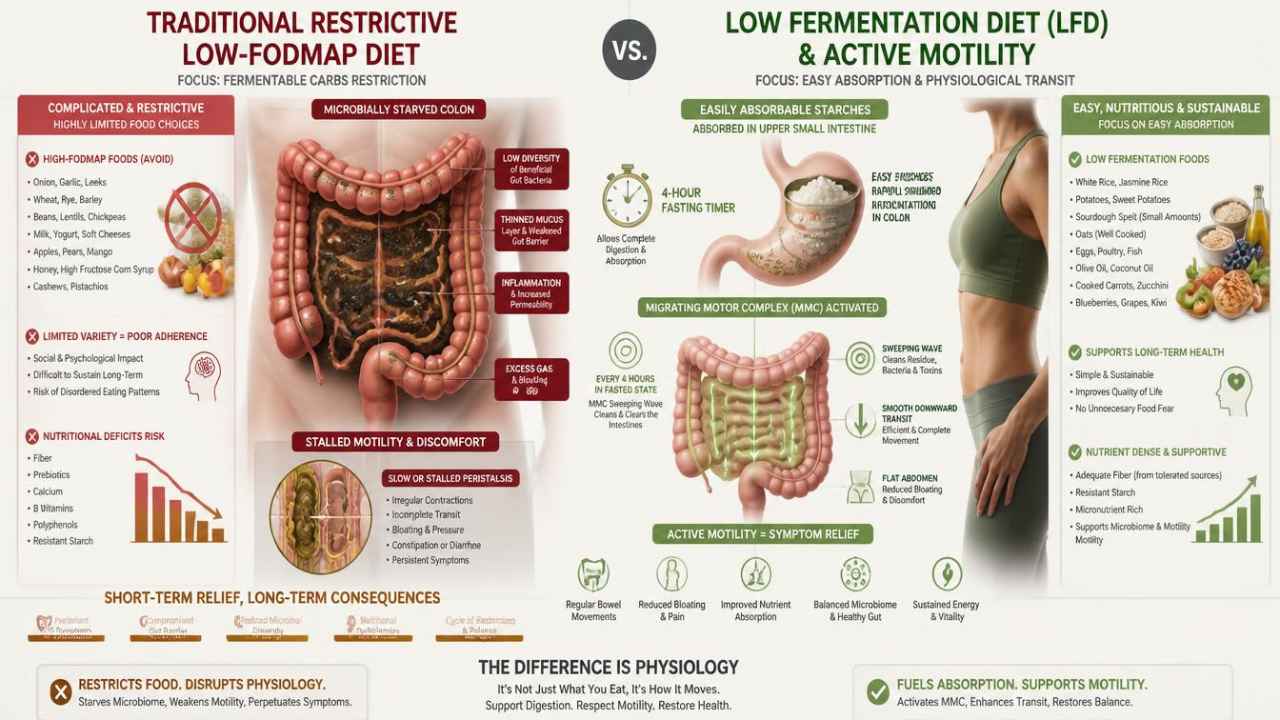
Dietary Mechanics — How the Low Fermentation Diet combines easily absorbable carbohydrates with structured digestive rest to support the Migrating Motor Complex (MMC).
- Alt Text: Medical infographic illustrating differences between restrictive Low FODMAP and the sustainable Low Fermentation Diet with MMC timing
- Legenda: Figure 1: Dietary Mechanics — How the Low Fermentation Diet combines easily absorbable carbohydrates with structured digestive rest to support the Migrating Motor Complex (MMC).
What to Eat vs. Foods to Avoid: The Definitive Master List
To reduce fermentation and gas production while keeping your diet nutrient-dense, use this practical food list:
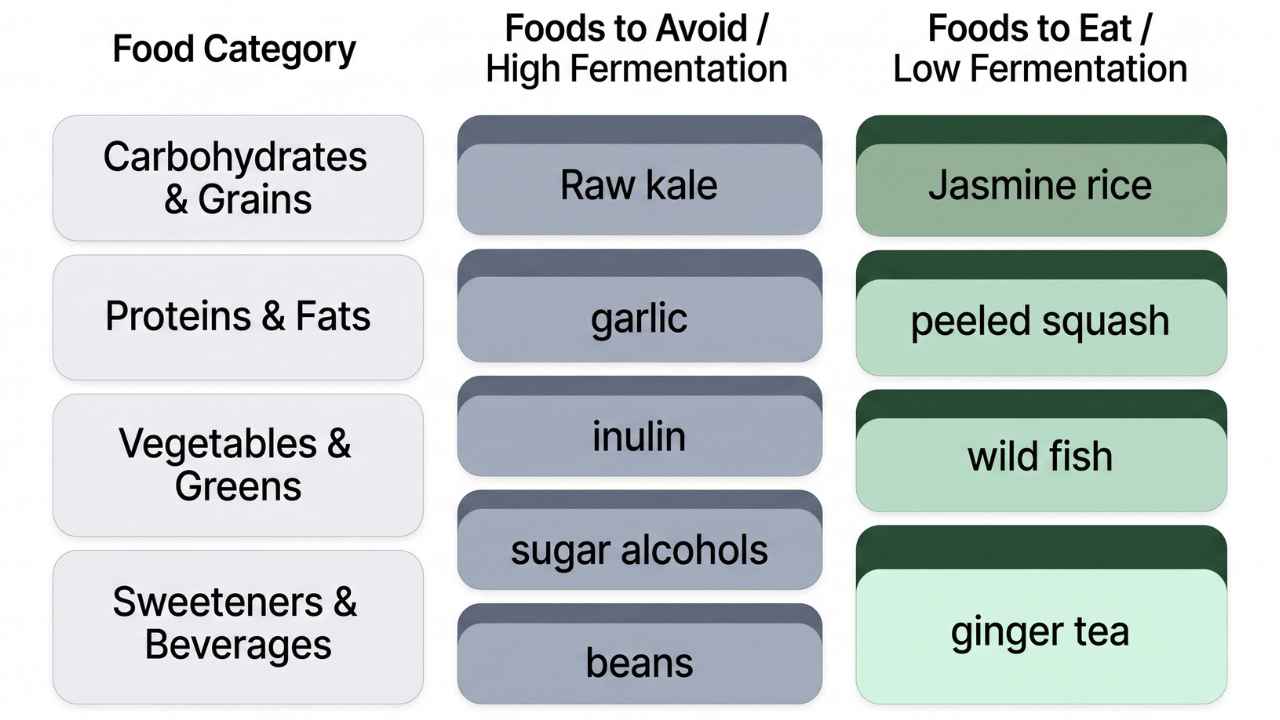
The Low Fermentation Food Guide — Categorized breakdown of easily absorbable staples versus high-fermentation gut irritants.
- Alt Text: Complete food list table showing low fermentation easily digestible foods versus high fermentation bacterial triggers
- Legenda: Table 1: The Low Fermentation Food Guide — Categorized breakdown of easily absorbable staples versus high-fermentation gut irritants.
Low-Fermentation Foods to Prioritize:
- Lean & Clean Proteins: Free-range chicken breast, turkey, wild salmon, cod, eggs, and lean beef cuts.
- Easily Absorbable Carbohydrates: Well-cooked white jasmine or basmati rice, peeled white/sweet potatoes, gluten-free oat porridge, and traditional fermented sourdough bread.
- Cooked, Low-FODMAP Vegetables: Peeled zucchini, carrots, tender spinach, peeled cucumbers, kabocha squash, and green beans (cooked until soft).
- Low-Residue Fruits: Ripe bananas, blueberries, raspberries, peeled kiwi, cantaloupe, and freshly squeezed lemon/lime.
- Warming Healthy Fats: Extra virgin olive oil, avocado oil, coconut oil, grass-fed ghee, and small amounts of creamy almond butter.
- Carminative Spices: Fresh peeled ginger root, turmeric, fresh herbs (parsley, basil, cilantro, rosemary), and Ceylon cinnamon.
High-Fermentation Foods to Avoid:
- High-Fermentable Sweeteners: High-fructose corn syrup, agave, sorbitol, xylitol, mannitol, and maltitol (common in protein bars and diet snacks).
- Cruciferous & Inulin-Rich Vegetables: Raw kale, broccoli, cauliflower, Brussels sprouts, raw onions, garlic, chicory root, and Jerusalem artichokes.
- Legumes & Tough Pulses: Kidney beans, black beans, lentils, chickpeas, and unfermented soy products.
- Heavy Dairy with High Lactose: Unfermented cow's milk, ice cream, soft unripened cheeses, and high-sugar sweetened yogurts.
- Dense Raw Foods: Giant raw green salads, raw nuts, and unpeeled tough-skinned fruits that stall gastric emptying.
👉 [Discover how a calibrated botanical motility matrix combining Osthole and Polygala accelerates gastric emptying and keeps food moving downward smoothly ].
7-Day Low Fermentation Meal Plan for SIBO & Sluggish Transit
Here is a practical, flavorful 7-day meal plan designed to keep gas fermentation low while nourishing your body:
Day 1:
- Breakfast: 2 scrambled eggs cooked in ghee with warm sourdough toast and a cup of fresh peeled ginger tea.
- Lunch: Shredded poached chicken breast over warm white jasmine rice, drizzled with olive oil and side of steamed peeled zucchini.
- Dinner: Pan-seared wild salmon filet with roasted sweet potato mash (peeled) and tender baby spinach sautéed in olive oil.
Day 2:
- Breakfast: Warm oatmeal prepared with water or almond milk, topped with blueberries, Ceylon cinnamon, and 1 tsp almond butter.
- Lunch: Roasted turkey breast slices with warm quinoa and soft steamed carrot coins seasoned with sea salt.
- Dinner: Grass-fed lean beef patty served with a baked peeled white potato, extra virgin olive oil, and steamed green beans.
Day 3:
- Breakfast: 2 soft-boiled eggs with half an avocado, warm rice cakes, and hot fennel tea.
- Lunch: Flaked cod fish bowl with basmati rice, peeled cucumber ribbons, and a light lemon-ginger dressing.
- Dinner: Slow-cooked shredded chicken thigh stewed in homemade chicken broth with tender diced carrots and parsnips.
Day 4:
- Breakfast: Gluten-free sourdough toast topped with creamy almond butter, sliced ripe banana, and a pinch of cinnamon.
- Lunch: Grilled chicken salad bowl made with tender butter lettuce (light dressing), warm white rice, and roasted peeled squash.
- Dinner: Baked trout filet with pureed butternut squash soup and a side of steamed peeled zucchini.
Day 5:
- Breakfast: Omelet with baby spinach and lactose-free aged parmesan cheese, accompanied by a cup of hot ginger-turmeric tea.
- Lunch: Grass-fed beef stir-fry with tender zucchini slices, carrots, and white jasmine rice (seasoned with coconut aminos).
- Dinner: Herb-roasted chicken breast with creamy mashed peeled potatoes and tender steamed green beans.
Day 6:
- Breakfast: Warm chia pudding made with unsweetened almond milk, topped with ripe raspberries and toasted pumpkin seeds.
- Lunch: Canned wild tuna salad prepared with olive oil and fresh lemon juice, served over warm white rice and steamed carrots.
- Dinner: Pan-seared lean pork loin chops with roasted sweet potato medallions and sautéed tender spinach.
Day 7:
- Breakfast: 2 fried eggs over a bed of warm white rice seasoned with sea salt and a side of fresh blueberries.
- Lunch: Slow-cooked bone broth chicken soup with tender carrots, celery leaves, and gluten-free rice noodles.
- Dinner: Grilled salmon with baked potato wedges (peeled), steamed zucchini, and an evening cup of soothing chamomile-fennel tea.
👉Explore this [Advanced Botanical Digestive Formula formulated with standardized Cnidium Monnieri, Polygala, and Radix Achyranthis to ignite peristalsis alongside your low-fermentation meals.
3 Essential Rules to Maximize Low-Fermentation Results
- 1. Strictly Maintain 4-Hour Meal Gaps: Grazing constantly stops the Migrating Motor Complex (MMC) from ever turning on. Give your stomach 4 hours of rest between breakfast, lunch, and dinner.
- 2. Always Choose Cooked Over Raw: Cooking breaks down tough plant cellular fibers, meaning your stomach acid and small intestine do not have to struggle to absorb nutrients.
- 3. Hydrate Between Meals, Not During: Drinking large glasses of ice water during meals dilutes gastric hydrochloric acid and digestive enzymes, leading to delayed emptying and premature fermentation.
Frequently Asked Questions (FAQ)
1. How is the Low Fermentation Diet different from the Low FODMAP Diet?
The Low FODMAP diet is a strict, short-term elimination protocol that restricts many healthy foods based strictly on carbohydrate chemistry. The Low Fermentation Diet is a more sustainable, long-term approach that focuses on easily absorbable carbohydrates, food texture, and meal timing (the 4-hour fasting gap) to support physical motility.
2. Can I eat rice and potatoes on a Low Fermentation Diet?
Yes. White jasmine/basmati rice and peeled white or sweet potatoes are ideal because their starches are rapidly absorbed in the upper small intestine, leaving almost zero fermentable residues for bacteria.
3. Why are raw salads and smoothies discouraged for slow motility?
Raw fibrous vegetables and ice-cold smoothies cause mesenteric vasoconstriction (cold gut stagnation) and require significant mechanical churning. In a sluggish gut, raw fibers sit in the digestive tract and ferment, worsening bloating.
4. How long should I stay on the Low Fermentation Diet?
Many individuals with chronic motility disorders or SIBO use the Low Fermentation Diet as a sustainable long-term lifestyle protocol for 3 to 6 months while rebuilding their gut motility and enteric nerve tone.
5. Why is snacking between meals bad for SIBO and bloating?
Every time you eat or drink calories, the intestinal Migrating Motor Complex (MMC) cleansing wave shuts down. Maintaining 4 hours between meals allows the MMC to execute its 90-minute sweeping cycle to clear bacteria and food debris.
6. Can the Low Fermentation Diet help with Methane SIBO (IMO) and constipation?
Yes. Methane gas slows down intestinal transit by up to 70%. By eliminating fermentable prebiotic fibers that feed methanogenic archaea, the diet reduces methane production and speeds up bowel transit.
7. What types of bread are allowed on this diet?
Traditional long-fermented sourdough bread and gluten-free white bread are generally well tolerated because the gluten proteins and fermentable sugars have already been broken down by wild yeasts.
8. Are digestive enzymes or motility supplements needed with this diet?
While the diet reduces the food available for bacterial fermentation, combining it with a prokinetic botanical formula (like Cnidium Monnieri/Osthole and Polygala) actively stimulates the smooth muscle contractions needed to prevent future bacterial stagnation.
9. Can I drink coffee or tea on the Low Fermentation Diet?
Yes. Black coffee, green tea, and carminative herbal teas (ginger, fennel, peppermint) are allowed. Avoid adding high-lactose dairy milk, sweetened syrups, or sugar alcohols.
10. How quickly does bloating improve after starting a Low Fermentation Diet?
Noticeable reductions in gas volume, evening abdominal distension, and post-meal fullness are typically experienced within 48 to 72 hours of following the meal plan and spacing rules.
Combine Low Fermentation Nutrition with Prokinetic Botanical Drive
Dietary modifications are essential to eliminate the fuel for bacterial fermentation, but restoring true, long-term regularity requires waking up the dormant neuromuscular rhythm of your colon.
By pairing the easily digestible meals of the Low Fermentation Diet with the warming, prokinetic power of standardized Cnidium Monnieri, Polygala Tenuifolia, and Radix Achyranthis, you unblock your digestive tract and enjoy lasting freedom from chronic bloating.
🌿 Support Your Motility Journey with DigestiStart: The complete daily botanical matrix designed to stimulate the Migrating Motor Complex (MMC), warm visceral microcirculation, and support smooth, effortless elimination.
👉 Check Official Availability & Claim Your Supply of DigestiStart Today
keep reading
Gut Health & Supplements
DigestiStart Review: Can This Herbal Formula Help Restore Digestive Health & Relieve Bloating?
Gut Health & Supplements
The Ultimate Guide to GERD: Causes, Symptoms & Natural Relief
Gut Health & Supplements