
Achyranthis (Niu Xi) for Pelvic Circulation: How Downward Conduction Relieves Lower Abdominal Heaviness & Incomplete Evacuation
Discover how Radix Achyranthis Bidentatae (Niu Xi) decongests pelvic venous pooling, guides downward peristalsis, and eliminates stubborn lower belly heaviness.
disclosure This article contains affiliate links. Purchases may earn us a commission at no extra cost to you. We only recommend products we've reviewed.
Radix Achyranthis (Niu Xi) for Pelvic Circulation: How Downward Conduction Relieves Lower Abdominal Heaviness & Incomplete Evacuation
If you consistently experience a dull, heavy fullness in your lower pelvic floor—a sensation that your bowel movements are never quite finished, no matter how much water you drink or fiber you eat—the problem is rarely located in your stomach.
The true mechanical barrier often lies deep within the lower pelvis.
When blood pools in the pelvic venous plexuses and mesenteric microvessels lose their tone, the rectosigmoid colon becomes mechanically congested. Instead of moving fluidly downward, stool stalls at the pelvic threshold, creating localized pressure, trapped gas pockets, and exhausting tenesmus (the constant urge to evacuate without success).
In classical botanical pharmacopeias, this physiological roadblock is known as "Lower Burner Blood Stasis."
To unblock it, herbal physicians rely on a legendary directional conductor: Radix Achyranthis (Achyranthis Bidentatae Radix), revered in Eastern medicine as Niu Xi (牛膝).
What Is Radix Achyranthis (Niu Xi)?
Radix Achyranthis refers to the cylindrical, yellowish-brown taproots of Achyranthes bidentata Blume, an herbaceous perennial in the Amaranthaceae family.
In traditional botanical systems, Niu Xi holds a unique pharmacological designation: it is classified as a "Guiding & Downward-Directing Herb" (引血下行). While other herbs stimulate secretions or trigger contractions in place, Achyranthis acts like an anatomical compass, systematically directing blood flow, lymphatic drainage, and peristaltic force downward into the lower extremities and pelvic bowl.
Modern phytotherapy confirms that this root is packed with bioactive triterpenoid saponins, phytoecdysteroids (β-Ecdysone), and inulin-type fructans that enhance microvascular tone, reduce pelvic congestion, and support smooth neuromuscular coordination along the lower bowel.
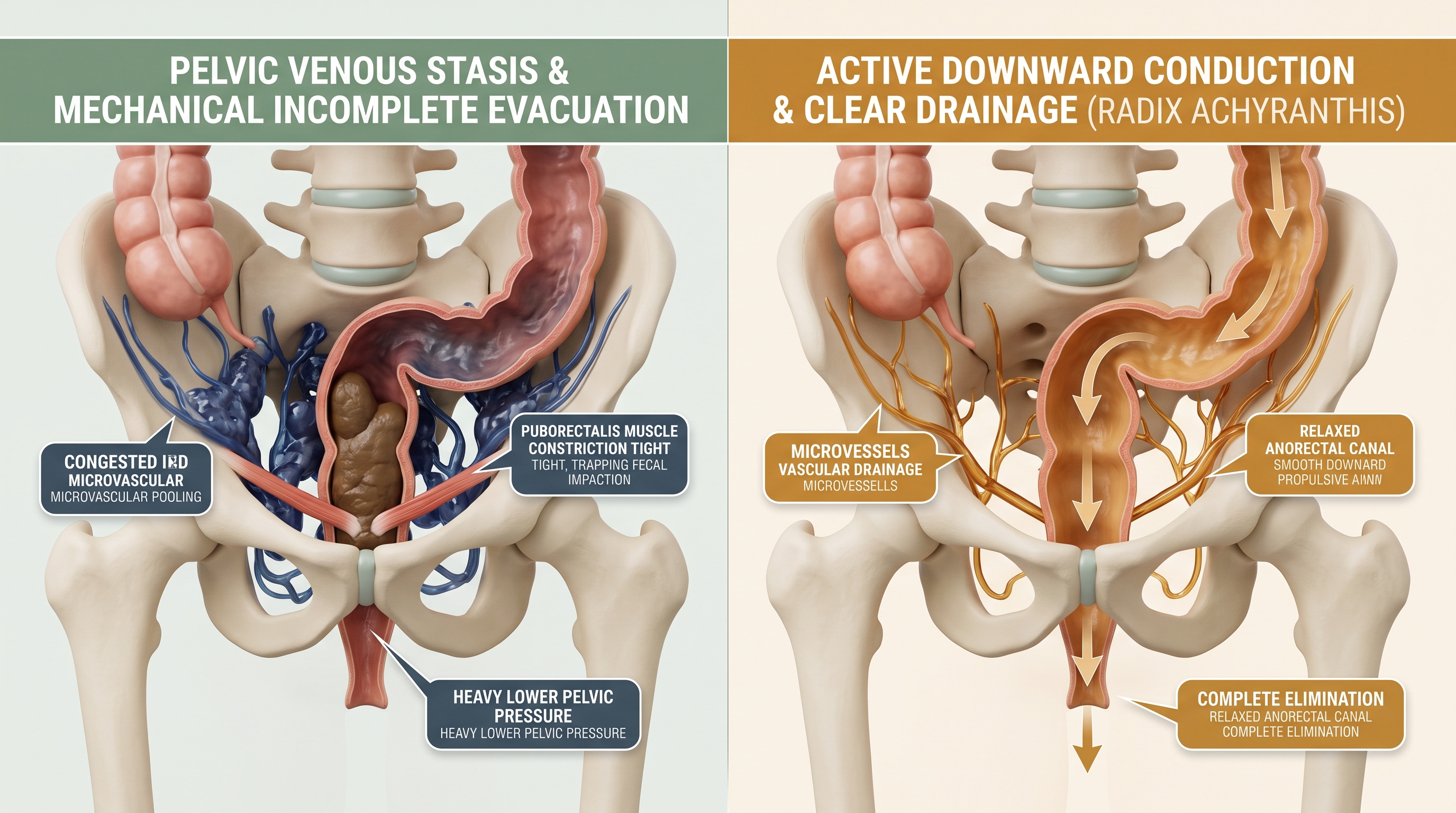
Pelvic Hemodynamics — Resolving venous pooling and mechanical resistance along the rectosigmoid junction.
- Alt Text: Medical diagram comparing lower pelvic venous stasis versus active downward vascular drainage guided by Radix Achyranthis
- Legenda: Figure 1: Pelvic Hemodynamics — Resolving venous pooling and mechanical resistance along the rectosigmoid junction.
The Phytochemistry: Why Niu Xi Clears Pelvic Stagnation
The targeted actions of Radix Achyranthis stem from three primary chemical classes:
- Triterpenoid Saponins (Achyranthes Saponins A & B): These bioactives exert potent anti-inflammatory and venous-tonifying actions, strengthening capillary walls and clearing localized microvascular pooling around the hemorrhoidal and pelvic veins.
- Phytoecdysteroids (β-Ecdysone & Polypodine B): Natural plant sterols that support cellular protein synthesis and muscular elasticity, toning the connective tissues and smooth muscle bands of the pelvic floor.
- Polysaccharides & Natural Inulin Fractions: Gentle prebiotic polymers that provide osmotic lubrication to dry, stalled fecal matter without triggering explosive fermentation or painful cramping.
Clinical Takeaway: When lower abdominal bloating is caused by pelvic venous congestion, standard laxatives only irritate the colon wall; clearing the vascular bottleneck is what enables complete, effortless evacuation.
👉 [Discover how a calibrated botanical matrix combining Radix Achyranthis with Osthole directs visceral circulation downward to dissolve lower belly heaviness].
Bulk-Forming Laxatives vs. Downward Vascular Conduction
Many individuals struggling with incomplete evacuation take psyllium husk or bulk-forming laxatives. If pelvic circulation is stalled, adding bulk frequently worsens the mechanical blockage:
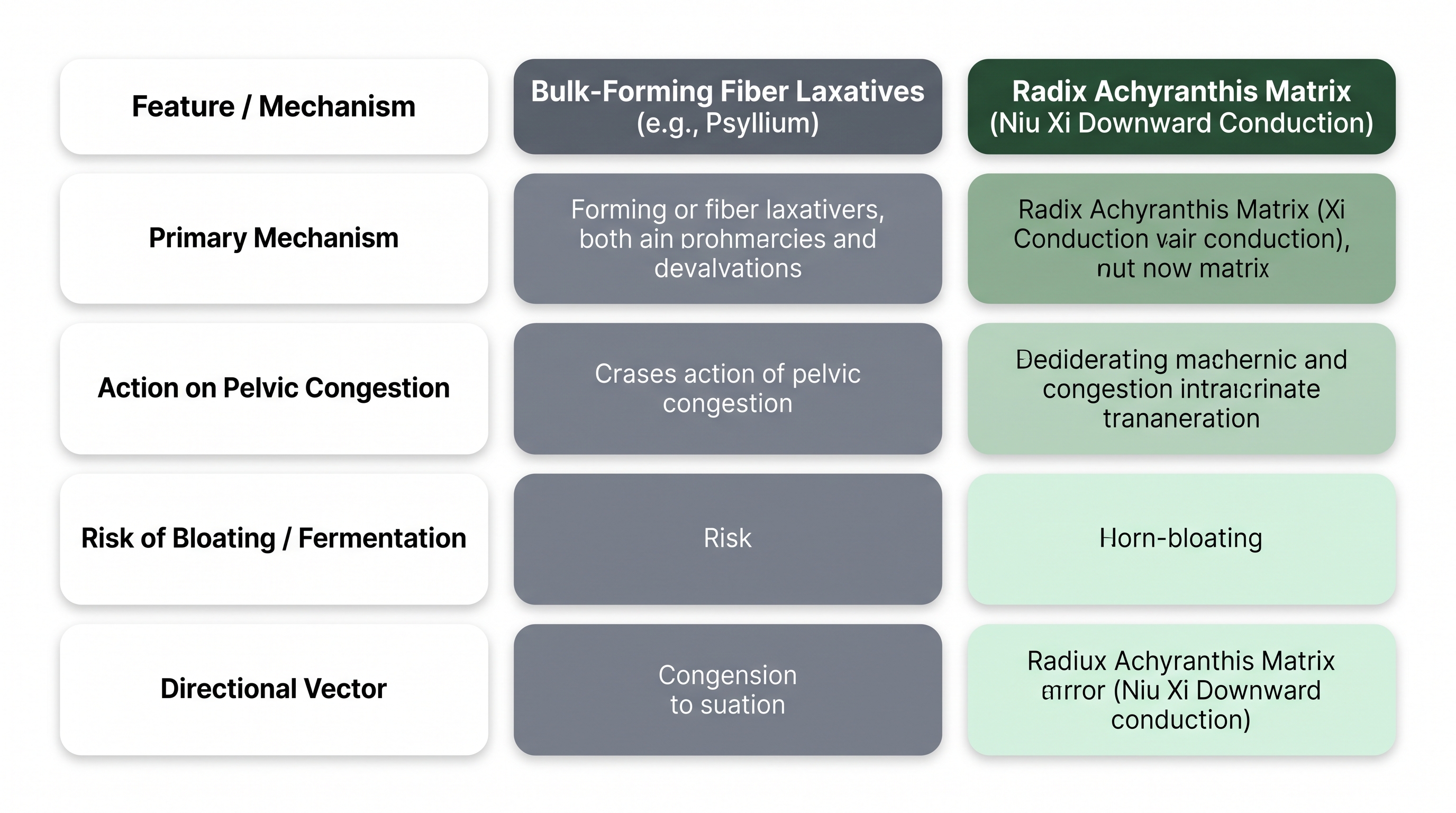
Clinical Mechanism Comparison — Bulk-Forming Fiber vs. Downward Vascular Conduction (Radix Achyranthis Matrix).
- Alt Text: Clinical comparison table contrasting bulk-forming fiber laxatives with downward-conducting vascular botanicals like Radix Achyranthis
- Legenda: Table 1: Clinical Mechanism Comparison — Bulk-Forming Fiber vs. Downward Vascular Conduction (Radix Achyranthis Matrix).
3 Core Mechanisms of Niu Xi for Effortless Elimination
Within a synergistic digestive formula, Radix Achyranthis fulfills three non-negotiable physiological roles:
1. Directs Peristaltic Momentum Downward
Upper digestive stimulants often create churning without propulsion. Niu Xi establishes a clear vector of movement, guiding enteric neuromuscular contractions down through the descending colon, sigmoid colon, and rectum.
2. Decongests Pelvic Venous Plexuses
Sedentary lifestyles, chronic sitting, and prolonged straining create sluggish microcirculation in the pelvic basin. The saponins in Radix Achyranthis stimulate venous return, draining stagnant fluid that exerts external pressure on the lower bowel.
3. Fortifies Pelvic Floor Elasticity & Tone
Through its high concentration of phytoecdysteroids, Achyranthis supports tendon and smooth muscle integrity, preventing the muscular flaccidity that leads to weak, incomplete bowel movements.
👉 [Discover how a calibrated botanical matrix combining Radix Achyranthis with Osthole directs visceral circulation downward to dissolve lower belly heaviness].
4 Daily Practices to Release Lower Pelvic Stagnation
To amplify the downward conducting power of Radix Achyranthis, integrate these physical protocols into your daily routine:
- 1. Adopt the Natural Squatting Angle: Use a 7- to 9-inch toilet footstool. Elevating your knees above your hips straightens the anorectal angle created by the puborectalis muscle, eliminating mechanical resistance during evacuation.
- 2. Break Prolonged Pelvic Compression: If you work at a desk, stand and perform 10 gentle hip circles every 60 minutes to prevent venous pooling in the iliac and pelvic vascular beds.
- 3. Deep Diaphragmatic Pelvic Drops: Inhale deeply into your lower pelvis, allowing the pelvic floor muscles to descend and relax, rather than holding subconscious tension in the lower abdomen.
- 4. Hydrate with Warm Electrolytes: Drink room-temperature or warm water enriched with trace minerals to maintain luminal hydration as Achyranthis directs transit downward.
Frequently Asked Questions (FAQ)
1. What is Radix Achyranthis (Niu Xi) and what is its primary digestive benefit?
Radix Achyranthis is the root extract of Achyranthes bidentata. In digestive health, it serves as a natural downward conductor, clearing pelvic vascular congestion and guiding sluggish transit toward complete elimination.
2. How does Niu Xi relieve the sensation of "incomplete evacuation"?
Incomplete evacuation is often caused by pelvic venous pooling and weak anorectal muscle coordination. Achyranthis improves local microvascular tone and directs peristaltic energy downward, ensuring stool clears the sigmoid colon entirely.
3. Why is Radix Achyranthis called a "downward-guiding" botanical?
In classical pharmacopeia, Achyranthis is unique for its ability to direct blood, fluids, and physiological energy downward toward the lower abdomen, pelvic floor, and legs, making it ideal for relieving upper and lower visceral stagnation.
4. Does Radix Achyranthis cause harsh laxative dependency or cramping?
No. Unlike stimulant anthraquinone laxatives (like senna), Achyranthis does not irritate the mucous membranes. It works through vascular decompression, smooth muscle tonification, and natural fluid dynamics.
5. How does Radix Achyranthis differ from Eucommia Ulmoides?
While both botanicals strengthen the lower core, Radix Achyranthis focuses on dynamic downward conduction and venous clearance, whereas Eucommia Ulmoides provides structural elastic tone to smooth muscle walls.
6. Can Niu Xi help with lower belly bloating and pelvic heaviness?
Yes. By reducing stagnant fluid accumulation and microvascular resistance in the lower pelvis, it helps flatten the lower abdominal distension that resists standard diets.
7. Why is Radix Achyranthis combined with Cnidium Monnieri (Osthole)?
Cnidium Monnieri acts as the "thermal spark" that ignites smooth muscle peristalsis, while Radix Achyranthis acts as the "rudder," steering that propulsive force downward to prevent upward gas reflux and abdominal distension.
8. Are there any contraindications for Radix Achyranthis?
Due to its downward-draining and blood-moving properties, Radix Achyranthis should be avoided during pregnancy or by individuals experiencing active excessive menstrual bleeding.
9. How quickly does Radix Achyranthis relieve pelvic congestion?
Vascular tone improvements and easier, more complete morning bowel movements are often noticed within 3 to 7 days of daily use within a multi-botanical matrix.
10. What is Radix Achyranthis's exact role in the DigestiStart formula?
Within DigestiStart, Radix Achyranthis serves as the "Pelvic Decongestant and Downward Vector", ensuring that all hydrated and mobilized waste is efficiently guided out of the body without straining.
Restore Downward Momentum & Experience Total Elimination
You do not have to struggle with the frustrating heaviness of incomplete evacuation, pelvic pressure, and stalled lower transit.
By addressing the root vascular congestion of the lower pelvis with Radix Achyranthis (Niu Xi), you establish clean, downward-directed peristalsis and reclaim the light, empty comfort of total daily elimination.
🌿 Discover DigestiStart: The breakthrough formula uniting Radix Achyranthis (Niu Xi), Cnidium Monnieri (Osthole), Polygala Tenuifolia, and Eucommia Ulmoides for total digestive unblocking and vitality.
👉Check Official Availability & Claim Your Supply of DigestiStart Today →
keep reading
Gut Health & Supplements
DigestiStart Review: Can This Herbal Formula Help Restore Digestive Health & Relieve Bloating?
Gut Health & Supplements
The Ultimate Guide to GERD: Causes, Symptoms & Natural Relief
Gut Health & Supplements