
Rehmanniae Radix Benefits: How Rehmannia Root Nourishes the Gut Lining, Hydrates Dry Stools & Enhances Vitality
Discover what Rehmanniae Radix (Rehmannia glutinosa root) is used for, its top health benefits for nourishing the gut mucosal lining, soothing internal heat, hydrating chronic dry constipation, and revitalizing digestive vitality naturally.

disclosure This article contains affiliate links. Purchases may earn us a commission at no extra cost to you. We only recommend products we've reviewed.
Rehmanniae Radix Benefits: How Rehmannia Root Nourishes the Gut Lining, Hydrates Dry Stools & Enhances Vitality
When the gastrointestinal tract is subjected to prolonged physical stress, erratic eating habits, chronic low-grade inflammation, or metabolic exhaustion, it frequently develops a state known in traditional holistic systems as "internal dryness and heat." Rather than merely experiencing temporary slow transit, the intestinal lining itself becomes parched, depleted of protective mucosal fluids, and prone to micro-irritation. This results in small, dry, pebble-like stools, persistent post-meal abdominal burning or tenderness, and a systemic feeling of burnout.
In classical botanical medicine and modern herbal pharmacology, few natural remedies possess the restorative, fluid-generating power of Rehmanniae Radix (Rehmannia glutinosa), widely celebrated as Rehmannia Root or Di Huang (Chinese Foxglove). Classified as a premier "Yin-nourishing" and tissue-regenerating botanical, Rehmanniae Radix acts as an internal reservoir—delivering bioavailable polysaccharides and iridoid glycosides directly to dry mucosal membranes, cooling digestive inflammation, and restoring the cellular hydration necessary for effortless daily elimination.
In this in-depth, research-backed guide, we explore the science behind Rehmannia benefits, examine how Radix Rehmanniae repairs depleted gut linings and relieves stubborn constipation, and explain why it serves as the essential "nourishing anchor" in modern multi-herb digestive formulations.
What Is Rehmanniae Radix (Rehmannia Glutinosa)?
Rehmannia (Rehmannia glutinosa) is a perennial flowering herb belonging to the Orobanchaceae family, native to the temperate mountainous regions of Northern and Central China. While the plant produces bell-shaped, reddish-purple blossoms resembling foxgloves, its primary medicinal value lies entirely within its thick, succulent, tuberous root system.
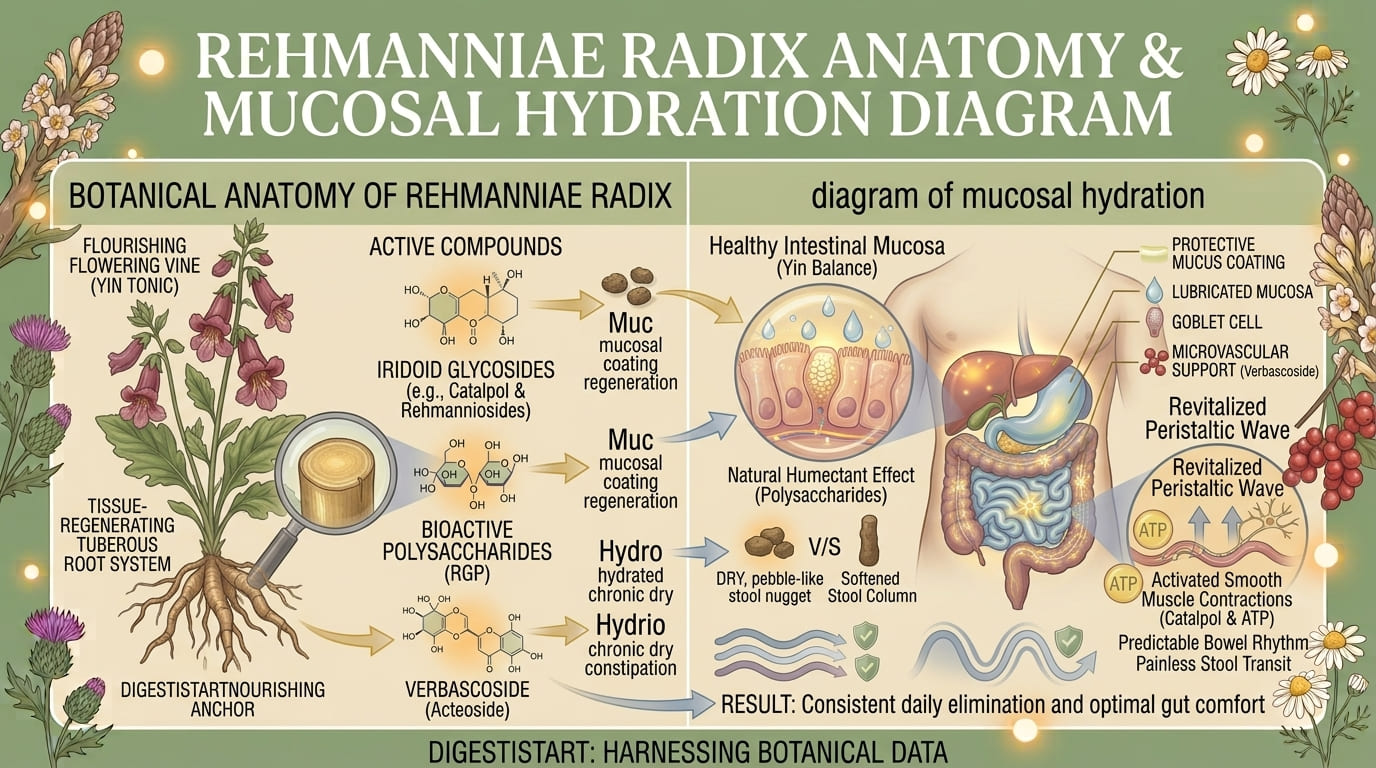
In traditional herbal pharmacopeias, Rehmannia is utilized in two distinct forms:
- Sheng Di Huang (Raw Rehmanniae Radix): Cold and moistening in nature, primarily used to clear excess heat, soothe inflammatory flare-ups, and generate vital body fluids.
- Shu Di Huang (Prepared Rehmanniae Radix / Rehmanniae Radix Preparata): Steamed and cured in wine, transforming into a rich, sweet, warming tonic specifically targeted at rebuilding depleted blood, tonifying adrenal vitality, and replenishing cellular reserves.
Modern botanical extraction techniques often capture the full spectrum of both forms to achieve dual therapeutic actions: immediate mucosal cooling paired with deep, sustained tissue nourishment.
The Active Phytochemistry: Why Rehmannia Root Works
The therapeutic efficacy of Rehmannia root is driven by a unique concentration of bioactive phytochemicals:
- Iridoid Glycosides (Catalpol & Rehmanniosides): Catalpol is the primary active marker in Rehmannia glutinosa. Clinical research demonstrates that catalpol exhibits powerful anti-inflammatory, neuroprotective, and antioxidant actions, defending the enteric nervous system (ENS) from oxidative decay and suppressing inflammatory cytokines along the intestinal wall.
- Bioactive Polysaccharides (RGP): Rehmannia polysaccharides act as concentrated natural humectants. They physically bind water molecules within the gastrointestinal lumen, lubricating the stool column and nourishing beneficial commensal gut microbiota.
- Verbascoside (Acteoside): A potent phenylethanoid glycoside that downregulates mucosal inflammation and supports microvascular blood flow to abdominal organs.
Top Health Benefits of Rehmanniae Radix for Digestion & Systemic Wellness
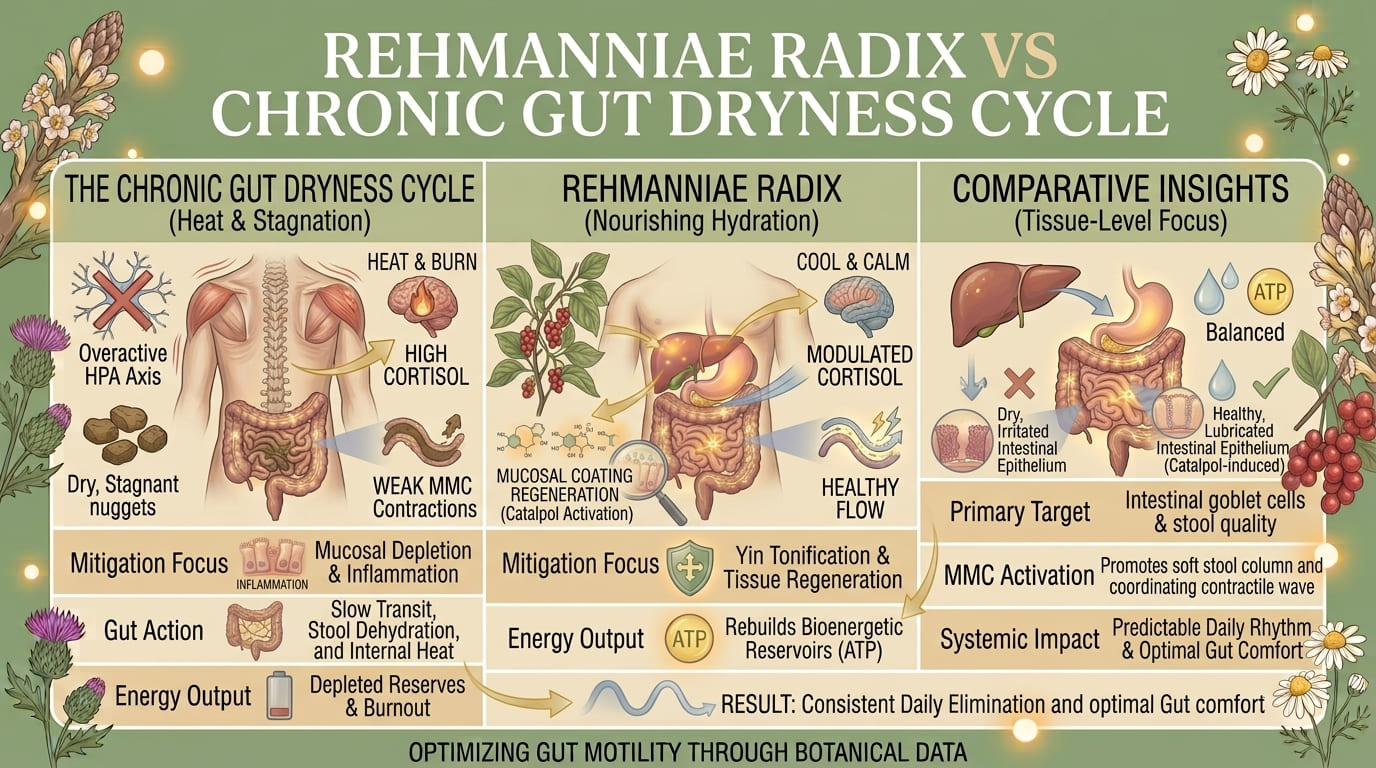
To restore gastrointestinal comfort and support complete digestive rejuvenation, Rehmanniae Radix operates across three vital physiological mechanisms:
1. Restores the Mucosal Protective Barrier (Gut Lining Repair)
The human gastrointestinal tract is shielded by a delicate mucosal epithelial barrier. When this layer dries out or degrades due to poor diet, medications, or stress, gut permeability increases, leading to discomfort and sensitivity. The iridoid glycosides and polysaccharides in Rehmannia glutinosa stimulate mucin production in goblet cells, helping to replenish the protective mucus coating that defends intestinal walls against acid and irritating wastes.
2. Combats Chronic Dry Constipation (The Internal Hydrator)
Many individuals suffering from chronic slow transit find that stimulant laxatives only worsen their condition, causing painful cramping without producing satisfying relief. This is because their underlying issue is tissue dehydration, not merely poor muscular rhythm. Rehmanniae Radix works from the inside out: its water-soluble polysaccharides draw hydration into dry fecal mass, softening stool consistency and facilitating painless transit without irritating the colon.
3. Modulates Adrenal Fatigue & Systemic Energy Reserves
Chronic digestive disturbances place immense strain on the adrenal glands and endocrine system. In Eastern medicine, Rehmannia is the cornerstone herb for nourishing Kidney Yin—the fundamental fluid and energy reserve of the entire body. By balancing stress-induced endocrine depletion and supporting healthy glucose metabolism, Rehmannia helps eliminate the chronic afternoon exhaustion and brain fog frequently associated with gut dysfunction.
Comparing Rehmanniae Radix to Other Key Digestive Botanicals
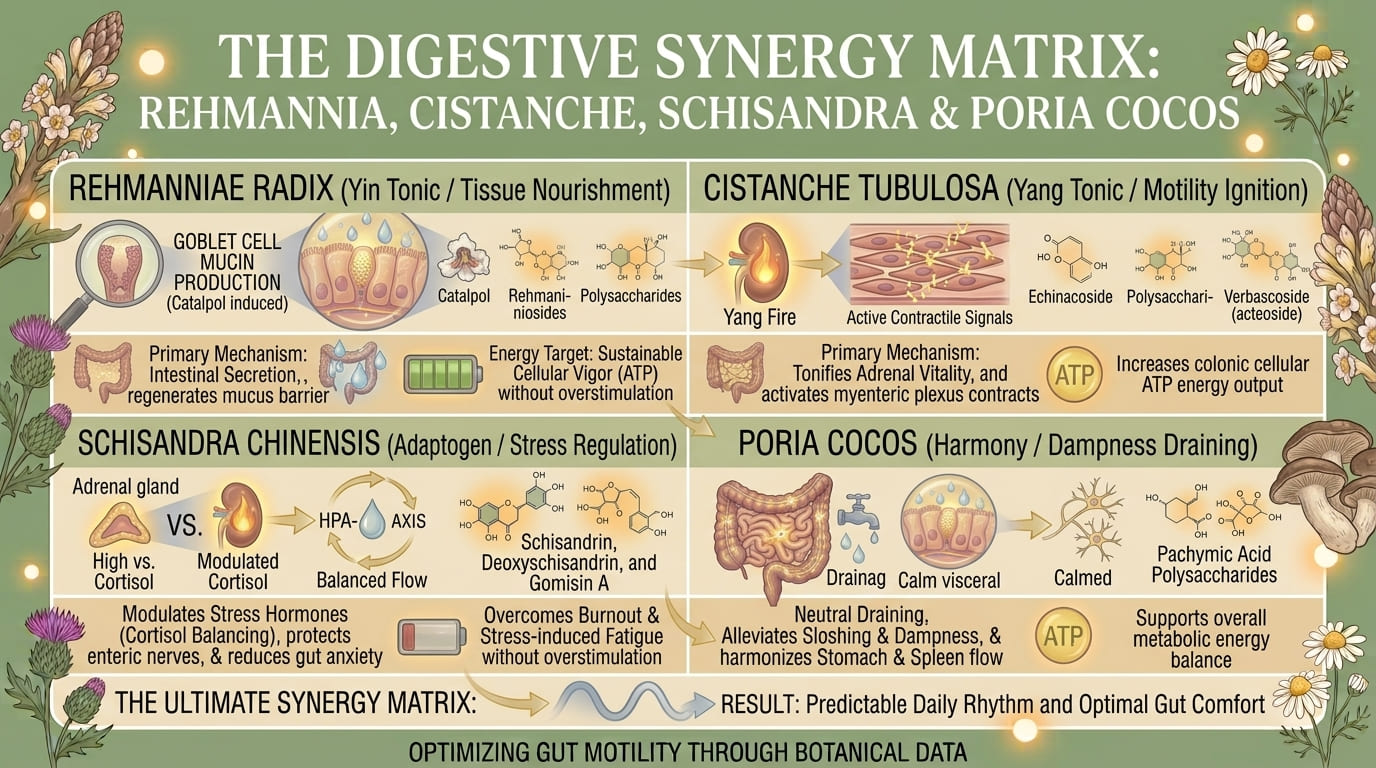
To understand why multi-herb digestive formulations achieve such consistent results, it is helpful to compare the distinct therapeutic profile of Rehmanniae Radix with other foundational botanicals:
👉 Check out this [Advanced Gut Rebuild Formula] for daily lining support and balanced inflammation levels.
Step-by-Step 24-Hour Protocol for Restoring Mucosal Fluidity & Energy
If you suffer from chronic dryness, hard stools, or post-meal burning and bloating, integrating Rehmanniae Radix into this daily restorative rhythm provides optimal results:
- Morning Awakening (6:30 AM – 9:30 AM): Start your day with 16–20 oz of room-temperature or lukewarm mineralized water. Take your complete botanical blend containing standardized Rehmanniae Radix and Cistanche 20 minutes before breakfast. This primes goblet cells along the stomach lining and activates gentle colonic hydration before food enters the system.
- Mid-Day Nourishment (12:00 PM – 2:00 PM): Consume moist, nutrient-dense, warm meals (such as bone broths, steamed greens, and slow-cooked stews). Avoid ultra-processed dry snacks, excessively spicy condiments, or ice-cold beverages that deplete digestive fluid reserves.
- Evening Repair & Rest (6:00 PM – Sleep): Finish your light dinner at least 3 hours before bed. Engage in 10 minutes of gentle restorative stretching or meditation. During sleep, Rehmannia’s polysaccharides and iridoid glycosides support mucosal cellular renewal and overnight intestinal tissue repair.

Why Botanical Synergy Outperforms Standalone Rehmannia Root
While raw Rehmannia root extract is a powerful medicinal agent on its own, chronic digestive dysfunction is rarely a one-dimensional problem:
- The Multi-Deficiency Reality: Sluggish digestion with dry stool is often caused by a combination of dehydration (lack of Yin), weak muscular motility (lack of Yang), and stress-induced bile stagnation.
- The Perfect Counterbalance: If you take a warming, motility-igniting herb like Cistanche or Dodder Seed without a moistening agent, the gut can sometimes feel overly dry. Conversely, if you take a rich, moistening herb like Rehmannia alone, its heavy density can feel slow to digest. When paired together, Rehmannia hydrates the stool while Cistanche and Schisandra propel it forward smoothly.
- Standardized Quality: Choosing a formula that utilizes standardized botanical extracts guarantees consistent levels of catalpol and echinacoside, ensuring predictable, long-lasting relief without digestive irritation.
👉 Check out this [Advanced Gut Rebuild Formula] for daily lining support and balanced inflammation levels.
Frequently Asked Questions (FAQ)
1. What is Rehmanniae Radix and what is it used for?
Rehmanniae Radix (the root of Rehmannia glutinosa, also known as Di Huang) is a revered traditional botanical used to nourish vital body fluids, repair the digestive mucosal lining, cool internal inflammatory heat, and relieve chronic dry constipation.
2. What is the difference between raw Rehmannia (Sheng Di Huang) and prepared Rehmannia (Shu Di Huang)?
Raw Rehmannia (Sheng Di Huang) is cooling and primarily focuses on clearing internal heat, reducing inflammation, and generating immediate fluids. Prepared Rehmannia (Shu Di Huang—steamed and wine-cured) is warm and deeply nourishing, focusing on rebuilding blood, supporting adrenal health, and restoring deep cellular energy reserves.
3. How does Rehmannia root help with constipation?
Unlike irritating chemical laxatives, Rehmannia acts as a natural humectant. Its concentrated polysaccharides draw and retain water in the large intestine, softening dry, compacted fecal matter so it can be passed comfortably and naturally.
4. What does the scientific research say about Catalpol in Rehmannia?
Catalpol is the primary bioactive iridoid glycoside in Rehmannia root. Scientific studies show that catalpol provides robust anti-inflammatory, antioxidant, and tissue-protective effects, helping to shield the intestinal barrier and the enteric nervous system (ENS) from cellular damage.
5. Can Rehmanniae Radix help with Leaky Gut and gut inflammation?
Yes. Rehmannia supports the health of intestinal goblet cells, which are responsible for producing the protective mucus layer that lines the gastrointestinal tract. By strengthening this barrier and downregulating inflammatory cytokines, it supports long-term gut barrier integrity.
6. Is Rehmannia suitable for daily, long-term use?
Yes. In classical herbalism, Rehmannia is classified as a "superior tonic herb," meaning it can be consumed consistently over extended periods to build foundational vitality and sustain tissue hydration without creating dependency.
7. What are the main benefits of Rehmannia root for energy and adrenal fatigue?
In traditional botanical medicine, Rehmannia is considered a premier tonic for Kidney Yin. Modern research suggests it helps balance the HPA axis, moderating the physical exhaustion, dry mouth, and burnout caused by chronic stress.
8. What are the potential side effects of taking Rehmannia?
Rehmanniae Radix is exceptionally safe and gentle for most individuals. In rare cases where extremely high doses of raw, unprocessed root are consumed on an empty stomach, individuals with weak digestion may experience mild bloating or loose stools. This is easily avoided by taking balanced multi-herb formulas.
9. Can Rehmannia be combined with other herbs like Cistanche and Schisandra?
Yes, this is an ideal synergy. Rehmannia provides the soothing moisture and tissue repair, while Cistanche provides muscular motility and Schisandra regulates stress and liver bile flow, creating a comprehensive solution for sluggish digestion.
10. Does Rehmannia root have benefits for skin health?
Yes. Because skin health is closely linked to internal hydration and gut barrier function, Rehmannia’s cooling, fluid-replenishing, and blood-nourishing properties are frequently utilized to promote skin elasticity and soothe dry, irritated skin.
11. What is the traditional Chinese medicine (TCM) name for Rehmanniae Radix?
In Traditional Chinese Medicine, Rehmanniae Radix is known as Di Huang (地黄). Unprocessed root is called Sheng Di Huang, while the steamed/cured preparation is called Shu Di Huang.
12. When is the best time of day to take a Rehmanniae Radix supplement?
The best time to take Rehmannia is in the morning with warm water before your first meal, or in divided doses with meals, allowing its hydrating polysaccharides to coat and support your digestive tract throughout the day.
Reclaim Deep Digestive Hydration, Comfort, and Lasting Vitality
You do not have to struggle daily with parched, uncomfortable digestion, sluggish bowel transit, or the systemic drain of chronic gut irritation. By incorporating the deeply hydrating, tissue-repairing, and restorative power of Rehmanniae Radix, you can replenish your body's vital fluids and restore natural, effortless regularity.
To experience the ultimate synergistic benefits of standardized Rehmanniae Radix paired with Cistanche, Schisandra, and Poria Cocos, choose a complete daily digestive formula. Reclaim your digestive lightness and vitality with the [Advanced Botanical Digestive & Motility Blend].
💡 Related Reading:
Want to see how Rehmanniae Radix works alongside all 8 synergistic ingredients? Read our In-Depth Digestive Support Formula Review & Analysis to explore full ingredient profiles, clinical mechanisms, and official purchasing options.
keep reading
Gut Health & Supplements
DigestiStart Review: Can This Herbal Formula Help Restore Digestive Health & Relieve Bloating?
Gut Health & Supplements
The Ultimate Guide to GERD: Causes, Symptoms & Natural Relief
Gut Health & Supplements