
The Ultimate Guide to the Best Teas for Bloating and Gas Relief
Discover the best herbal teas for bloating and gas relief. Learn how carminative botanicals naturally relax spasms, accelerate digestion, and soothe your gut.
disclosure This article contains affiliate links. Purchases may earn us a commission at no extra cost to you. We only recommend products we've reviewed.
The Ultimate Guide to the Best Teas for Bloating and Gas Relief
When uncomfortably tight abdominal fullness or sharp trapped gas strikes, finding fast-acting, natural relief becomes a priority. While over-the-counter options exist, few remedies offer the immediate, warming, and gut-calming comfort of a simple cup of herbal tea. For centuries, traditional botanical infusions have been the go-to solutions for soothing digestive friction, relaxing intestinal spasms, and dispelling painful gas.
Choosing the right tea, however, is key. Not all herbal blends possess the functional compounds necessary to address specific types of bloating. Whether your discomfort stems from sluggish motility, heavy fermentation, or stress-induced gut sensitivity, understanding which botanical allies work best will allow you to reclaim digestive ease reliably.
In this ultimate guide, we will explore the top herbal teas for bloating and gas relief, dive deep into the specific physiological mechanisms of each carminative botanical, compare fast-acting anti-spasmodics against anti-inflammatory options, and help you select the ideal infusion for your unique digestive triggers.
How Carminative Teas Relax the Gastrointestinal Tract
Before exploring specific herbs, it is important to understand how warm botanical infusions act on the digestive system.
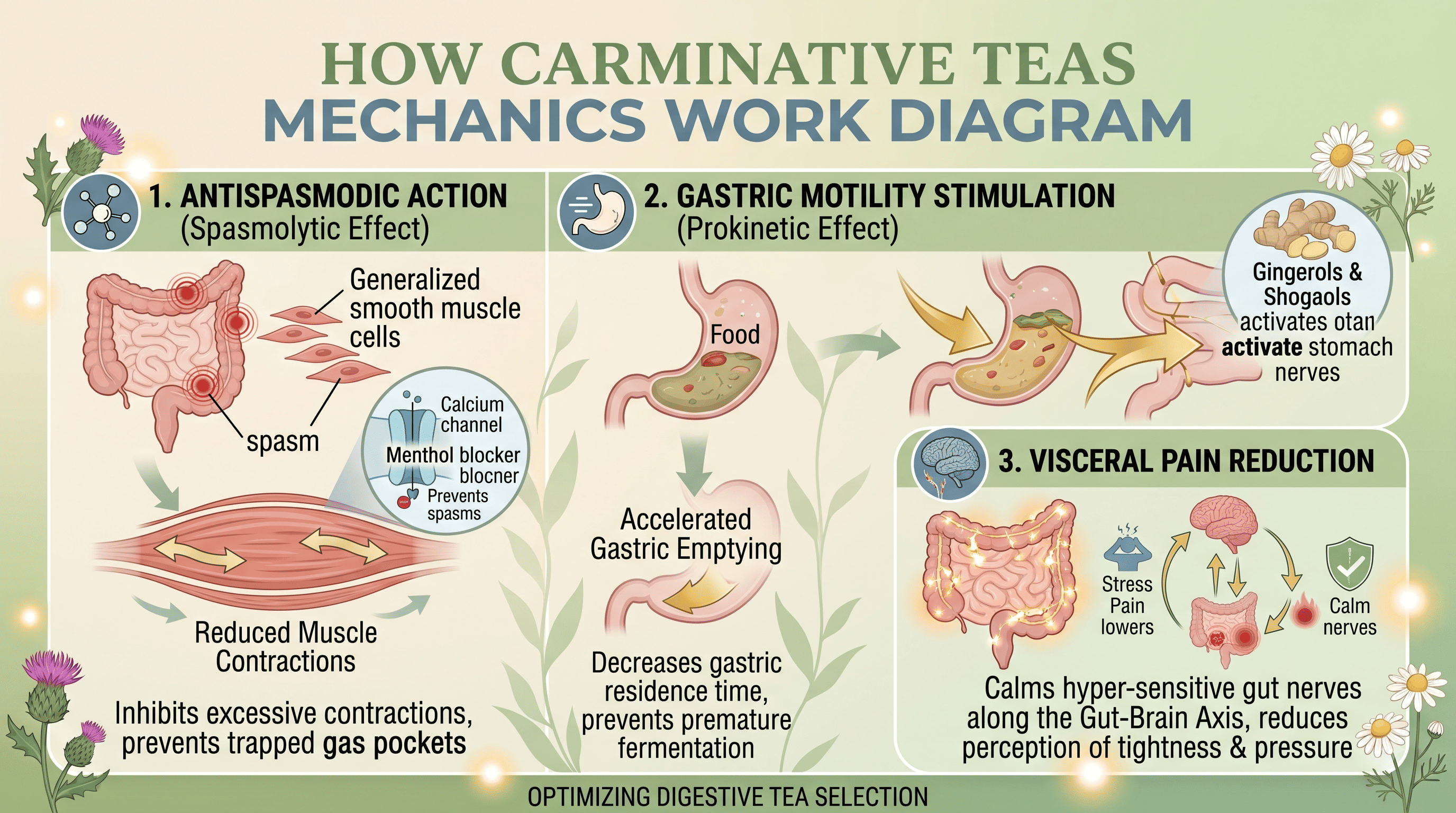
1. Antispasmodic Action (Spasmolytic Effect)
Volatile aromatic oils in carminative herbs interact with smooth muscle receptors in the gut wall. They inhibit excessive contractions and relax localized spasms that physically trap gas pockets, allowing bubbles to dissipate smoothly.
2. Gastric Motility Stimulation (Prokinetic Effect)
Certain herbs accelerate stomach emptying. By decreasing gastric residence time, food moves into the small intestine faster, preventing it from lingering and prematurely undergoing rapid bacterial fermentation.
3. Visceral Pain Reduction
Active plant compounds calm hyper-sensitive nerve endings along the gut-brain axis. This lowers systemic inflammation and reduces the perception of extreme tightness and pressure.
Check out this [Advanced Full-Spectrum Digestive Support Formula (Insert Your Affiliate Link Here)] featuring targeted carminative botanicals to accelerate post-meal nutrient breakdown.
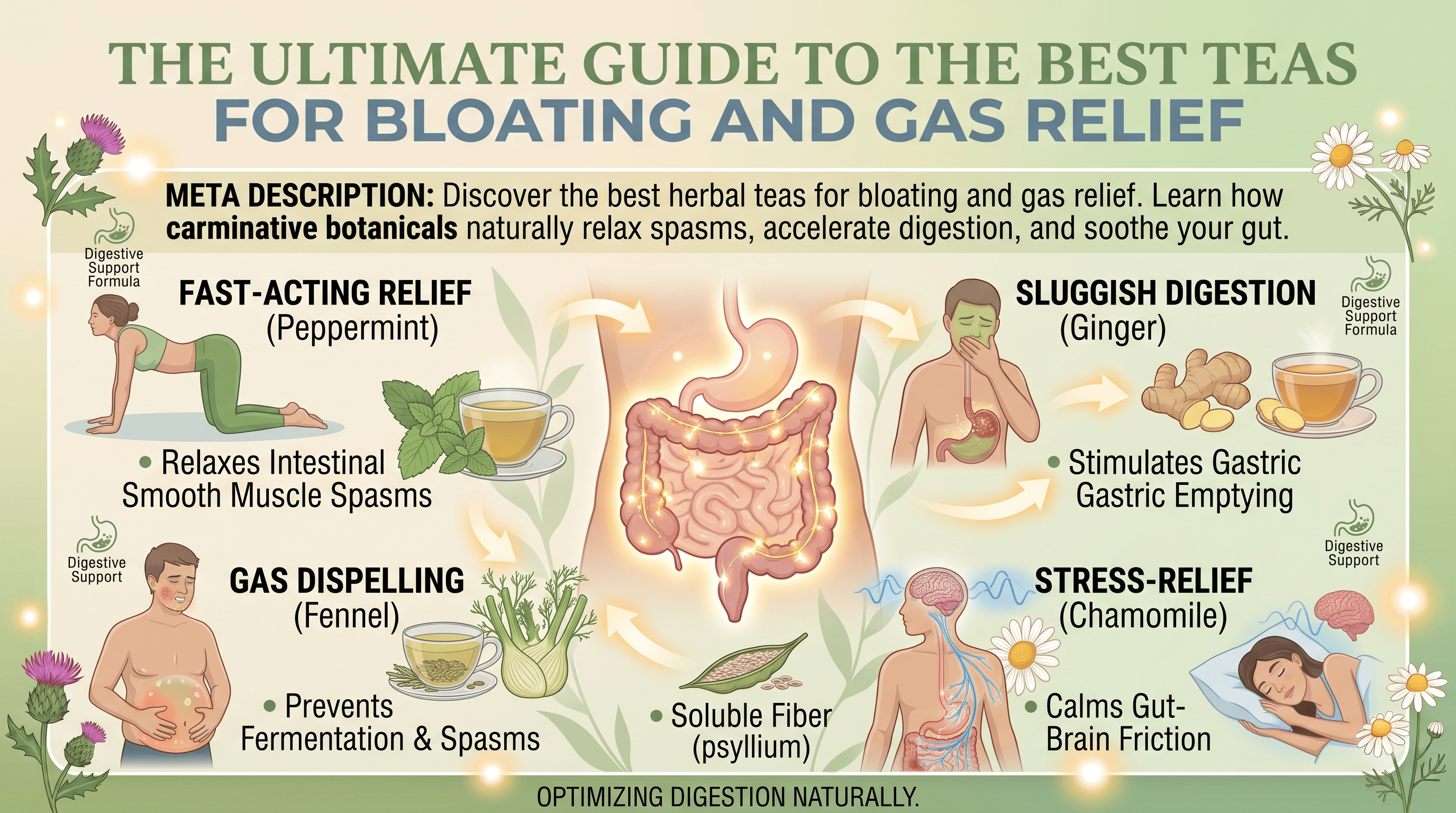
Top 4 Herbal Teas for Fast Bloating Relief
To eliminate trapped gas and restore abdominal comfort quickly, integrate these four proven botanical infusions into your daily routine.
1. Peppermint Tea: The Fast-Acting Anti-Spasmodic
When bloating is accompanied by sharp, localized gas pain or cramping, Peppermint (Mentha piperita) is your most powerful first response. Its effectiveness is rooted in its high concentration of L-menthol. Menthol acts as a direct calcium channel blocker on the smooth muscle lining of the digestive tract. This relaxation eases painful spasms, unkinks the intestines, and allows trapped gas to move through.
2. Ginger Tea: Accelerating Sluggish Digestion
If your bloating is characterized by nausea, upper stomach heaviness, or a feeling that your meal is sitting stagnant, Ginger (Zingiber officinale) is the premier choice. It is a powerful prokinetic agent. Its active gingerols and shogaols stimulate gastric emptying, forcing food to move from the stomach to the small intestine faster. This crucial action prevents food from lingering and undergoing premature, excessive bacterial fermentation in the upper GI tract.
3. Fennel Tea: The Aromatic Gas Dispeller
For individuals experiencing consistent lower abdominal gas accumulation and fermentation after meals, Fennel (Foeniculum vulgare) is a gentle yet highly effective carminative herb. It has been used for centuries to prevent colic in infants. Its primary aromatic compound, anethole, relaxes intestinal smooth muscle and possesses mild antimicrobial properties to prevent the bacterial over-gas production that leads to discomfort.
4. Chamomile Tea: The Stress-Relief Digestive Aid
Digestion is inherently linked to your central nervous system (CNS). When stress, anxiety, or nervous tension flares, it often manifests as gut irritation, visceral hypersensitivity, and erratic muscle movements. Chamomile (Matricaria chamomilla) targets this gut-brain axis directly. It is widely used as a mild nervine sedative, lowering overall CNS stress signals that exacerbate gut nerve sensitivity and Visceral Hypersensitivity.
Comparing the Top Teas for Unique Triggers
To select the most effective over-the-counter option, match your primary symptom to the appropriate functional remedy:

24-Hour Action Plan for Herbal Digestive Reset
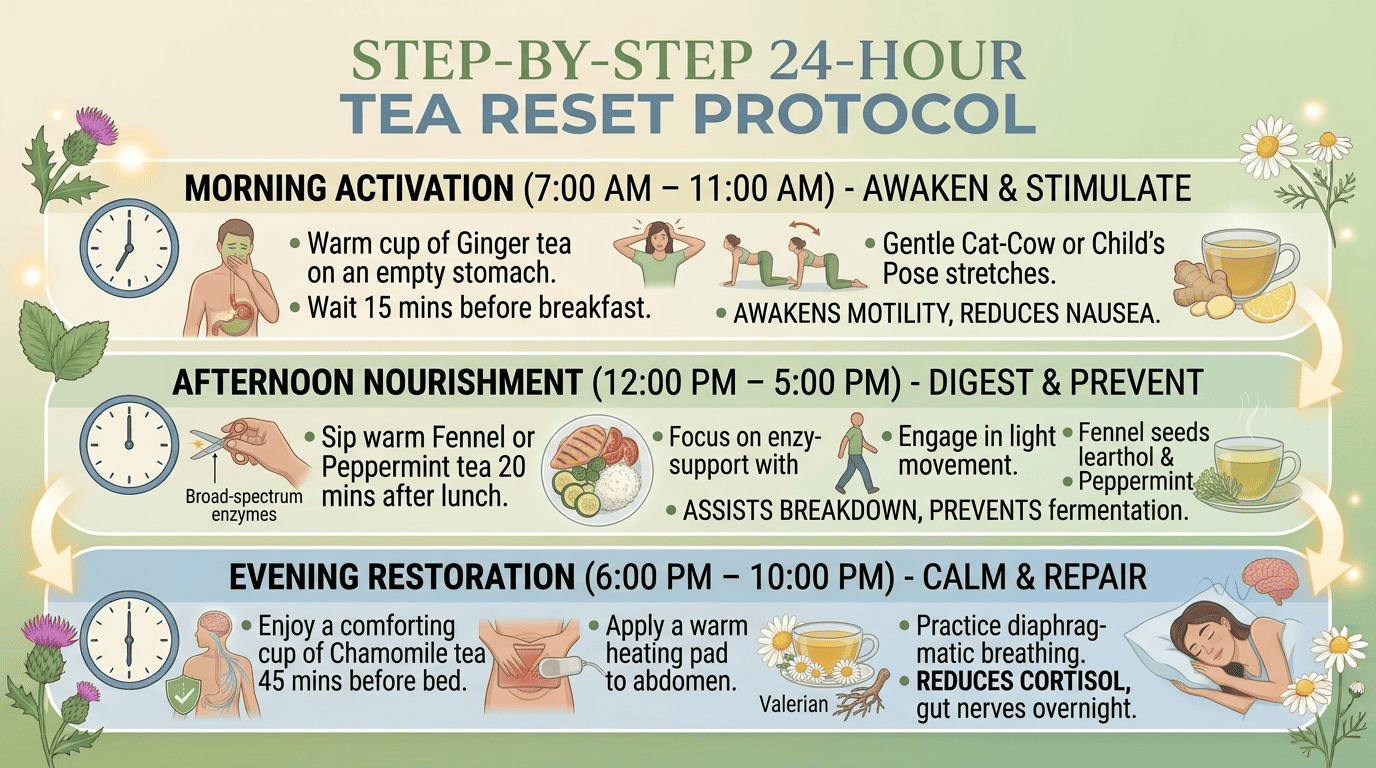
If you are suffering from persistent bloating and want to reset your digestion using natural infusions, follow this 24-hour protocol:
- Morning Activation (7:00 AM – 11:00 AM): Begin your day with a warm cup of Ginger tea on an empty stomach to stimulate gastrointestinal motility and awaken your digestive tract, or choose warm Peppermint if you woke up with cramping.
- Afternoon Nourishment (12:00 PM – 5:00 PM): Sip warm Fennel or Peppermint tea 20 minutes after lunch to assist with nutrient breakdown, prevent afternoon gas formation, and move food smoothly.
- Evening Restoration (6:00 PM – 10:00 PM): Enjoy a comforting cup of Chamomile tea 45 minutes before bedtime to lower CNS stress signals and soothe gut nerve endings overnight, ensuring restorative sleep.
Long-Term Herbal Strategies for Gut Harmony
Stopping gas before it starts requires addressing everyday eating and lifestyle habits.
- Cover While Steeping: Always place a lid or saucer over your cup while steeping for 8 to 10 minutes to prevent volatile essential oils (the medicinal compounds) from escaping in steam.
- Use Loose Leaf Tea: High-quality loose leaves retain higher levels of essential oils and active phytonutrients than commercial tea bags.
- Avoid Refined Sugars: Sweeteners can nourish gas-producing gut bacteria, nullifying the anti-bloat properties of your brew.
- Integrate Targeted Synergy: Complement your daily tea rituals with highly concentrated plant extracts for comprehensive support. We recommend synergistic botanicals like Poria Cocos to clear dampness, Wild Yam to ease muscle tension, and Rehmannia Root to support mucosal integrity.
👉 Check out this [Advanced Gut Rebuild Formula] for daily lining support and balanced inflammation levels.
Frequently Asked Questions (FAQ)
1. How fast does peppermint tea work for bloating and gas pain? Peppermint tea typically begins relaxing intestinal smooth muscle within 15 to 30 minutes, allowing trapped gas to dissipate.
2. Is it better to drink ginger tea before or after meals? Drinking ginger tea about 15 to 20 minutes before a meal can stimulate digestive motility, while sipping it right after accelerates gastric emptying.
3. Can I combine different anti-bloating teas together? Yes. Blends like Peppermint-Fennel or Ginger-Chamomile offer dual benefits by relaxing muscle spasms while simultaneously soothing stress and accelerating digestion.
4. Does chamomile tea help with hormonal bloating? Chamomile helps reduce stress-induced cortisol spikes that worsen fluid retention, though botanical diuretics or specialized supplements target tissue water retention more directly.
5. Why should I cover my tea while it steeps? Carminative active ingredients are light, volatile oils that evaporate quickly in steam. Covering your mug traps these crucial compounds inside the liquid.
6. Can drinking too much herbal tea cause side effects? Excessive peppermint tea can sometimes relax the lower esophageal sphincter, worsening acid reflux in susceptible individuals. Moderate intake (2–3 cups daily) is generally safe.
7. Does iced tea work as well as warm tea for gas relief? Warm liquids are generally superior because heat relaxes GI smooth muscle. Extremely cold or icy beverages can trigger mild intestinal spasms.
8. Can I give fennel tea to children for trapped gas? Fennel tea has a long history of traditional use for mild childhood digestive discomfort, but always consult a pediatrician before introducing herbal remedies to young children.
9. What is the best time of day to drink tea for bloating prevention? Drinking warm carminative tea 20 to 30 minutes after major meals yields the best results for preventing post-meal gas accumulation and distension.
10. How do botanical extracts compare to brewed herbal teas? Concentrated botanical extracts offer standardized, higher doses of active compounds (like saponins and flavonoids) without requiring large fluid volumes, making them ideal for potent daily maintenance.
Reclaim Daily Comfort with Proven Digestive Support
Herbal teas offer a time-tested, gentle way to calm gastrointestinal distress, dissipate trapped gas, and support natural motility. By matching the right botanical infusion to your specific digestive triggers, you can restore comfort naturally.
To ensure your digestive tract breaks down meals effortlessly and maintains smooth intestinal motility, integrating a high-potency daily supplement is essential. We recommend supporting your journey with the [Advanced Liver & Digestive Support Blend]. Formulated with premium plant extracts, active enzymes, and gut-soothing herbs, it provides everyday protection against trapped gas, post-meal heaviness, and abdominal tightness.
👉 Check out this [Advanced Gut Rebuild Formula] for daily lining support and balanced inflammation levels.
keep reading
Gut Health & Supplements
DigestiStart Review: Can This Herbal Formula Help Restore Digestive Health & Relieve Bloating?
Gut Health & Supplements
The Ultimate Guide to GERD: Causes, Symptoms & Natural Relief
Gut Health & Supplements