
Gut Healing Soup Recipes: 5 Warming Bone Broths & Anti-Inflammatory Meals for Sluggish Motility
Discover restorative gut healing soup recipes and warm bone broths designed to repair the mucosal barrier, stimulate gut motility, and soothe bloating.
disclosure This article contains affiliate links. Purchases may earn us a commission at no extra cost to you. We only recommend products we've reviewed.
featured in this review
DigestiStart
Advanced bioactive botanical formula that activates smooth muscle peristalsis, clears pelvic venous congestion, and eliminates stubborn bloating without harsh laxatives.
Gut Healing Soup Recipes: 5 Warming Bone Broths & Anti-Inflammatory Meals for Sluggish Motility
When your digestive tract feels exhausted, raw vegetables, dense salads, and heavy fibrous meals often create painful friction. Instead of feeling energized after eating, your stomach swells, gastric emptying stalls, and you are left dealing with heavy visceral pressure.
In functional gastroenterology and traditional medicinal cooking, the golden rule for a struggling digestive tract is simple: when digestion is weak, feed it warmth, liquid nutrients, and predigested building blocks.
Slow-simmered bone broths and pureed anti-inflammatory soups eliminate the mechanical burden of digestion. They deliver restorative amino acids directly to the gut mucosa, warm sluggish mesenteric microvessels, and allow the smooth muscle wall of the intestines to regain its natural peristaltic rhythm without triggering gas fermentation.
Why Warm Soups and Bone Broths Restore Sluggish Gut Transit
Cold smoothies and raw foods force your stomach to work twice as hard to break down tough plant cell walls. In contrast, therapeutic warm broths offer three non-negotiable digestive benefits:
- Predigested Amino Acids (Glycine, Proline & Glutamine): Long, slow simmering extracts bioavailable collagen and gelatin from bones. These structural peptides act like mortar for epithelial tight junctions, soothing intestinal inflammation and supporting mucosal integrity.
- Thermal Vasodilation (Ending Visceral Cold): Warm liquids instantly relax constricted mesenteric capillaries, increasing blood flow and oxygen delivery to the enteric smooth muscle.
- Zero Mechanical Resistance: Liquid and pureed textures require virtually no stomach churning, preventing food from lingering in the upper stomach where it can ferment.
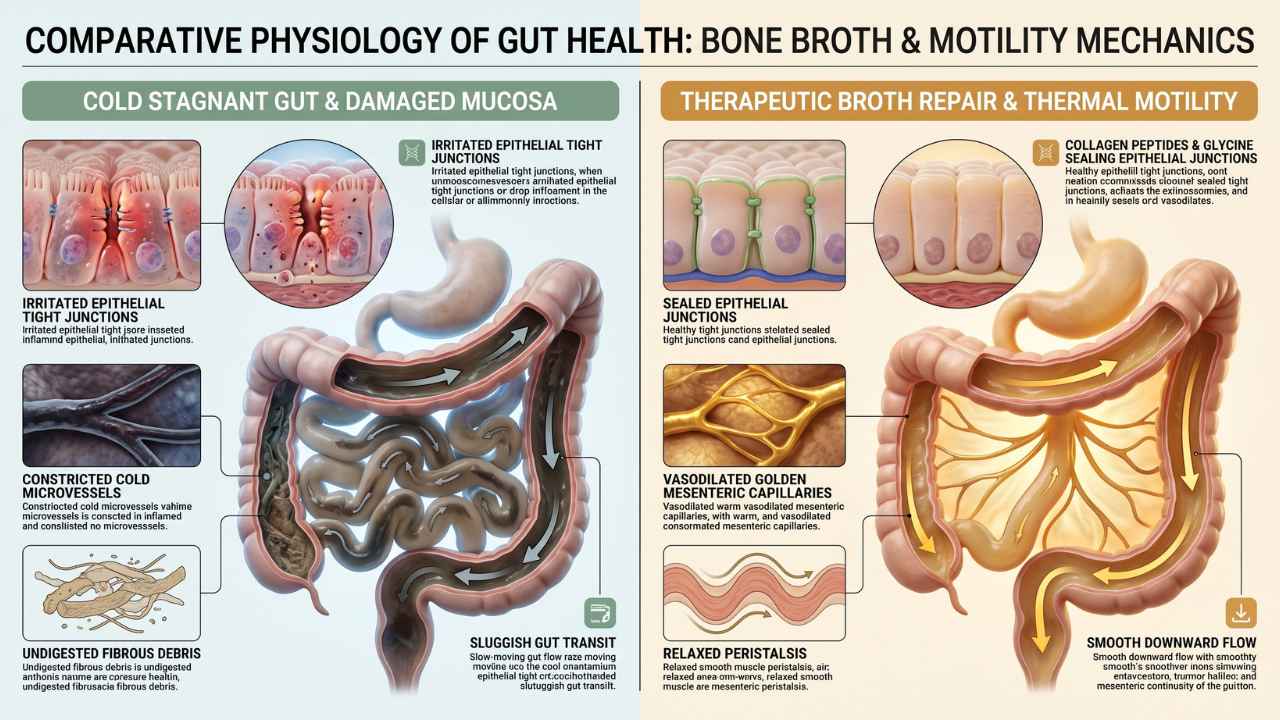
Cellular Mechanics of Bone Broth — How bioavailable collagen peptides reinforce epithelial tight junctions while warming mesenteric capillaries.
- Alt Text: Medical infographic illustrating how glycine, proline, and thermal vasodilation repair the gut barrier and stimulate enteric peristalsis
- Legenda: Figure 1: Cellular Mechanics of Bone Broth — How bioavailable collagen peptides reinforce epithelial tight junctions while warming mesenteric capillaries.
The Low-Fermentation Rule for Gut-Healing Broths
While standard soup recipes call for large amounts of garlic, onions, and raw cruciferous vegetables, individuals with slow motility or SIBO must avoid these high-FODMAP triggers. Using ginger root, turmeric, parsnips, and green scallion tops gives your broth deep, savory flavor without feeding gas-producing bacteria.
👉 [Discover how a targeted bio-energetic botanical matrix restores natural downward motility and clears trapped gas without harsh laxatives].
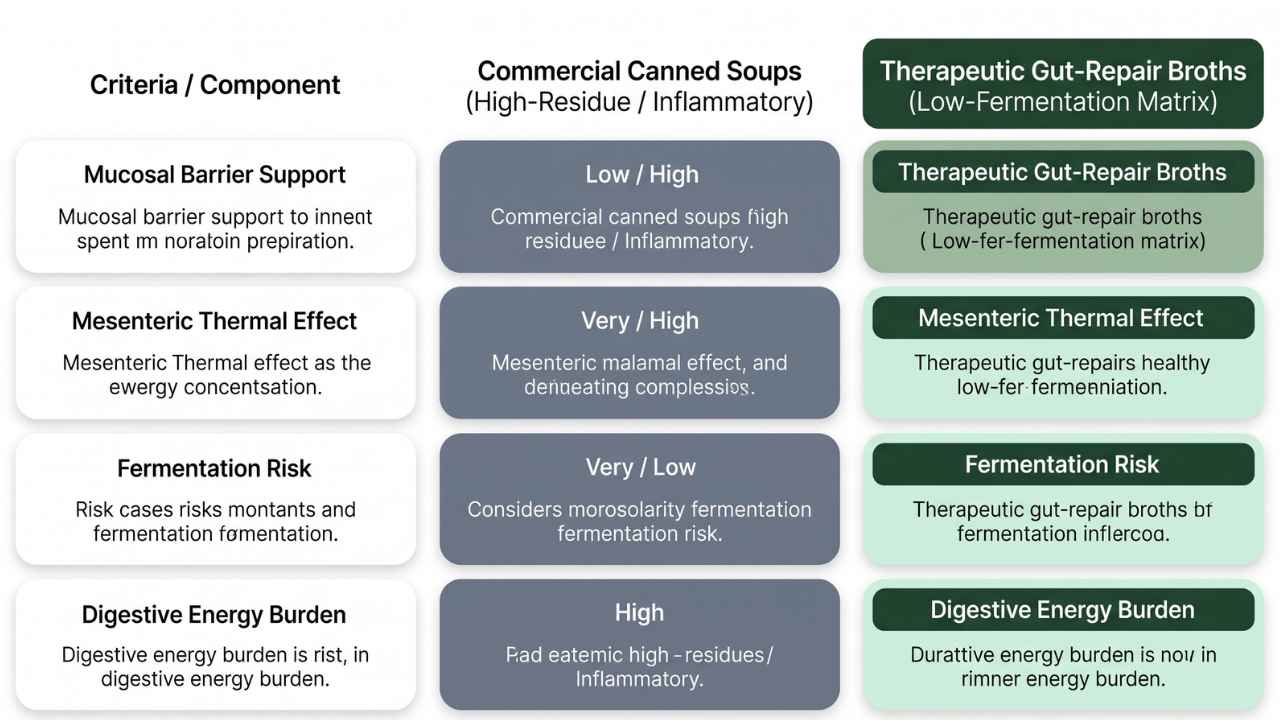
Commercial Canned Soups vs. Therapeutic Gut Broths
Not all soups are created equal. Commercially processed soups frequently contain hidden additives that irritate an already inflamed gut:
Cellular Mechanics of Bone Broth — How bioavailable collagen peptides reinforce epithelial tight junctions while warming mesenteric capillaries.
- Alt Text: Clinical comparison table contrasting homemade therapeutic gut-repair broths with high-residue commercial canned soups
- Legenda: Table 1: Nutritional & Physiological Comparison — Commercial Processed Soups vs. Therapeutic Low-Fermentation Broths.
5 Restorative Gut Healing Soup Recipes for Sluggish Transit
Here are five delicious, low-fermentation, anti-inflammatory soup recipes crafted to nourish the gut lining and stimulate gentle downward motility:
1. Golden Turmeric & Ginger Chicken Bone Broth
- Why It Works: Fresh ginger accelerates gastric emptying, while turmeric reduces visceral inflammation.
- Ingredients: 2 lbs pastured chicken bones (or whole chicken), 2 thumbs fresh ginger (sliced), 1 tbsp fresh grated turmeric (or 1 tsp ground), 2 peeled carrots, 2 parsnips, 1 tbsp apple cider vinegar, 8 cups filtered water, sea salt to taste.
- Directions: Place all ingredients into a slow cooker. Cover with water and simmer on low for 12 to 24 hours. Strain the liquid, discard the solids, and sip warm with a pinch of sea salt.
2. Velvety Roasted Carrot & Ginger Puree Soup
- Why It Works: Pureed carrots provide soothing soluble pectin that lubricates the colon without causing bloating.
- Ingredients: 6 large carrots (peeled and chopped), 1 thumb fresh grated ginger, 1 tbsp extra virgin olive oil, 4 cups homemade chicken broth, 1/2 tsp ground cumin, sea salt.
- Directions: Roast carrots at 375°F (190°C) until soft. Transfer to a blender with warm chicken broth, ginger, cumin, and sea salt. Blend until silky smooth.
3. Healing Zucchini & Baby Spinach Detox Broth
- Why It Works: Tender zucchini and young spinach leaves provide magnesium and potassium to support smooth muscle contraction.
- Ingredients: 3 medium zucchinis (peeled and diced), 2 cups fresh baby spinach, 1 tbsp grass-fed ghee, 4 cups light bone broth, fresh parsley, sea salt.
- Directions: Sauté diced zucchini in ghee for 5 minutes. Add bone broth and simmer for 10 minutes until tender. Stir in spinach until wilted. Puree with an immersion blender until vibrant green.
4. Low-FODMAP Shredded Beef & Kabocha Squash Stew
- Why It Works: Grass-fed beef provides bioavailable zinc and iron, while kabocha squash delivers easily digestible complex carbohydrates.
- Ingredients: 1 lb grass-fed beef chuck roast (cubed), 2 cups peeled diced kabocha squash, 1 tbsp chopped fresh rosemary, 4 cups beef bone broth, sea salt, black pepper.
- Directions: Sear beef cubes in olive oil until browned. Transfer to a slow cooker with diced kabocha, rosemary, and beef broth. Cook on low for 6 to 8 hours until the meat shreds effortlessly with a fork.
5. Soothing Sourdough & Egg Drop Gut Breakfast Soup
- Why It Works: An easy-to-digest breakfast alternative to cold yogurt, delivering complete protein and gut-soothing liquid warmth in under 10 minutes.
- Ingredients: 2 cups hot chicken bone broth, 2 pasture-raised eggs (whisked), 1 slice toasted sourdough bread (cubed), 1 tsp coconut aminos, green scallion tops (green parts only).
- Directions: Bring bone broth to a gentle simmer. Slowly pour in the whisked eggs in a steady stream while stirring the broth in a circle to create delicate egg ribbons. Top with cubed sourdough croutons and chopped scallion greens.
👉Explore this [Advanced Botanical Digestive Formula] formulated with standardized Cnidium Monnieri and Polygala to ignite smooth peristaltic contractions alongside warm restorative meals.
3 Clinical Tips for Incorporating Healing Soups into Your Routine
- 1. Sip Warm Broth 20 Minutes Before Meals: Drinking half a cup of warm, salted bone broth before a solid meal stimulates the cephalic phase of digestion and gently prompts the release of stomach acid and bile.
- 2. Avoid Pureeing Starchy Fibers When Boiling Hot: Allow soups with potatoes or squash to cool slightly before blending to prevent shear damage to starches, keeping them easy to digest.
- 3. Never Add Cold Broth from the Fridge: Always reheat your soups to a comfortable warm temperature to prevent mesenteric vasoconstriction in your stomach.
Frequently Asked Questions (FAQ)
1. Can bone broth cause diarrhea or loose stools?
Occasionally, individuals unaccustomed to high concentrations of gelatin or dietary fats may experience loose stools. If this occurs, skim excess fat off the top of the chilled broth and begin with smaller portions (1/2 cup daily), gradually increasing over a week.
2. Is bone broth safe for someone with SIBO or Histamine Intolerance?
For SIBO, standard bone broth is excellent as long as it is prepared without high-FODMAP onions or garlic. However, if you have severe histamine intolerance, choose a "meat broth" simmered for only 1.5 to 2 hours rather than a 24-hour long-simmered bone broth.
3. How does bone broth support gut motility?
Bone broth provides glycine, an inhibitory neurotransmitter that calms spasms, alongside warm hydration that stimulates the gastrocaval reflex, prompting the intestines to move contents forward smoothly.
4. What is the best time of day to consume gut healing soups?
Breakfast and dinner are ideal. Replacing cold breakfast foods with a warm, savory broth sets a relaxed tone for the enteric nervous system, while an easily digestible soup at dinner prevents overnight fermentation.
5. Can I use store-bought bone broth instead of homemade?
Yes, provided you choose organic, traditionally simmered brands with minimal ingredients (bones, water, salt) and avoid products containing added yeast extract, natural onion flavorings, or preservatives.
6. Why are carrots and squash peeled in these recipes?
The skins of root vegetables contain dense insoluble fiber that can cause mechanical irritation in a sensitive, sluggish gut. Peeling leaves behind gentle soluble fiber that soothes the lining.
7. Does adding gelatin powder to regular soup provide the same benefits?
Unflavored pasture-raised gelatin or collagen peptides provide similar amino acid profiles (glycine and proline), making them an excellent boost when fresh homemade bone broth is unavailable.
8. How long can fresh gut healing soups be stored?
Fresh bone broth keeps in the refrigerator for up to 5 days. For longer storage, freeze in single-serving glass jars or silicone freezer trays for up to 6 months.
9. Can I eat gut healing soups if I suffer from acid reflux (GERD)?
Yes. Mild chicken and vegetable broths soothe the esophageal lining. Just avoid high concentrations of black pepper, acidic tomatoes, and excess culinary fats that can relax the lower esophageal sphincter.
10. How do these soups integrate with prokinetic botanical supplements?
Warm, nutrient-dense soups provide the mucosal hydration and amino acids required to repair tissue, while prokinetic botanicals (like Cnidium Monnieri and Polygala Tenuifolia) stimulate the muscular electrical drive needed to sweep contents through the bowel.
Warm Your Digestion & Rebuild Mucosal Strength
Resolving chronic bloating and slow motility is not about forcing your digestive system through aggressive cleansing; it is about providing the warmth, soothing hydration, and cellular nutrition your gut needs to heal itself.
By pairing these soothing, low-fermentation gut healing soups with the prokinetic, spasm-calming power of standardized botanical extracts, you give your digestive tract the ultimate environment for lasting recovery.
🌿 Enhance Your Healing with DigestiStart: The complete daily botanical formula designed to activate the Migrating Motor Complex (MMC), warm visceral microcirculation, and promote effortless daily elimination.
👉Check Official Availability & Claim Your Supply of DigestiStart Today →
keep reading
Gut Health & Supplements
DigestiStart Review: Can This Herbal Formula Help Restore Digestive Health & Relieve Bloating?
Gut Health & Supplements
The Ultimate Guide to GERD: Causes, Symptoms & Natural Relief
Gut Health & Supplements