Stomach Bloating After Eating: Neuromuscular Gut Motility vs. Microbial Fermentation
Discover why your stomach bloats after eating. Understand the real difference between microbial fermentation and neuromuscular gut stagnation, and how to fix it.
disclosure This article contains affiliate links. Purchases may earn us a commission at no extra cost to you. We only recommend products we've reviewed.
featured in this review
DigestiStart
Advanced bioactive botanical formula that activates smooth muscle peristalsis, clears pelvic venous congestion, and eliminates stubborn bloating without harsh laxatives.
Stomach Bloating After Eating: Neuromuscular Gut Motility vs. Microbial Fermentation
Few symptoms are as physically uncomfortable and mentally frustrating as watching your stomach swell immediately after a meal. For millions of people, eating even a modest, "clean" meal triggers a protruding belly, a sensation that the stomach is hard and tight, nausea, and sharp discomfort that lingers for hours.
The conventional response is almost always to eliminate more foods: cutting out dairy, gluten, grains, and high-FODMAP vegetables.
Yet, when you find yourself experiencing severe stomach bloating after eating very little, restrictive diets stop working.
The underlying problem is rarely just the food itself. It is a fundamental breakdown in neuromuscular gut motility—the electrical and physical coordination required to move food downward before it stagnates and ferments.
Why Is My Stomach Hard and Distended After Meals?
When food enters the stomach, two distinct biological mechanisms must work in unison: biochemical breakdown (enzymes and acid) and mechanical transit (smooth muscle peristalsis).
When post-meal bloating becomes chronic, it typically stems from one of two primary pathways:
- 1. Rapid Microbial Fermentation: When bacteria colonize the small intestine (SIBO), they feed on undigested carbohydrates within minutes, producing large volumes of hydrogen, methane, or hydrogen sulfide gases.
- 2. Enteric Neuromuscular Stagnation: The interstitial cells of Cajal (the gut's electrical pacemakers) fail to trigger coordinated contractions. Food lingers in the stomach and duodenum, leading to delayed gastric emptying, early satiety, and visceral wall stretching.
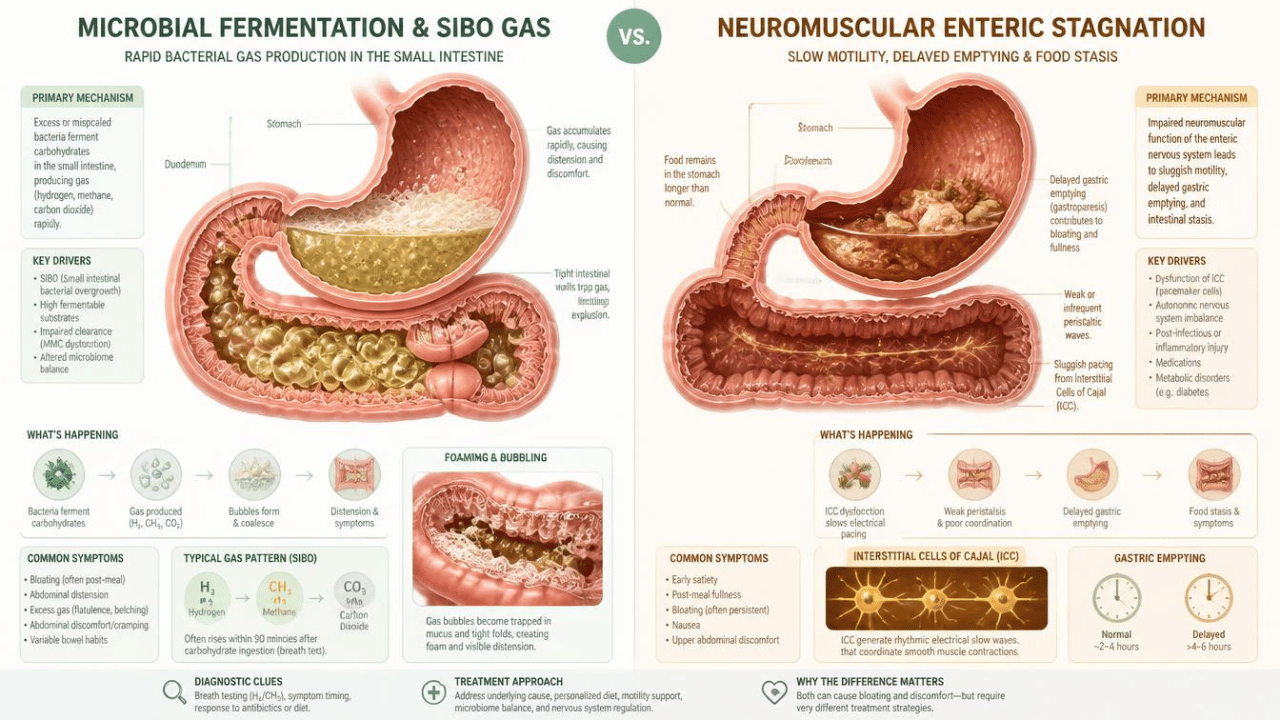
Figure 1: Neuromuscular Stagnation Mechanics — How impaired enteric pacing leads to trapped food residue, gas pocket accumulation, and severe post-meal distension.
- Alt Text: Medical anatomical infographic contrasting microbial fermentation gas pockets with enteric motor stagnation and delayed gastric emptying
- Legenda: Figure 1: Neuromuscular Stagnation Mechanics — How impaired enteric pacing leads to trapped food residue, gas pocket accumulation, and severe post-meal distension.
The Hidden Trap: When Probiotics Make Bloating Worse
When enteric motility is stalled, introducing billions of live bacterial cultures through standard probiotic supplements is like adding more cars to a traffic jam. Without active forward propulsion, supplemented bacteria settle in the upper digestive tract, dramatically increasing gas production and postprandial distension.
👉 [Discover how a targeted bio-energetic botanical matrix restores natural downward motility and clears trapped gas without harsh laxatives].
Microbial Fermentation vs. Neuromuscular Motility Stagnation
Understanding whether your bloating is driven purely by microbial gas or by stalled enteric motility is essential for choosing the right recovery protocol:
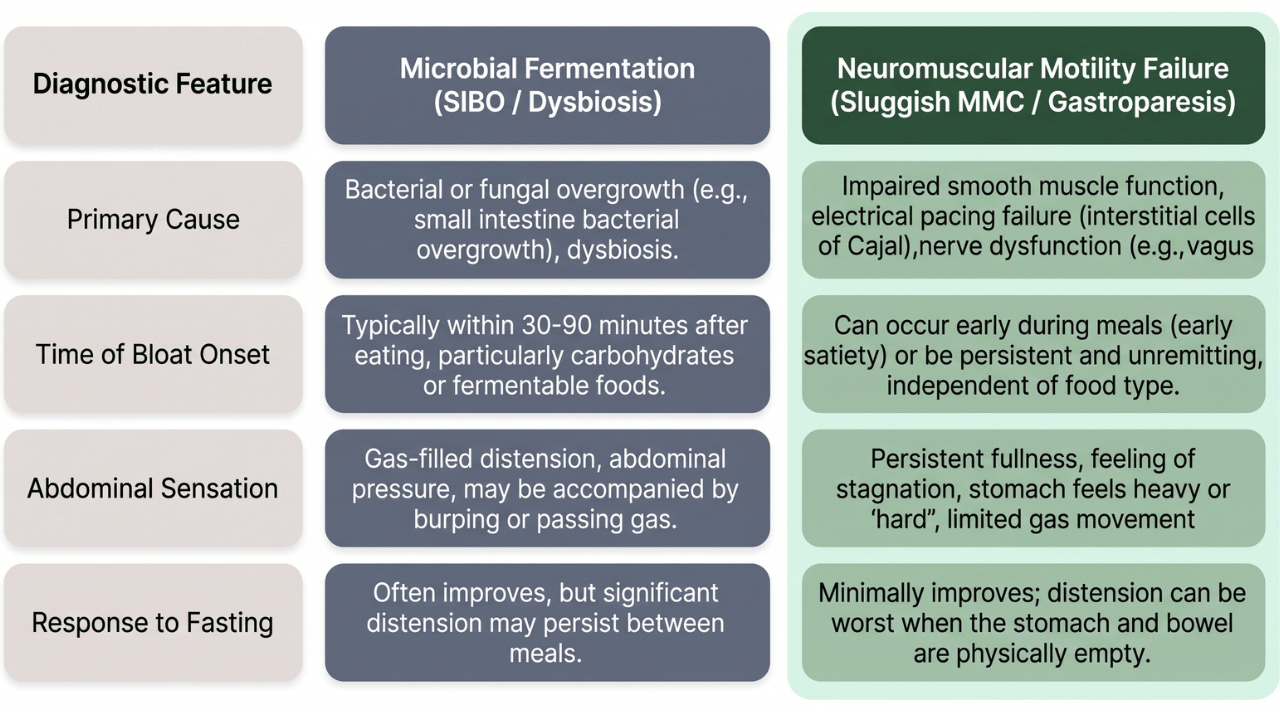
Table 1: Clinical Differentiation — Microbial Gas Fermentation vs. Neuromuscular Enteric Motility Stagnation.
- Alt Text: Clinical comparison table differentiating microbial carbohydrate fermentation from neuromuscular gut motility failure
- Legenda: Table 1: Clinical Differentiation — Microbial Gas Fermentation vs. Neuromuscular Enteric Motility Stagnation.
4 Root Causes of Sluggish Motility & Post-Meal Bloating
If your digestive tract lacks propulsive momentum, identifying these four physiological triggers can restore regular transit:
1. Migrating Motor Complex (MMC) Inactivity
Between meals, the gut relies on a specialized electrical sweeping wave known as the Migrating Motor Complex. If you graze constantly, experience chronic stress, or have post-infectious enteric nerve inflammation, the MMC shuts down, leaving residual debris to stagnate.
2. Gastric Acid and Bile Insufficiency
Adequate stomach acid (HCl) and bile flow act as natural prokinetic triggers. Without sufficient acidity to signal pyloric valve opening and gallbladder contraction, the entire digestive cascade slows, leaving the upper abdomen painfully distended.
3. Enteric Nervous System Spasms
When visceral sensory nerves become hypersensitive, the circular smooth muscle fibers undergo uncoordinated spasms rather than smooth rhythmic peristalsis. This creates localized pinch points where gas and fluid get trapped.
4. Pelvic Floor and Splanchnic Blood Stasis
Sedentary lifestyle and impaired microcirculation reduce arterial blood delivery to the mesenteric vascular bed. Cold, sluggish circulation deprives intestinal smooth muscle of the oxygen and ATP required for sustained peristaltic waves.
👉Explore this [Advanced Botanical Digestive Formula] formulated with standardized Cnidium Monnieri and Polygala to ignite smooth peristaltic contractions alongside warm restorative meals.
4 Clinical Strategies to Clear Trapped Gas & Stimulate Motility
- Implement 4-Hour Inter-Meal Fasting Windows: Stop grazing between meals. Giving your digestive tract a 4 to 5-hour window without caloric intake allows the Migrating Motor Complex to complete its 90-minute sweeping cycles.
- Anchor Meals with Warming Carminative Spices: Incorporate fresh ginger, cracked fennel seeds, and Ceylon cinnamon into your cooking to stimulate gastric blood flow and reduce gas surface tension.
- Engage in 10-Minute Post-Meal Walking: Gentle, upright ambulation after eating mechanically stimulates the gastrocolic reflex and accelerates gastric emptying without placing stress on the heart.
- Prioritize Low-Residue, Warm Nutrients: Focus on easily absorbable proteins, well-cooked root vegetables, and warm bone broths rather than cold, fibrous raw salads that demand massive digestive energy.
Frequently Asked Questions (FAQ)
1. Why does my stomach bloat even when I drink water or eat very little?
When enteric smooth muscle is stagnant or visceral nerves are hypersensitive, even the physical weight of water or small food volumes stretches the gastric wall, triggering a reflex relaxation of the abdominal wall known as abdomino-phrenic dyssynergia.
2. What is the difference between bloating and abdominal fat?
Bloating fluctuates throughout the day—often starting flat in the morning and expanding significantly after meals—and feels tight or tender. Abdominal adipose tissue remains constant in size and feels soft and pliable to the touch.
3. Can sluggish bowel motility cause back pain after eating?
Yes. Distension of the stomach and transverse colon exerts pressure on posterior retroperitoneal nerve pathways and the diaphragm, projecting referred aching sensations into the mid- and lower back.
4. Does magnesium help relieve chronic stomach bloating?
Magnesium (especially forms like magnesium citrate or oxide) acts as an osmotic agent by drawing water into the lumen to promote bowel clearance. However, while it helps empty the colon, it does not fix small intestine electrical motility on its own.
5. Why do eggs or high-protein meals cause fullness in some people?
Proteins and fats trigger the release of cholecystokinin (CCK), which naturally slows gastric emptying to ensure proper breakdown. If your stomach acid or enzyme production is low, protein stays in the stomach too long, causing prolonged heaviness.
6. What causes a fluttering or gurgling feeling in the upper abdomen?
Upper abdominal gurgling (borborygmi) is caused by gas and fluid being forced through narrowed or spasming segments of the bowel as the enteric nervous system attempts to re-establish forward transit.
7. How does chronic stress shut down gut motility?
High sympathetic "fight-or-flight" tone diverts blood flow away from the mesenteric circulation and inhibits the vagus nerve, immediately halting digestive enzyme secretion and peristaltic motor sweeps.
8. Is coffee effective for stimulating bowel movements?
Coffee stimulates the release of gastrin and cholecystokinin, triggering the gastrocolic reflex in the colon within minutes for many people. However, in individuals with high gut sensitivity, excessive caffeine can trigger enteric spasms rather than smooth transit.
9. How do I know if my bloating is caused by SIBO?
Bloating that occurs within 30 to 90 minutes after consuming fermentable carbohydrates (like onions, garlic, apples, or beans) and is accompanied by excessive gas, brain fog, or altered bowel patterns is a hallmark indicator of SIBO.
10. How do prokinetic botanical formulas resolve bloating differently from laxatives?
Laxatives chemically irritate the mucosal lining or draw water into the colon for emergency evacuation. Botanical prokinetics work upstream by stimulating the enteric neuromuscular pacemakers and the vagal motor drive, restoring continuous, natural sweeping waves.
Take Control of Your Digestion: Restore Rhythm Over Restriction
Living with persistent post-meal bloating and stalled transit is not a life sentence of eating plain chicken and white rice in isolation.
By shifting your focus from endless food eliminations to activating neuromuscular motility and soothing enteric nerve tension, you give your gastrointestinal tract the propulsive power it needs to clear gas, process nutrients effortlessly, and stay comfortably flat all day.
🌿 Restore Your Natural Enteric Motility with DigestiStart: The comprehensive botanical formula developed to reactivate the Migrating Motor Complex (MMC), reduce trapped gas pressure, and ensure smooth, predictable daily transit.
Check Official Availability & Claim Your Supply of DigestiStart Today →
keep reading
Gut Health & Supplements
DigestiStart Review: Can This Herbal Formula Help Restore Digestive Health & Relieve Bloating?
Gut Health & Supplements
The Ultimate Guide to GERD: Causes, Symptoms & Natural Relief
Gut Health & Supplements