
Trapped Gas Under Ribs: Splenic Flexure Syndrome Relief & Motility Solutions
Sharp pain or gas bubbles under your left rib cage? Discover splenic flexure syndrome symptoms, positional relief techniques, and natural motility solutions.
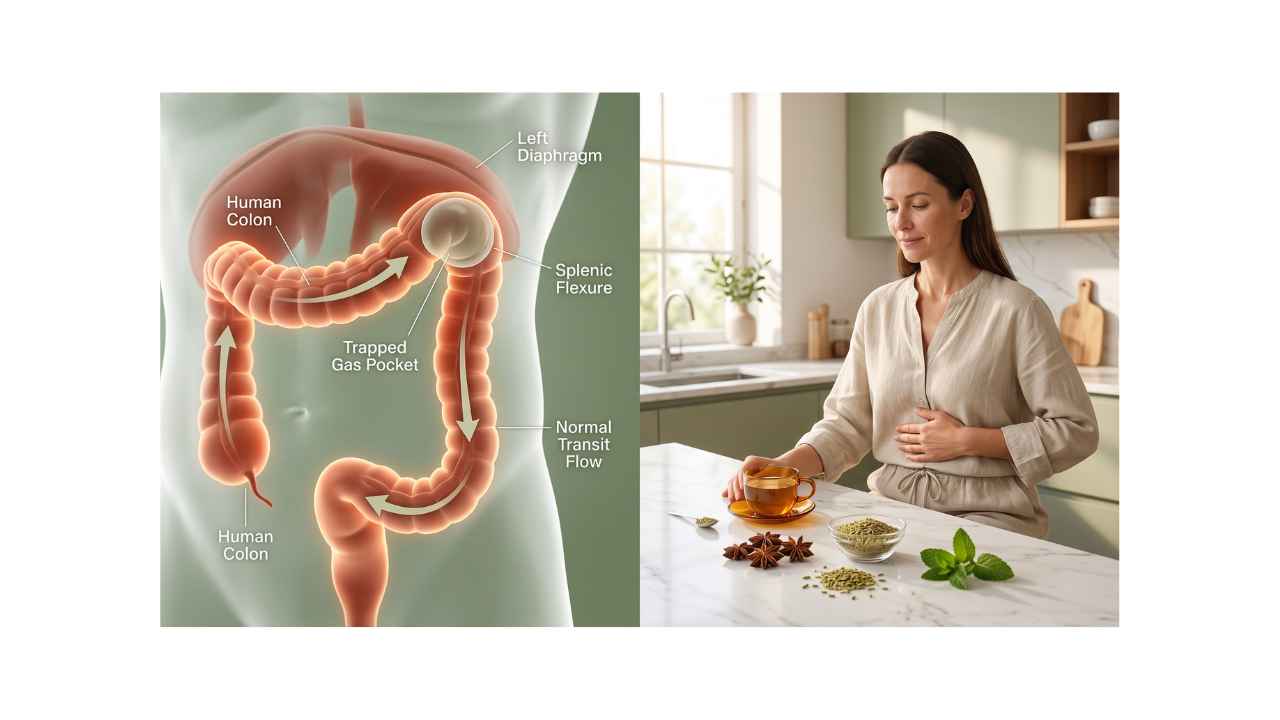
disclosure This article contains affiliate links. Purchases may earn us a commission at no extra cost to you. We only recommend products we've reviewed.
Trapped Gas Under Ribs: Splenic Flexure Syndrome Relief & Motility Solutions
You sit down at your desk or finish a light meal, and suddenly a sharp, stabbing ache or intense pressure locks beneath your left rib cage. For many, this agonizing sensation of trapped gas under the ribs radiates upward into the chest or shoulder, creating sudden anxiety and an uncomfortable feeling of breathlessness.
Because the discomfort sits high in the rib cage, it is commonly mistaken for heart issues, spleen inflammation, or standard heartburn.
However, antacids and basic anti-gas chews rarely provide lasting relief. When gas becomes physically trapped in the highest corner of the large intestine, you are dealing with Splenic Flexure Syndrome—a mechanical stagnation issue rooted in uncoordinated enteric motility and localized smooth muscle spasms.
Understanding the unique anatomy of the splenic flexure is the key to unlocking this trapped pressure and restoring smooth, continuous gut flow.
Why Gas Traps in the Splenic Flexure: Anatomy & Mechanics
The large intestine travels across the upper abdomen (transverse colon) and makes a sharp, hairpin downward turn near the spleen into the descending colon. This anatomical junction is called the splenic flexure.
Because the splenic flexure sits higher in the abdominal cavity than any other part of the colon—tucked directly beneath the left dome of the diaphragm—it acts as a natural biological trap:
- 1. Buoyant Gas Accumulation: Physical gas naturally rises. In a sluggish digestive tract, buoyant pockets of gas float to the apex of this colon bend, where they get mechanically trapped if downward peristalsis is weak, intensifying stomach bloating after eating.
- 2. Colic Angle Spasms: When smooth muscles at this junction spasm instead of performing coordinated rhythmic contractions, the lumen pinches shut. Food residues stall, leading to food sitting in stomach for hours.
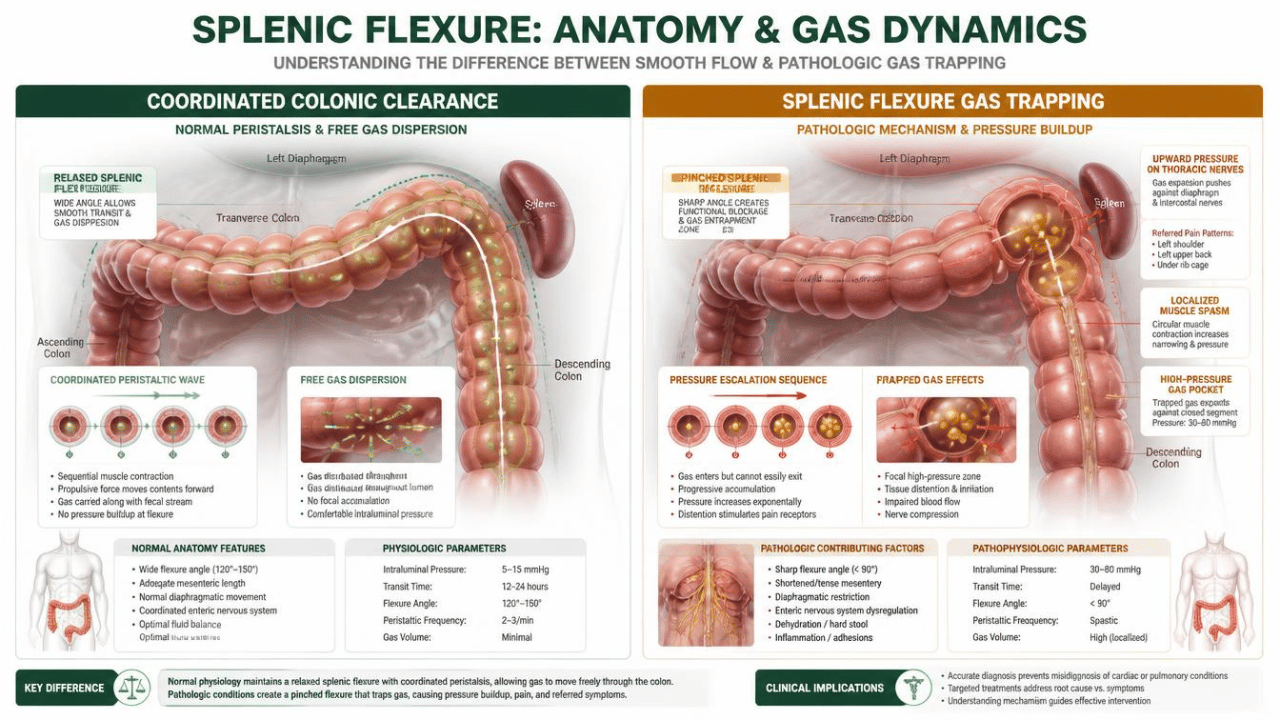
Figure 1: Splenic Flexure Mechanics — How high anatomical colon bends and smooth muscle spasms create trapped gas pockets under the ribs.
Why Standard Laxatives and Simethicone Often Fail
Simethicone breaks surface tension to merge small bubbles into larger ones, but if the muscular "turn" of the colon is clamped shut, the larger gas bubble remains trapped against the ribs. Standard laxatives irritate the lower bowel without coordinating smooth relaxation at the upper colic bend. Real relief requires calming enteric spasms and stimulating sweeping downward motility.
Splenic Flexure Syndrome vs. GERD vs. Musculoskeletal Rib Pain
Because left-sided upper pain can stem from multiple sources, this clinical breakdown helps identify the true mechanism:
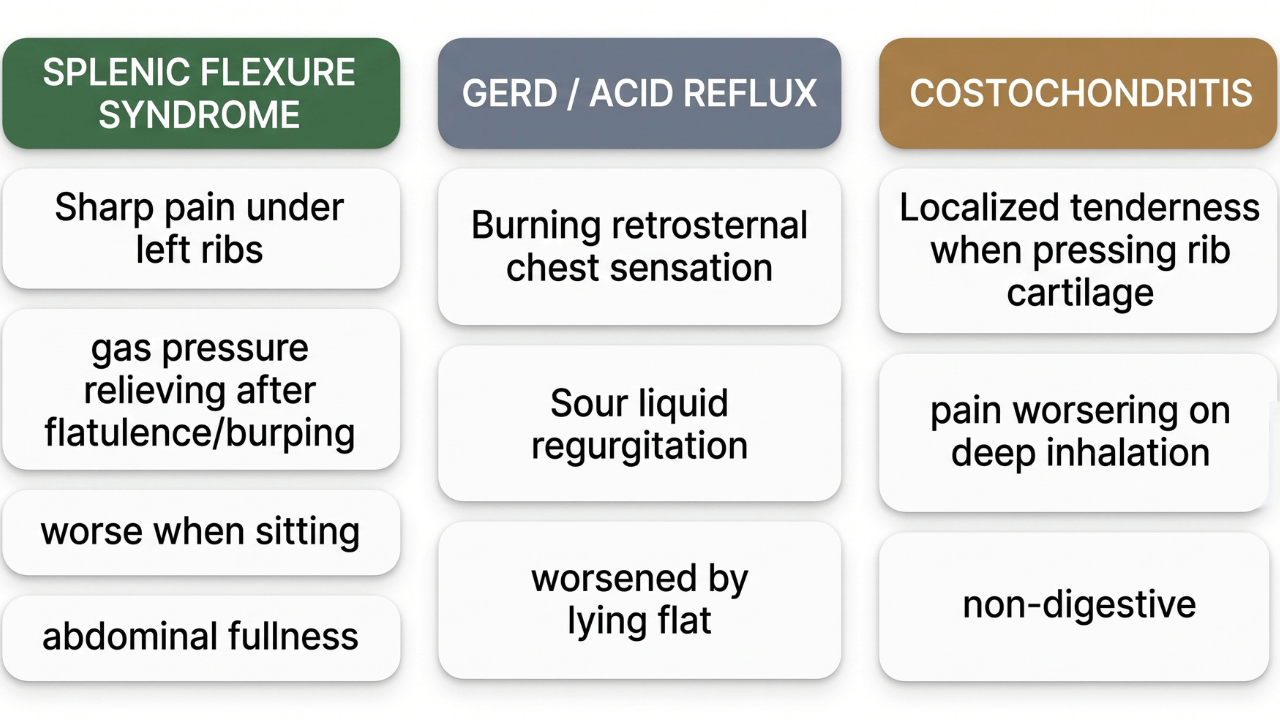 Table 1: Differential Assessment — Splenic Flexure Syndrome vs. GERD vs. Musculoskeletal Rib Pain.
5 Primary Symptoms of Splenic Flexure Syndrome
When gas and digestive residues become trapped at the splenic angle, it triggers several distinct clinical signs:
1. Sharp, Stabbing Pain Under the Left Lower Rib Cage
A localized pressure or pinching ache beneath the left ribs that frequently worsens when sitting hunched over or wearing tight waistbands, as mechanical compression further closes the colic angle.
2. Resonant Borborygmi and Fluttering Sensations
Loud, resonant gurgling, bubbling, or vibrating sensations high under the left rib cage as trapped gas pockets struggle to squeeze past constricted intestinal folds, generating noticeable loud stomach gurgling and trapped gas.
3. Left Flank Discomfort Radiating to the Upper Back
The distended colon loop places tension on retroperitoneal sensory nerves, causing pain to refer backward into the left flank, mid-back, or shoulder blade area.
4. Upward Diaphragm Pressure & Pseudo-Cardiac Tightness
An expanding gas pocket at the splenic apex pushes upward against the left diaphragm dome. This mechanical pressure limits full lung expansion and can trigger temporary heart palpitations, often compounded by sluggish gallbladder and poor bile flow affecting upper digestive clearance.
5. Positional Flank Pain and Nocturnal Stagnation
Lying flat on the left side or slumping back on a sofa can compress the splenic flexure, trapping fermenting gases and leading to uncomfortable evening distension and morning tightness.
👉 Explore this Advanced Botanical Digestive Formula featuring standardized Cnidium Monnieri, carminatives, and smooth muscle tonics to release high-pressure colic spasms and propel trapped gas downward.
4 Rapid Physical & Lifestyle Techniques to Release Trapped Rib Gas
- Adopt the Left-to-Right Knee-to-Chest Posture: Lie on your back, bring your knees toward your chest, and gently roll from left to right. This shifts the anatomical angle of the splenic flexure, allowing buoyancy to move trapped gas into the descending colon for effortless clearance.
- Practice Torso Elongation & Side Bends: Avoid sitting slouched after eating. Stand tall and perform slow, gentle overhead side stretches away from the left side. Elongating the left torso expands the space under the ribs and opens the pinched colic bend.
- Apply Gentle Downward Colon Massage: Use your fingertips to apply light, circular pressure starting just below the left rib cage and moving downward toward the left hip bone to mechanically guide trapped air along the descending colon.
- Incorporate Antispasmodic Prokinetic Botanicals: Herbs with dual carminative and prokinetic actions relax hypertonic smooth muscle spasms while keeping intestinal pacemaker waves active.
Frequently Asked Questions (FAQ)
1. What does splenic flexure syndrome pain feel like?
It feels like a sharp, stabbing ache, fullness, or pinching pressure located high under the left rib cage. It can range from a dull continuous ache to acute spasms that radiate to the left chest, back, or shoulder.
2. Can trapped gas under the ribs feel like a heart attack?
Yes. Because the splenic flexure sits directly beneath the diaphragm near the heart, severe gas distension can cause referred chest tightness, rib pressure, and shortness of breath. (Always seek emergency medical evaluation to rule out cardiac causes for sudden chest pain).
3. Why does gas get trapped on the left side more than the right?
The splenic flexure on the left side is anatomically higher and more sharply angled than the hepatic flexure on the right. Gas naturally rises to this highest apex, making it far more prone to entrapment.
4. How can I get rid of trapped gas under my rib cage fast?
Combine deep diaphragmatic breathing with the "knee-to-chest" stretch or a gentle left-side torso stretch. Drinking warm water with carminative botanical extracts also relaxes the colic sphincter rapidly.
5. Does sitting down make splenic flexure pain worse?
Yes. Sitting—especially slouched over a desk or in a soft chair—mechanically compresses the upper abdomen, tightening the splenic bend and preventing gas bubbles from passing downward.
6. Can constipation cause pain under the left rib cage?
Yes. When stool accumulates in the descending or sigmoid colon, it creates a physical roadblock. Gas produced upstream cannot pass, backing up and expanding at the splenic flexure.
7. What foods trigger gas trapped under the ribs?
High-FODMAP foods, carbonated beverages, raw cruciferous vegetables, beans, and artificial sweeteners generate high volumes of hydrogen and methane gas that easily accumulate at anatomical colon bends.
8. How does stress contribute to splenic flexure spasms?
The gut-brain axis regulates enteric smooth muscle tone. During periods of sympathetic stress, stress hormones trigger uncoordinated spasms in the colon wall, clamping the splenic junction shut.
9. Can walking help release gas from under the ribs?
Yes. Gentle upright walking uses gravity and abdominal muscle movement to massage the intestines, encouraging the splenic bend to open and propel gas bubbles forward.
10. What is the difference between splenic flexure syndrome and IBS?
Splenic Flexure Syndrome is considered a localized functional variant of IBS, focusing specifically on anatomical gas entrapment and smooth muscle spasms at the left colic junction.
11. Can drinking through a straw make rib pain worse?
Yes. Drinking through straws, chewing gum, or eating too fast increases aerophagia (swallowed air), which rapidly travels down to the highest colon bends.
12. Does a heating pad help trapped rib gas?
Applying a warm heating pad to the upper left abdomen helps relax tight smooth muscle fibers and improves localized blood flow, easing spasms at the colic flexure.
13. Why does trapped gas cause back pain?
The colon shares visceral sensory nerve pathways with the spinal cord. High distension at the splenic angle refers pain signals to the mid-to-upper back and left flank.
14. What sleeping position is best for releasing trapped rib gas?
Sleeping on your left side initially brings the splenic flexure lower than the transverse colon. Transitioning to lying flat or on the right side then uses buoyancy to move gas through the descending colon.
15. How do prokinetics prevent chronic trapped gas under the ribs?
Targeted prokinetics improve acetylcholine signaling, ensuring continuous, coordinated peristaltic contractions that prevent gas from stalling and accumulating at high anatomical colon bends.
Free the Trapped Pressure: Clear the Splenic Bend and Reclaim Ease
Living with sharp left rib pain, trapped gas bubbles, and restricted breathing is an uncomfortable physical drag on your daily routine.
By focusing on relaxing localized colic smooth muscle spasms, correcting anatomical posture, and activating continuous downward peristalsis, you eliminate gas traps at the source and keep your digestive highway moving smoothly.
🌿 Clear Trapped Rib Gas with DigestiStart: The advanced botanical prokinetic matrix formulated to soothe colic spasms, accelerate upper GI clearance, and eliminate stubborn trapped gas without harsh laxatives.
Check Official Availability & Claim Your Supply of DigestiStart Today →
keep reading
Gut Health & Supplements
DigestiStart Review: Can This Herbal Formula Help Restore Digestive Health & Relieve Bloating?
Gut Health & Supplements
The Ultimate Guide to GERD: Causes, Symptoms & Natural Relief
Gut Health & Supplements