Digestive Enzymes After Gallbladder Removal: How to Stop Bile Diarrhea, Fat Bloat & Nutrient Deficiencies
Should you take digestive enzymes after gallbladder removal? Discover how to stop bile acid diarrhea, relieve post-cholecystectomy bloat, and absorb fats.
disclosure This article contains affiliate links. Purchases may earn us a commission at no extra cost to you. We only recommend products we've reviewed.
Digestive Enzymes After Gallbladder Removal: How to Stop Bile Diarrhea, Fat Bloat & Nutrient Deficiencies
Over 700,000 cholecystectomies (gallbladder removal surgeries) are performed annually in the United States alone. In the vast majority of cases, patients are discharged from the hospital with a single dietary reassurance: "You do not need your gallbladder to live a normal life; eat whatever you like after two weeks."
Yet for tens of thousands of individuals, life after surgery tells a completely different story. Weeks, months, or even years after the procedure, eating a meal containing healthy oils, butter, or protein triggers immediate digestive distress: explosive, urgent yellow diarrhea, persistent upper abdominal bloat, chronic floating stools, and painful nausea.
These debilitating symptoms are not "in your head"—they are the direct biochemical consequence of losing a critical storage organ. While you can survive without a gallbladder, your liver never stops manufacturing bile. Removing the reservoir fundamentally disrupts how your gastrointestinal tract handles dietary lipids and pancreatic enzymes.
Understanding how to strategically deploy digestive enzymes with high-potency lipase, alongside targeted bile acid modulation, is the clinical key to eliminating post-cholecystectomy syndrome and restoring long-term metabolic health.
1. The Surgical Shift: What Really Happens to Bile Flow After Cholecystectomy
To understand why digestive enzymes are necessary after gallbladder surgery, you must examine how your internal plumbing was altered.
Your gallbladder never produced bile; its job was to store, dehydrate, and concentrate the bile manufactured continuously by your liver. In an intact digestive system, consuming a fatty meal triggers the release of the hormone cholecystokinin (CCK). CCK instructs the gallbladder to contract forcefully, dumping a potent, highly concentrated surge of bile into the duodenum at the exact second food arrives from the stomach.
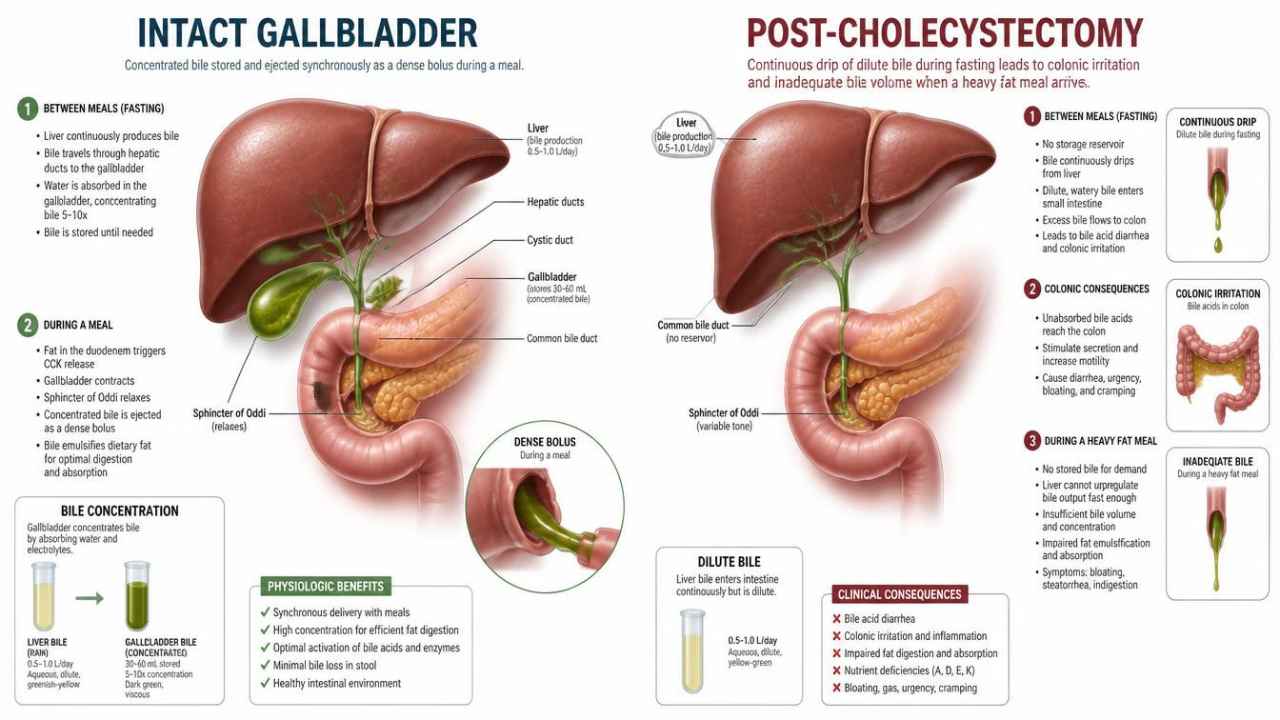 Figure 1: The Reservoir Deficit — How losing the gallbladder converts a meal-triggered bile surge into an unregulated, dilute drip.
When the gallbladder is surgically excised, this on-demand reservoir is permanently gone:
- The Fasting Bile Drip: Without a reservoir, the liver continuously trickles dilute, watery bile into the empty duodenum 24 hours a day, even while you sleep.
- The Mealtime Deficit: When you sit down to eat a substantial meal containing healthy fats, there is no concentrated reservoir left to discharge. The dilute trickle of hepatic bile is insufficient to emulsify the incoming fat volume.
- The Pancreatic Disconnect: Because fat is not adequately emulsified into microscopic droplets, native pancreatic lipase cannot access the triglycerides, leading to secondary functional enzyme failure.
This anatomical change leads directly to the two primary subtypes of post-cholecystectomy dysfunction: chronic fat-malabsorption bloating or caustic bile acid diarrhea.
2. The Post-Cholecystectomy Paradox: Oily Bloat vs. Bile Acid Diarrhea
Depending on how your enteric nervous system, liver output, and colonic microbiome adapt to surgery, post-cholecystectomy symptoms manifest in two opposite clinical patterns:
Clinical Subtype A: The Malabsorptive Pattern (Fat Bloat & Floating Stools)
In this pattern, the liver's dilute bile output cannot keep pace with dietary fat intake.
- Unemulsified, unhydrolyzed fat globules travel through the small intestine intact.
- Stools become pale, chalky, clay-colored, or floating with a greasy residue.
- The patient suffers from deep epigastric heaviness, upper right quadrant tightness, chronic nausea, and severe fat-soluble vitamin malabsorption.
- This pattern mimics the chronic presentation of a sluggish gallbladder and trouble digesting fats, despite the organ no longer being present.
Clinical Subtype B: The Choleretic Pattern (Bile Acid Diarrhea - BAM Type 3)
In this pattern, the constant 24-hour drip of bile acids overwhelms the terminal ileum's capacity for reabsorption.
- Excess unabsorbed bile salts pass directly into the large intestine.
- In the colon, bile acts as a harsh chemical irritant and biological laxative, stimulating rapid secretomotor activity and pulling liters of water into the bowel lumen.
- The result is sudden, painful, explosive watery diarrhea—typically neon yellow or green—striking 15 to 45 minutes after eating.
Understanding which subtype dominates your physiology determines whether your primary intervention should be broad-spectrum enzymes with supplemental bile, or high-lipase enzymes paired with natural bile binders.
3. Do You Need Digestive Enzymes, Ox Bile, or Both?
A major point of confusion for post-cholecystectomy patients is whether to reach for purified ox bile or standard digestive enzymes. As detailed in our clinical comparison of ox bile vs digestive enzymes for fat malabsorption, these two interventions target separate steps of digestion.
Why Standard Digestive Enzymes Are Non-Negotiable
When bile flow is uncoordinated, the activation of pancreatic enzymes in the duodenal lumen is severely compromised. Supplementing with a broad-spectrum digestive enzyme containing high concentrations of lipase, protease, and amylase provides immediate benefits:
- It breaks down dietary proteins and starches in the stomach before they reach the duodenum, reducing total digestive workload.
- Supplemental microbial lipase remains stable across a wide pH range, cleaving triglycerides even when dilute bile fails to create optimal micelle conditions.
- As established in our analysis of pancreatic vs plant-derived digestive enzymes, plant and fungal enzymes begin working in the upper stomach, pre-hydrolyzing nutrients before biliary mixing occurs.
When to Use Caution with Ox Bile
Ox bile replaces missing biliary surfactants. However, for post-cholecystectomy patients experiencing Subtype B (Bile Acid Diarrhea), taking supplemental ox bile can worsen the problem. Adding exogenous bile salts to a colon already irritated by excess bile will intensify urgent diarrhea.
Ox bile should be reserved strictly for individuals who suffer from Subtype A: zero diarrhea, persistent constipation, light-colored or clay stools, and marked fat-soluble nutrient deficiencies.
4. The 3-Pillar Clinical Recovery Protocol for Life Without a Gallbladder
Restoring digestive comfort and preventing long-term nutrient depletion after gallbladder surgery requires a structured, multi-tier protocol:
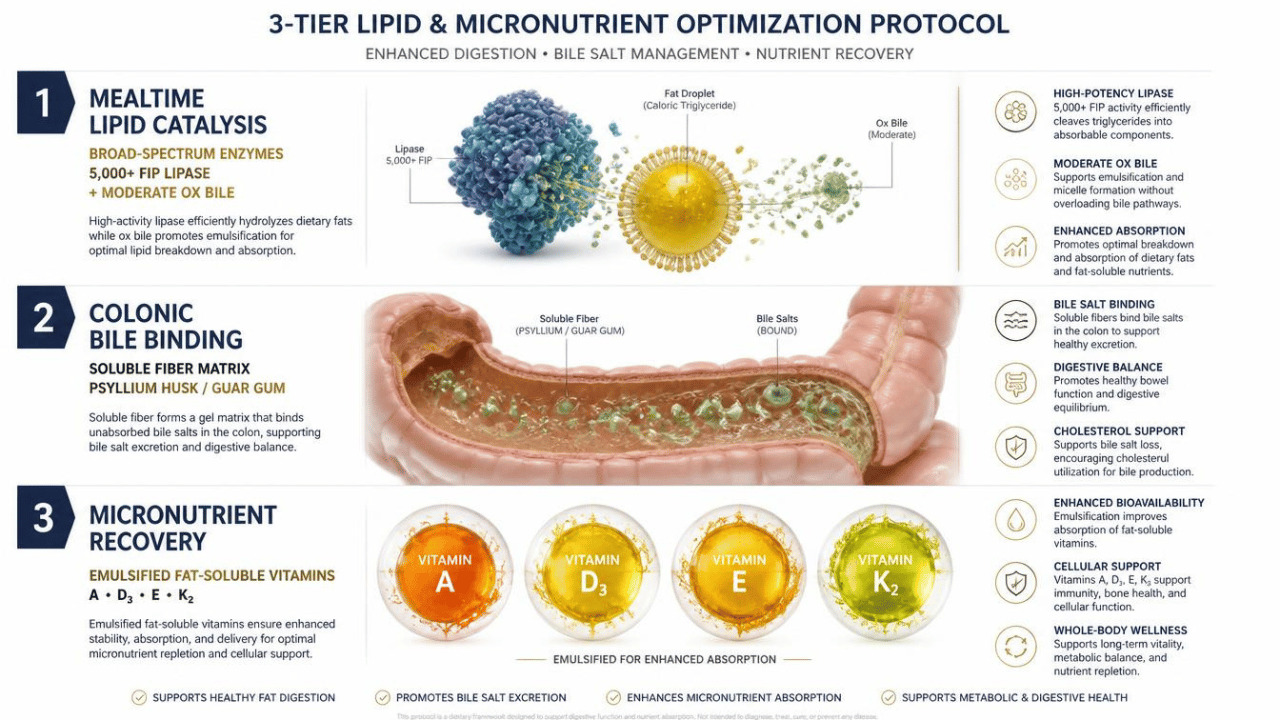
Figure 2: The Three-Pillar Protocol — Neutralizing free bile acids in the colon while restoring upper GI lipid absorption.
Pillar 1: Mealtime Enzymatic Cleavage (The Lipase Strategy)
Take a high-potency, broad-spectrum digestive enzyme providing a minimum of 3,000 to 6,000 FIP units of microbial lipase (or 15,000+ USP units of pancreatin) with the first or second bite of every meal containing fat. Following the rules for how to take digestive enzymes for maximum results ensures the catalysts dissolve directly into the food bolus before it reaches the duodenum.
Pillar 2: Colonic Bile Acid Buffering (For Diarrhea & Urgency)
If you suffer from loose, burning, yellow stools after eating:
- Incorporate gentle soluble fiber binders such as non-fermented organic psyllium husk, partially hydrolyzed guar gum (PHGG), or apple pectin 15 to 20 minutes before meals.
- Soluble fiber acts as a natural bile acid sequester, binding free bile salts in the small intestine and preventing them from reaching the colon where they trigger watery diarrhea.
- For stubborn cases, physicians may prescribe pharmaceutical bile binders like cholestyramine or colesevelam.
Pillar 3: Micronutrient Replenishment (Fat-Soluble Vitamin Restoration)
Years of uncorrected fat malabsorption deplete cellular reserves of critical micronutrients:
- Vitamin D3 & K2: Vital for bone mineral density and immune regulation.
- Vitamin A (Retinol): Essential for maintaining the intestinal mucosal barrier and eye health.
- Vitamin E (Mixed Tocopherols): The body's primary lipid antioxidant, protecting cell membranes.
- Protocol: Utilize micellized or emulsified liquid drops of vitamins A, D3, E, and K2, which bypass the need for heavy biliary emulsification and absorb directly across the intestinal villi.
Pillar 4: Restoring Duodenal and Gastric Motility
A stagnant stomach delays food delivery, causing the liver's dilute bile to sit and pool in the duodenum, increasing the risk of alkaline bile reflux into the stomach. Supporting neuromuscular gut motility and prokinetic activation between meals ensures the upper gastrointestinal tract empties cleanly and prevents biliary backwash.
5. Post-Cholecystectomy Long-Term Checklist
To maintain a flat abdomen and predictable bowel habits without a gallbladder, implement these four dietary rules:
- Distribute Fats Evenly: Avoid consuming your entire daily fat allowance in a single sitting. Instead of a massive 60-gram fat feast, divide healthy fats into 15-to-20-gram portions spread across three balanced meals.
- Eliminate Poor-Quality Industrial Seed Oils: Fried foods, canola, soybean, and corn oil are oxidized and place immense metabolic stress on the biliary ductal system. Rely exclusively on easy-to-digest fats like extra virgin olive oil, avocado oil, and medium-chain triglycerides (MCT oil), which absorb directly into the portal vein without needing bile salts.
- Hydrate Strategically: Drink room-temperature water between meals, but limit fluid intake during meals to prevent diluting the already reduced concentration of gastric juices and hepatic bile.
- Support Hepatic Bile Quality: Incorporate bitter botanicals such as dandelion root, milk thistle, and artichoke leaf extract to keep the liver's continuous bile flow thin, fluid, and free of microscopic debris.
Frequently Asked Questions (FAQ)
1. Should you take digestive enzymes after gallbladder removal?
Yes. After gallbladder removal, your digestive system loses the ability to release a concentrated bolus of bile when fat enters the duodenum. Taking a broad-spectrum digestive enzyme rich in lipase ensures that dietary fats, proteins, and starches are chemically broken down even in the presence of dilute hepatic bile.
2. Can a gallbladder grow back after surgery?
No, a gallbladder cannot grow back once it has been surgically excised. However, in rare instances, a small remnant of the cystic duct tissue left behind during surgery can dilate over time, forming a "pseudo-gallbladder" (cystic duct remnant) that can potentially develop stones or inflammation.
3. What causes sudden yellow diarrhea after gallbladder surgery?
Yellow, watery diarrhea after cholecystectomy is typically caused by Bile Acid Malabsorption (BAM). Because there is no gallbladder to store bile, bile acids continuously trickle down the digestive tract. When excess unabsorbed bile enters the colon, it acts as a harsh chemical irritant, drawing massive amounts of water into the bowel and triggering urgent diarrhea.
4. Is ox bile or a digestive enzyme better after gallbladder removal?
It depends on your symptoms. If you experience explosive diarrhea or burning stools, avoid ox bile and use digestive enzymes with lipase paired with soluble fiber binders. If your primary symptoms are pale floating stools, dry skin, and constipation, a combination of digestive enzymes with low-dose ox bile (100 to 125 mg) is generally superior.
5. Can you ever eat high-fat foods again without a gallbladder?
Yes. While large volumes of greasy or fried foods should be avoided, you can comfortably consume healthy fats (such as salmon, olive oil, eggs, and avocados) by distributing them evenly throughout the day and using supplemental lipase enzymes to assist breakdown.
6. Why do I feel nauseous after eating fats without a gallbladder?
Postprandial nausea occurs when dietary fats enter the duodenum without enough concentrated bile to emulsify them. The undigested fat delays gastric emptying, sending distress signals via the vagus nerve that manifest as upper epigastric fullness and nausea.
7. How long does it take for digestion to adjust after gallbladder surgery?
For most patients, the common bile duct dilates slightly over 2 to 6 months to compensate for the lost storage capacity. However, without targeted nutritional support, a significant percentage of patients experience persistent digestive symptoms for years.
8. Can lack of a gallbladder cause vitamin deficiencies?
Yes. Gallbladder removal frequently leads to subclinical deficiencies in fat-soluble vitamins (A, D3, E, and K2) because their intestinal absorption depends entirely on proper lipid emulsification and micelle formation.
9. What is Post-Cholecystectomy Syndrome (PCS)?
Post-Cholecystectomy Syndrome refers to the persistence or recurrence of upper abdominal pain, nausea, bloating, diarrhea, or indigestion following gallbladder removal, affecting roughly 10% to 15% of surgical patients.
10. How does MCT oil help people without a gallbladder?
Medium-Chain Triglyceride (MCT) oil consists of caprylic and capric fatty acids that do not require bile salts or pancreatic lipase for digestion. They are absorbed directly across the intestinal enterocytes and transported straight to the liver via the portal vein for rapid energy.
11. Can gallbladder removal cause bile reflux gastritis?
Yes. The continuous trickle of bile into the duodenum can sometimes wash backward through a relaxed pyloric valve into the stomach. This alkaline bile reflux irritates the gastric mucosa, causing severe burning, nausea, and vomiting of greenish-yellow fluid.
12. When is the best time to take enzymes after gallbladder surgery?
Always swallow your digestive enzyme capsule with the very first or second bite of food. This ensures the enzymes dissolve and integrate directly into the breaking food bolus before it passes into the duodenum.
13. Does apple cider vinegar help after gallbladder removal?
Apple cider vinegar or Betaine HCl can be helpful if you also suffer from low stomach acid. Healthy gastric acid triggers the release of secretin and CCK, stimulating both the liver to synthesize bile and the pancreas to secrete digestive enzymes.
14. Why are my stools light-colored or floating after surgery?
Light-colored, clay-like, or floating stools indicate that fat is passing through unabsorbed, and that normal levels of stercobilin (the brown pigment derived from processed bile) are missing from the stool matrix.
15. Can taking digestive enzymes cause dependency?
No. Supplemental digestive enzymes do not suppress your pancreas or liver from producing endogenous secretions. They simply assist luminal breakdown of the specific meal they are consumed with.
16. How does stress worsen digestion after gallbladder surgery?
Stress triggers the sympathetic nervous system, which constricts the Sphincter of Oddi (the valve controlling bile and pancreatic fluid delivery into the duodenum). This causes bile to back up into the liver while stalling gut motility, exacerbating post-meal bloating and cramping.
Reclaiming Digestive Health After Gallbladder Surgery
Undergoing a cholecystectomy solves the acute emergency of an inflamed gallbladder or gallstone obstruction, but it requires a conscious, long-term adjustment to how you nourish and support your digestive system.
By supplementing with high-potency microbial lipase enzymes, utilizing soluble fiber to buffer colonic bile irritation when necessary, and replenishing essential fat-soluble micronutrients, you can permanently eliminate post-cholecystectomy distress. Living without a gallbladder does not require lifelong dietary deprivation—it simply requires understanding your altered anatomy and supporting it with the right biochemical tools.
Reclaim Digestive Comfort, Motility, and Daily Regularity
You don’t have to endure the daily weight of sluggish bowel transit, post-meal fat bloating, or painful upper digestive stagnation. By leveraging the synergistic power of high-potency digestive enzymes alongside targeted neuromuscular prokinetics, you can restore smooth, effortless transit and reclaim optimal nutrient absorption.
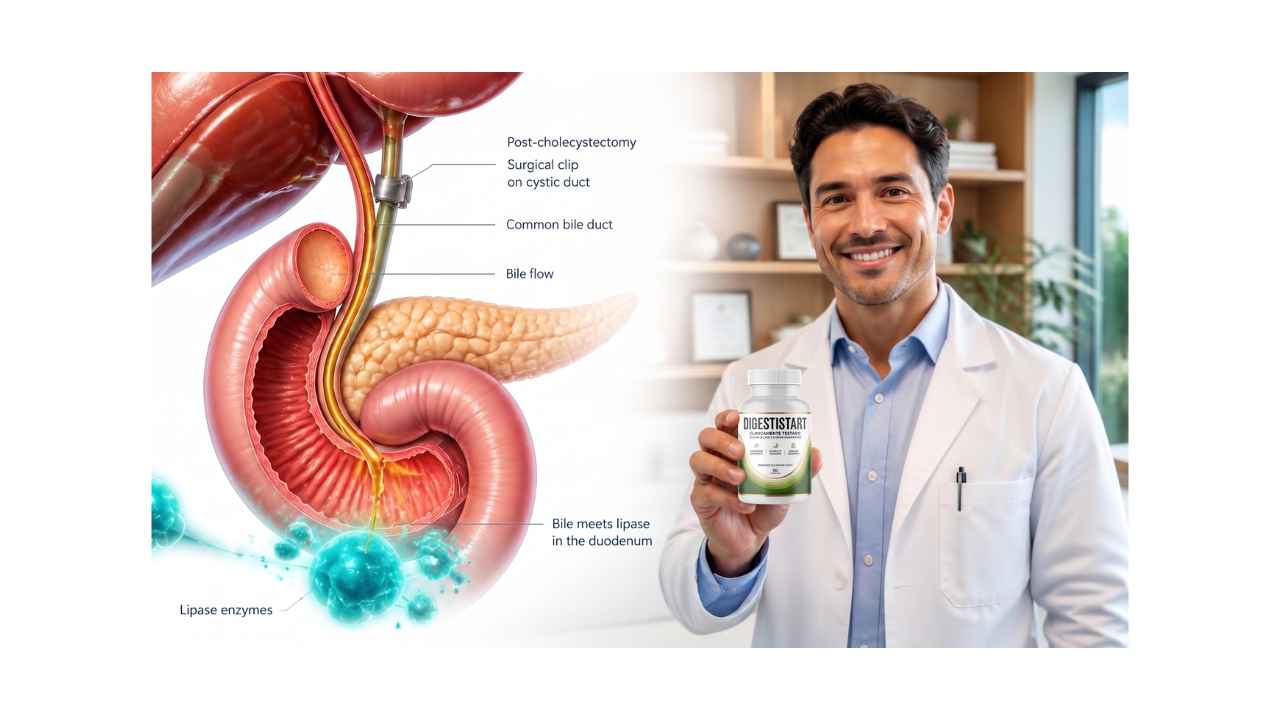
To experience the comprehensive digestive reset your system needs—especially when dealing with fat malabsorption or missing gallbladder support—choose a dedicated daily formula. Reclaim your daily lightness and digestive vitality with DigestiStart—expertly crafted with essential digestive biocatalysts and premium botanical extracts for total gut comfort.
🌿 Restore Your Digestive Balance with DigestiStart: Engineered with targeted digestive enzymes and prokinetic botanicals to clear trapped gas, accelerate transit, and keep your stomach flat and comfortable after every meal.
👉 [Discover DigestiStart and Reclaim Effortless Daily Regularity Today]
Recommended Reading
- Sluggish Gallbladder & Trouble Digesting Fats: Symptoms of Poor Bile Flow and How to Restore Motility – Discover the underlying causes of biliary stasis, thick biliary sludge, and clinical strategies to optimize liver bile production.
- Ox Bile vs. Digestive Enzymes for Fat Malabsorption: Which Supplement Clears Oily Bloating? – Learn how to identify whether your digestive breakdown stems from physical emulsification failure (bile salts) or chemical cleavage failure (lipase).
- Pancreatic vs. Plant-Derived Digestive Enzymes: Which Is Right for Your Digestive Profile? – Understand the essential differences in pH activation, enzyme survival, and therapeutic scope between animal pancreatin and fungal enzymes.
- How to Take Digestive Enzymes for Maximum Results: Timing, Dosages, Stacking & Common Mistakes – Master precision administration timing, dosage matching by plate composition, and fatal mistakes that ruin enzyme therapy.
- Best Gut Health Supplements for Bloating: Why Neuromuscular Motility Outperforms Probiotics – Discover why restoring electromechanical intestinal transit and the Migrating Motor Complex stops chronic bloating and bacterial stagnation.
keep reading
Gut Health & Supplements
DigestiStart Review: Can This Herbal Formula Help Restore Digestive Health & Relieve Bloating?
Gut Health & Supplements
The Ultimate Guide to GERD: Causes, Symptoms & Natural Relief
Gut Health & Supplements