Ox Bile vs. Digestive Enzymes for Fat Malabsorption: Which Supplement Clears Oily Bloating?
Compare ox bile and digestive enzymes for fat malabsorption. Discover which supplement resolves greasy stools, fat-soluble nutrient deficiency, and oily bloat.
disclosure This article contains affiliate links. Purchases may earn us a commission at no extra cost to you. We only recommend products we've reviewed.
Ox Bile vs. Digestive Enzymes for Fat Malabsorption: Which Supplement Clears Oily Bloating?
Consuming healthy, nutrient-dense fats—such as avocados, grass-fed ghee, wild-caught salmon, and pastured eggs—is foundational for hormone synthesis, cellular integrity, and the absorption of fat-soluble vitamins. However, for a vast population suffering from lipid malabsorption, even moderate healthy fat intake triggers visceral distress: greasy floating stools, painful postprandial nausea, severe rib-cage tightness, and persistent, oily bloating that lasts for hours.
When faced with digestive failure after a fatty meal, two distinct therapeutic supplements dominate the market: purified ox bile extracts (bile salts) and high-potency lipase digestive enzymes.
While often conflated or recommended interchangeably, ox bile and digestive enzymes perform fundamentally different biological jobs. Utilizing a digestive enzyme when you lack bile salts—or taking ox bile when your pancreas produces no lipase—will leave dietary fat unabsorbed, unhydrolyzed, and trapped in the intestinal lumen where it fuels microbial dysbiosis. Understanding the precise mechanism of your lipid breakdown failure is the only path to restoring comfortable fat assimilation.
1. The Essential Two-Step Lipid Breakdown Cascade
Dietary fats are unique among macronutrients because they are hydrophobic (water-repelling). While carbohydrates and proteins can be dissolved in aqueous digestive fluids, ingested oils and fats immediately coalesce into massive, dense globules.
To process these lipids, the digestive system relies on a non-negotiable, two-step electromechanical and biochemical chain reaction:
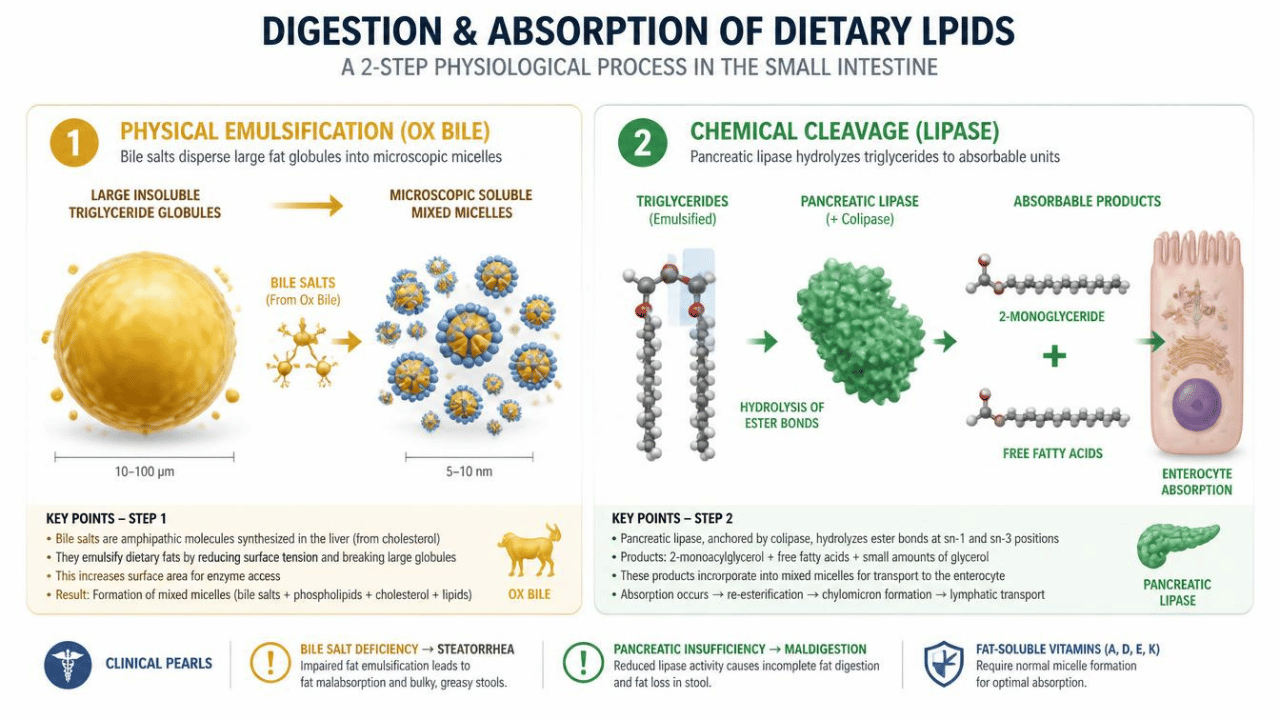
Figure 1: The Lipid Digestion Cascade — Physical bile emulsification preceding chemical lipase hydrolysis.
Step 1: The Physical Emulsification Phase (The Role of Bile Salts)
Before any chemical digestion can occur, large fat globules must be physically dispersed. When chyme enters the duodenum, the hormone cholecystokinin (CCK) signals the gallbladder to contract, releasing concentrated bile acids (bile salts). These surfactants surround dietary triglycerides, breaking them into microscopic droplets known as micelles. This physical emulsification expands the surface area of dietary fat by over one-thousand-fold. Without bile, digestive enzymes cannot interact with the lipid globule.
Step 2: The Chemical Hydrolysis Phase (The Role of Lipase Enzymes)
Once fat is physically suspended in microscopic micelles, the enzyme lipase (synthesized primarily in the pancreas) binds to the micelle surface. Lipase hydrolyzes the chemical ester bonds holding the triglyceride molecule together, cleaving it into free fatty acids and a monoglyceride. Only after this enzymatic cut can the enterocytes lining the small intestinal mucosa absorb the lipids.
The Bio-Catalytic Rule: Bile salts physically disperse; lipase enzymes chemically cleave. Bile salts create surface area; lipase enzymes execute the nutritional absorption.
2. Purified Ox Bile: Mechanism, Indications, and Clinical Use
Purified ox bile extract provides standardized concentrations of conjugated bile acids (such as cholic acid and chenodeoxycholic acid) that mirror the surfactant properties of endogenous human bile.
How Ox Bile Resolves Fat Malabsorption:
Ox bile functions as a biological detergent. It restores Step 1 of lipid breakdown by physically emulsifying dietary fats when the liver or gallbladder fails to deliver adequate bile surge. It reduces the surface tension of fatty matrices, prevents the liver from becoming decongested, carries fat-soluble micronutrients across the intestinal mucus layer, and acts as a natural antimicrobial agent that inhibits small intestinal bacterial overgrowth (SIBO).
Primary Indications for Ox Bile:
- Post-Cholecystectomy (No Gallbladder): The body lacks a storage reservoir for concentrated bile, delivering only a constant, dilute trickle that is insufficient for large fat boluses.
- Biliary Stasis, Sludge, & Gallstones: Sluggish gallbladder output prevents full emulsification, frequently tied to sluggish gallbladder and trouble digesting fats.
- Fat-Soluble Vitamin Malabsorption: Chronic deficiencies in vitamins A, D3, E, or K2 despite adequate supplementation.
- Chalky, Pale, or Tan Stools: Directly indicating a systemic absence of the bile pigments (bilirubin) that provide healthy brown stool coloration.
3. High-Lipase Digestive Enzymes: Mechanism and Potency Standards
Supplemental digestive enzymes engineered for fat breakdown focus on maximizing Step 2 of lipid digestion by providing standardized concentrations of lipase enzymes.
How Digestive Enzymes Resolve Fat Malabsorption:
Supplemental lipase does not change the physical solubility of fats. Instead, it performs the final enzymatic cleavage that dismantles a triglyceride into absorbable free fatty acids. If your bile production and storage (gallbladder) are functioning normally, but your pancreatic output is blunted, supplemental lipase provides the catalytic machinery required to complete nutrient absorption and prevent steatorrhea.
Primary Indications for High-Lipase Enzymes:
- Exocrine Pancreatic Insufficiency (EPI): Diagnosed or functional failure of the acinar cells to produce sufficient hydrolases.
- True Greasy Steatorrhea: Stools that are glistening, oily, sticky, difficult to flush, leave an oil slick in the toilet bowl, and possess a rancid odor.
- Achromic Stools with Normal Bilirubin: In cases where stool color is normal brown (indicating adequate bile), but the consistency is greasy and unhydrolyzed.
- Food Intolerances to Protein/Starch: When fat malabsorption is paired with poor digestion of meats and grains, suggesting a global pancreatic or brush border insufficiency—as analyzed in our guide to pancreatic vs plant-derived digestive enzymes.
Potency Checklist: Decoding High-Lipase Blends
A clinically effective enzyme supplement must display lipase activity units, not just milligrams (mg). Avoid formulas that list lipase only as part of a proprietary blend. For substantial lipid malabsorption, a broad-spectrum fungal/microbial enzyme blend (as analyzed in this comparison) should provide:
- Minimum Lipase Potency: At least 3,000 FIP or 12,000 USP units per standard capsule, often listed as microbial lipase (Aspergillus species).
4. Modular Diagnostic Comparison: Ox Bile vs. Lipase Deficiency
To determine which biochemical agent targets your symptom profile, compare their distinct diagnostic signatures rather than generic labels:
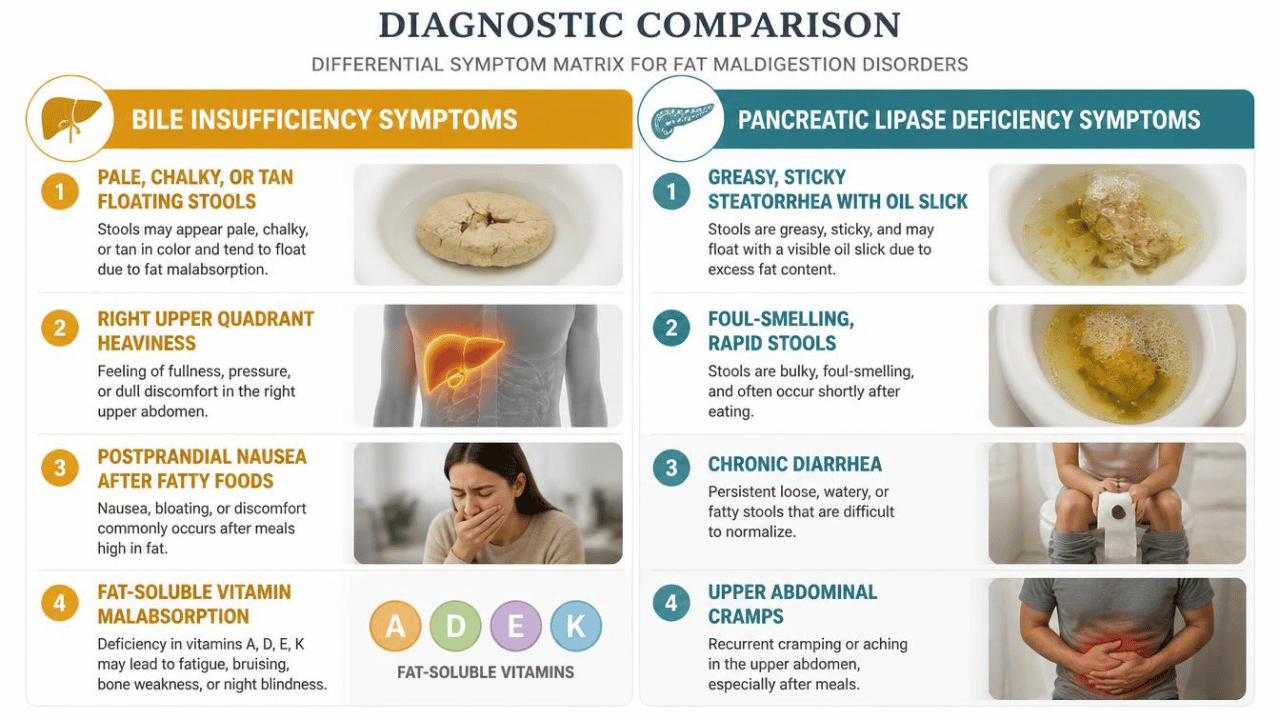
Figure 2: The Symptom Signature — Differentiating emulsification failure from catalytic breakdown failure.
Symptom Matrix: Purified Ox Bile Extract
- Primary Cause: No Gallbladder (Cholecystectomy); Bile Duct Obstruction; Biliary Sludge/Stasis.
- Visual Stool Marker: Pale-tan, chalky, or yellowish floating stools (acholic stools).
- Upper GI Pain Pattern: Aching or heaviness under the right rib cage (right upper quadrant pain) that may radiate to the right shoulder blade, especially after fatty meals.
- Other Markers: Persistent postprandial nausea, low serum fat-soluble vitamins (A, D, E, K).
Symptom Matrix: High-Potency Lipase Enzymes
- Primary Cause: Exocrine Pancreatic Insufficiency (EPI); Chronic Pancreatitis; Low Stomach Acid (impaired CCK/Secretin trigger).
- Visual Stool Marker: Stools that are distinctly brown but are sticky, glistening, shiny, difficult to flush, or leave an obvious oil slick in the toilet water.
- Upper GI Pain Pattern: Diffuse upper abdominal cramps or pain around the stomach/navel, often paired with extensive bloating.
- Other Markers: Rapid stools or chronic diarrhea soon after eating.
5. Integrated Protocols: How to Select and Safely Stack FatMalabsorption Supplements
Successful clinical resolution of fat malabsorption requires specific supplement selection, strict dose timing with the food bolus, and understanding when single versus combined therapy is necessary.
Scenario A: Choose Ox Bile First If...
You have had your gallbladder removed (post-cholecystectomy), you experience painful heaviness under the right rib cage after eating fats, your stools are consistently pale, clay-colored, or tan-colored, and your lab panels show refractory deficiencies in fat-soluble vitamins D and A.
- Administration Protocol: Take 125 mg to 250 mg of purified ox bile extract immediately following substantial fat intake (meals containing oils, butter, cheese, nuts, or red meat). Never take ox bile with a fat-free snack or on an empty stomach, as unbuffered bile salts irritate the gastric lining.
Scenario B: Choose High-Lipase Digestive Enzymes First If...
You still have an intact gallbladder, but your stools are sticky, glistening, shiny, difficult to flush, and leave an oil slick, and you experience extensive diffuse upper abdominal bloating alongside signs of global enzyme insufficiency.
- Administration Protocol: As detailed in our guide on how to take digestive enzymes for maximum results, swallow a broad-spectrum high-lipase enzyme capsule with the first or second bite of solid food.
Scenario C: The Synergistic Stack (Severe Dysfunction & Post-Cholecystectomy)
If you have had your gallbladder removed and continue to pass greasy, oily, glistening stools despite taking ox bile, you likely suffer from combined emulsification failure and secondary functional pancreatic insufficiency (EPI).
- The Stack: To execute the multi-tier stack protocol, take a broad-spectrum digestive enzyme with your first bite to support gastric breakdown and acid stability. Midway through the meal, take a 125 mg ox bile capsule to support duodenal emulsification.
Reclaiming Flat-Abdomen Fat Comfort
Lipid malabsorption bloating is not a life sentence requiring constant whole-food restrictions or chronic discomfort. By matching your supplementation to your specific biological bottleneck—using purified ox bile salts to replace missing surfactants and physically emulsify fats, or high-potency pancreatic/plant lipase to catalyze the necessary chemical cleavage—you eradicate the root cause of greasy, sticky steatorrhea and oily post-meal ballooning.
Restoring efficiency to both physical and chemical lipid digestion stops microbial dysbiosis, optimizes nutrient bioavailability, and provides consistent relief from upper gastric distension, allowing you to return to nutrient-dense healthy fats with confidence and a flat, comfortable abdomen.
Frequently Asked Questions (FAQ)
1. Can lack of bile cause floating stools?
Yes. Inadequate bile output prevents dietary fats from being emulsified, meaning they remain bulky, insoluble, and too large for chemical cleavage. These unhydrolyzed, buoyant lipid masses make the stool lighter than water, causing it to float.
2. Can I take ox bile and digestive enzymes together?
Yes. Many advanced digestive formulas combine ox bile (often 100 mg to 200 mg) with pancreatic enzymes (amylase, protease, and high-potency lipase) in a single capsule. This mimics the body's natural synchronous release of both bile acids and pancreatic enzymes into the duodenum during Step 1 and Step 2 of lipid digestion.
3. Does ox bile help with bloating after fatty food?
Yes, provided the bloating is specifically caused by bile insufficiency (e.g., in post-gallbladder removal or biliary stasis). By physically emulsifying fat, ox bile allows for efficient enzymatic breakdown and nutrient absorption, which prevents large masses of unabsorbed fat from fermenting in the intestinal lumen and generating the painful post-meal distension.
4. What happens if you take ox bile with no gallbladder?
Since cholecystectomy patients lack a reservoir to deliver concentrated bile on demand, supplemental ox bile replaces that surge. Taken dynamically with fat-heavy meals, it ensures complete fat emulsification, reduces post-meal upper right-quadrant pain, and ensures the absorption of critical fat-soluble vitamins (A, D, E, K).
5. Why are my stools oily and floating?
Stools float for two primary reasons: excessive trapped gas (carbohydrate fermentation) or excessive unabsorbed fat (steatorrhea). If the floating stools are also distinctly greasy, sticky, glistening, and leave an oil slick in the water, the float is driven by unhydrolyzed triglycerides, signaling a failure of pancreatic lipase or severe bile salt insufficiency.
6. Do I need ox bile if I still have my gallbladder?
You may benefit from low-dose ox bile or botanical choleretics (e.g., artichoke, milk thistle, beetroot extract) if your gallbladder is intact but sluggish, producing thick biliary sludge that does not eject completely. This functional stasis impairs emulsification just as much as a missing gallbladder.
7. Can digestive enzymes cause loose stools?
High doses of supplemental enzymes can cause mild cramping or softer, more frequent bowel movements, but they typically do not cause the caustic, urgent, watery diarrhea characteristic of a bile acid overdose.
8. Does gallbladder removal cause fat bloating?
Yes. Gallbladder removal disrupts the crucial Step 1 of lipid digestion: emulsification. Without concentrated bile salts available to disperse dietary fat into micelles during Step 2 of the postprandial timeline, lipase enzymes cannot cleave nutrients, leaving large lipid masses that fuel fermentation and visceral ballooning.
9. Can taking ox bile shut down my body's natural bile production?
Yes, theoretically. Continuous high doses of exogenous bile acids can exert negative feedback on hepatic bile synthesis via the FXR receptor pathway, potentially creating dependency. It is best used dynamically (only with fat-heavy meals) or tapered down as liver health and biliary flow recover.
10. How quickly does ox bile work for fat malabsorption?
Ox bile functions immediately upon the meal it is consumed with. If taken correctly following fat intake, noticeable reductions in right upper-quadrant fullness, postprandial nausea, and oily bloating should be observed within 1 to 2 meals.
11. Does taking enzymes prevent my body from making its own?
No. Endogenous pancreatic enzyme production is regulated by local intestinal triggers (HCL and fat stimulating CCK/Secretin) and vagal nerve signaling. Supplemental enzymes assist digestion in the stomach/upper duodenum but do not downregulate pancreatic function via a negative feedback loop.
12. Why does ox bile sometimes cause a burning sensation?
If ox bile is taken without sufficient dietary fat to act upon, or if the user suffers from a hiatal hernia or patent pyloric sphincter, the conjugated bile acids can reflux upward. They are alkaline surfactants that irritate the gastric and esophageal lining, causing severe chemical burn sensations.
13. What is abdomino-phrenic dyssynergia in fat bloating?
Abdomino-phrenic dyssynergia is a somatic reflex common in functional bloating. When the gut feels discomfort from unabsorbed fat or gas, the user abnormally contracts the diaphragm downward and relaxes the anterior abdominal wall outward, visibly protruding the belly even if total gas volume is normal.
14. Are there vegetarian alternatives to ox bile?
No. "Ox Bile" is always sourced from animals. Vegetarians can support fat digestion by utilizing high-FIP microbially derived lipase enzymes stacked with botanical choleretics (like artichoke extract, milk thistle, and dandelion root) which help stimulate the liver’s native bile production.
15. How do I know if I need more lipase or more bile salts?
If your stools are consistently pale, chalky, tan-colored, or floating soon after eating fat, start with purified ox bile. If your stools remain brown but distinctly greasy, shiny, and slippery (leaving an oil slick), you have pancreatic steatorrhea and require high-potency lipase enzymes.
16. Why does stress shut down fat digestion?
Chronic sympathetic stress inhibits the vagus nerve, shuts down the enterovagal reflex, suppresses gastric acid production, and impairs both CCK signaling (gallbladder contraction) and secretin signaling (pancreatic enzyme release).
Recommended Reading
- Sluggish Gallbladder & Trouble Digesting Fats: Symptoms of Poor Bile Flow and How to Restore Motility – Explore the underlying pathophysiology of biliary stasis, biliary dyskinesia, and targeted strategies to restore bile acid flow.
- Pancreatic vs. Plant-Derived Digestive Enzymes: Which Is Right for Your Digestive Profile? – Understand the catalytic distinctions, pH activation zones, and clinical guidelines for choosing animal pancreatin versus microbial enzyme formulas.
- How to Tell If You Have a Digestive Enzyme Deficiency: Symptoms, Root Causes & At-Home Self-Assessment – Learn how to identify symptoms of digestive enzyme deficiency, evaluate substrate malabsorption patterns, and conduct a structured at-home trial.
- How to Take Digestive Enzymes for Maximum Results: Timing, Dosages, Stacking & Common Mistakes – Master meal timing, dosage matching by macronutrient volume, and critical administration errors that compromise enzyme therapy.
keep reading
Gut Health & Supplements
DigestiStart Review: Can This Herbal Formula Help Restore Digestive Health & Relieve Bloating?
Gut Health & Supplements
The Ultimate Guide to GERD: Causes, Symptoms & Natural Relief
Gut Health & Supplements