How to Take Digestive Enzymes for Maximum Results: Timing, Dosages, Stacking & Common Mistakes
Learn how to take digestive enzymes correctly. Discover optimal timing with meals, dosage calculations, stacking protocols with HCl, and critical mistakes to avoid.
disclosure This article contains affiliate links. Purchases may earn us a commission at no extra cost to you. We only recommend products we've reviewed.
How to Take Digestive Enzymes for Maximum Results: Timing, Dosages, Stacking & Common Mistakes
Investing in high-potency digestive catalysts is only half the battle; the physiological reality is that even the most sophisticated formulation will fail if administered incorrectly. Unlike fat-soluble vitamins or systemically absorbed medications that can be swallowed arbitrarily throughout the day, supplemental biocatalysts are strictly substrate-dependent.
As established in our complete guide to digestive enzymes, supplemental enzymes do not act upon human tissues; they act directly upon the physical food bolus within the lumen of the gastrointestinal tract. If the enzyme and the food do not physically intersect under optimal biochemical conditions, catalytic breakdown drops to zero.
Mastering meal timing, matching active potency units to macronutrient volume, structuring strategic stacks with gastric acidifiers, and eliminating common clinical usage errors are the parameters that determine therapeutic success.
1. Precision Timing: The Physiological Window of Activation
The single most common reason people experience poor results from digestive enzymes is incorrect administration timing.
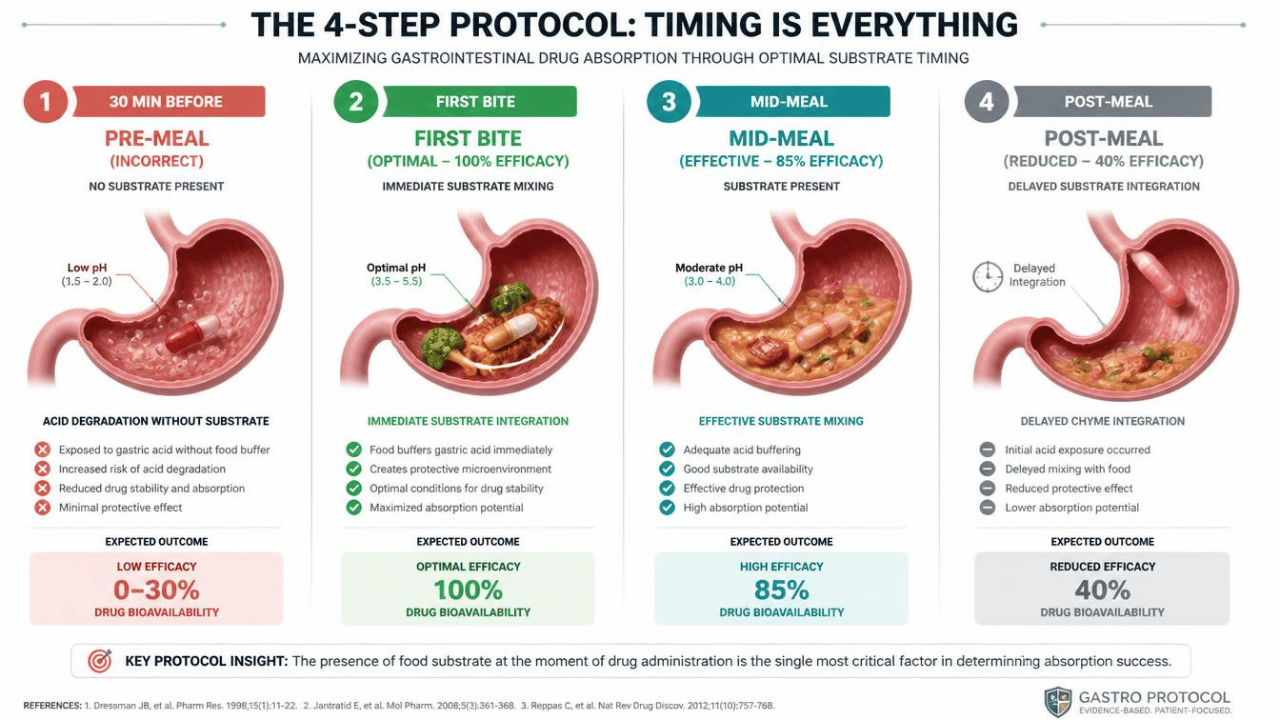
Figure 1: The Bioavailability Timeline — Efficacy differentials based on meal consumption timing.
Enzymes are fragile protein structures. When taken on a completely empty stomach with a large glass of water, non-enteric coated enzymes enter a hollow gastric chamber. Without a food matrix to act upon or buffer gastric secretions, proteolytic enzymes can irritate the gastric mucosal lining or become prematurely exposed to concentrated hydrochloric acid.
The Golden Window: The Very First Bite
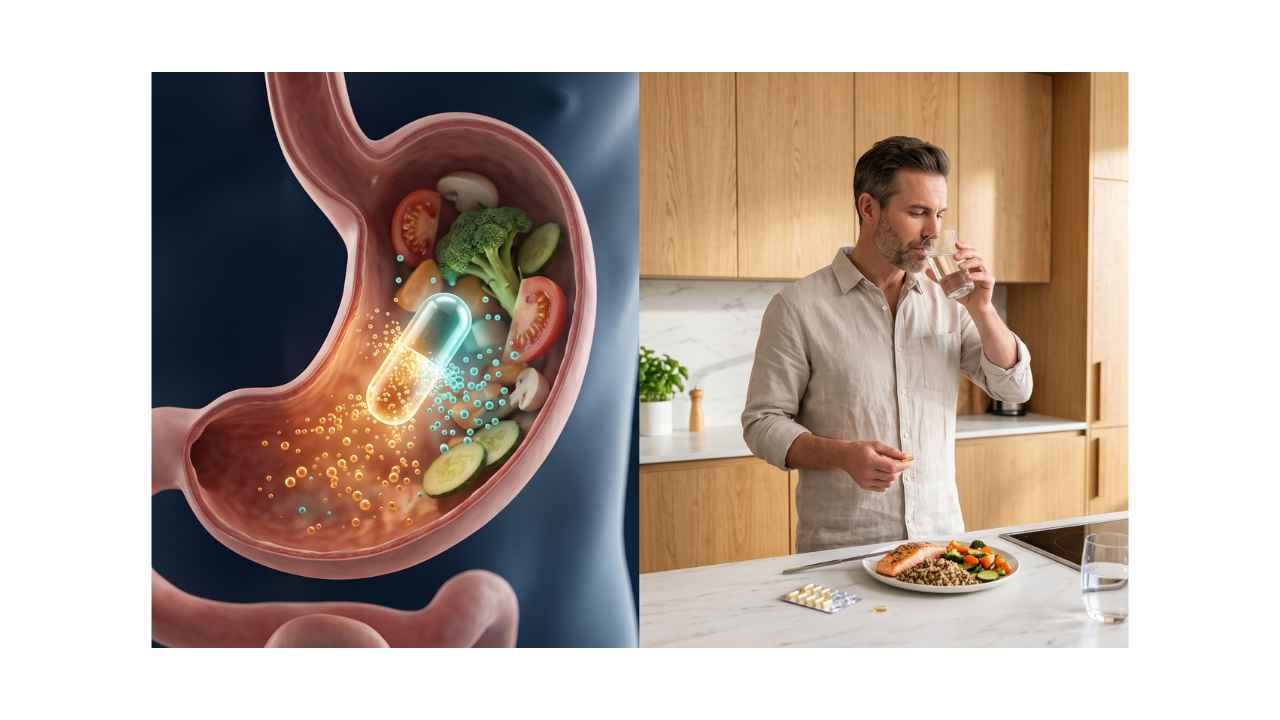
The optimal moment to swallow your digestive enzyme supplement is with your first or second bite of solid food:
- Swallowing the capsule as you begin eating ensures that as the capsule shell dissolves in the fundus of the stomach (typically within 5 to 10 minutes), the newly freed biocatalysts mix thoroughly into the breaking food bolus.
- In the case of broad-spectrum microbial and fungal enzymes—which remain active across a broad pH range as outlined in our analysis of pancreatic vs plant-derived digestive enzymes—this allows early pre-digestion to begin in the upper stomach before full gastric acid acidification occurs.
Taking Enzymes Mid-Meal vs. Post-Meal
- Mid-Meal (Acceptable): If you forget to take your dose at the start, swallowing the capsule halfway through a dense or multi-course meal remains highly effective. The mechanical churning of the antrum will still incorporate the catalysts into the chyme.
- Post-Meal (Sub-Optimal): Taking enzymes 30 to 60 minutes after finishing a meal significantly reduces their efficacy. By that point, the earliest portion of the food bolus has already moved into the duodenum unhydrolyzed, where it begins triggering osmotic shifts and early bacterial fermentation.
- Taking Enzymes on an Empty Stomach (Systemic Proteolytic Therapy): If you take broad-spectrum proteases without food, they are absorbed into the lymphatic and circulatory systems, acting as systemic anti-inflammatory agents rather than digestive aids.
2. Potency and Dosing Strategy: Decoding Activity Units
Dosing digestive enzymes is fundamentally different from dosing standard vitamins. There is no universal "Recommended Daily Allowance" (RDA) for enzymes, because your required dosage fluctuates with the physical volume and macronutrient density of every individual meal.
A patient who has confirmed their status through identifying a digestive enzyme deficiency requires precise dosing:
Dosage Is Governed by Plate Composition, Not Body Weight
A 90 kg individual eating a light green salad requires far fewer enzymes than a 50 kg individual consuming a 12-ounce ribeye steak paired with roasted potatoes. Adjust your dosing dynamically:
- Light / Low-Macronutrient Snacks: 0 to 1 standard capsule.
- Moderate Mixed Meals (Standard Protein, Fat, Starch): 1 to 2 capsules.
- Dense, High-Fat, or High-Protein Feasts: 2 to 3 capsules distributed across the duration of the meal.
The Minimum Effective Potency Checklist
Never purchase a supplement that lists enzyme content exclusively in milligrams (mg). Milligrams measure powder mass, which often consists primarily of maltodextrin fillers. A clinically viable, broad-spectrum formula must display standardized Food Chemicals Codex (FCC) or United States Pharmacopeia (USP) units:
- Protease (Protein breakdown): Minimum 20,000 to 50,000 HUT (Hemoglobin Units on a Tyrosine base).
- Lipase (Fat breakdown): Minimum 1,500 to 5,000 FIP or USP units (crucial for preventing steatorrhea).
- Amylase (Starch breakdown): Minimum 10,000 to 20,000 DU (Dextrinizing Units).
- Lactase (Dairy disaccharides): Minimum 3,000 to 9,000 ALU (Acid Lactase Units).
- Alpha-Galactosidase (Legume/cruciferous oligosaccharides): Minimum 300 to 500 GalU.
3. Strategic Stacking: Combining Enzymes with Betaine HCl, Bile, and Prokinetics
Gastrointestinal malabsorption rarely exists in an isolated vacuum. For patients with complex gut dysfunction, combining enzymes synergistically with complementary biochemical agents produces superior clinical outcomes.
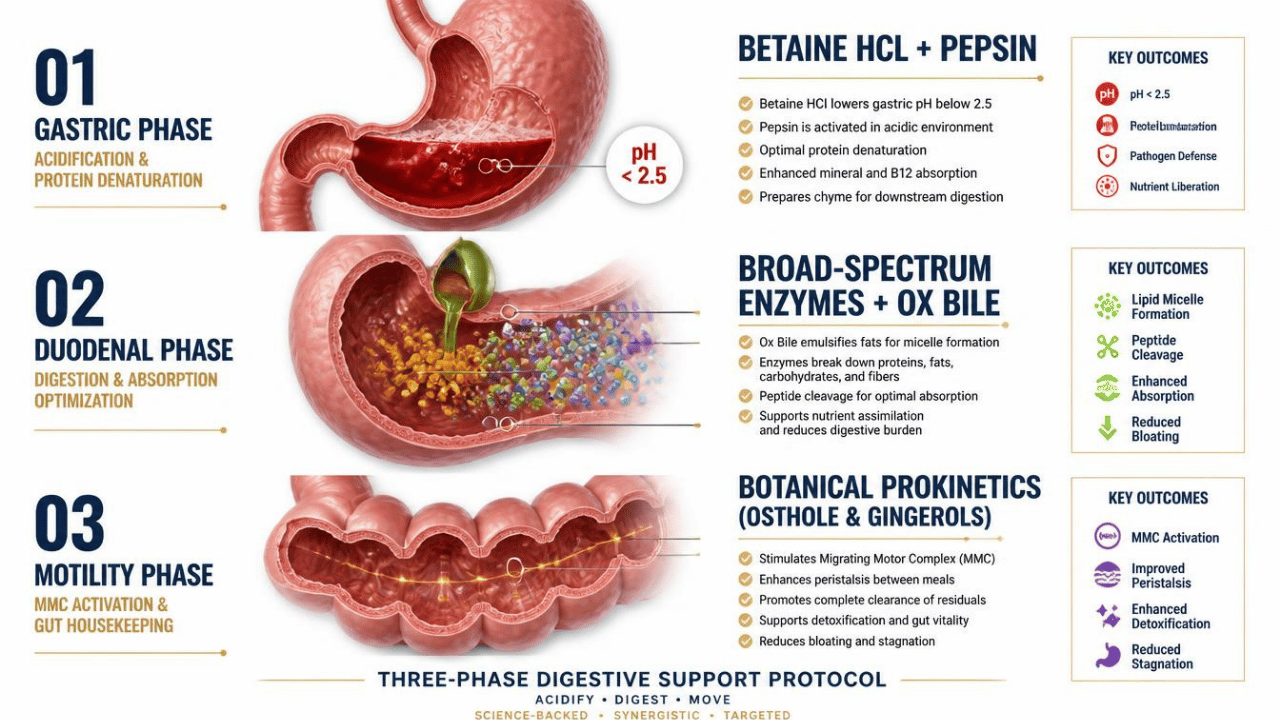
Figure 2: The Multi-Tiered Digestive Stack — Coordinating enzymes, gastric acidifiers, bile acids, and prokinetics.
The Hypochlorhydria Stack: Enzymes + Betaine HCl
If your primary symptom is meat sitting like an undigested brick in your epigastrium, low stomach acid is likely impairing your endogenous pepsin activation.
- The Protocol: Combine 1 broad-spectrum plant/fungal enzyme capsule with 350 to 650 mg of Betaine HCl (with Pepsin) at the start of dense protein meals.
- Mechanism: The Betaine HCl drops gastric pH, denaturing complex tertiary protein structures and activating native pepsinogen, while acid-stable supplemental proteases accelerate peptide bond cleavage.
The Lipid-Clearing Stack: Lipase + Ox Bile
For individuals who have undergone a cholecystectomy or suffer from sluggish gallbladder and poor bile flow, lipase alone cannot hydrolyze large lipid globules.
- The Protocol: Take a lipase-dense enzyme blend alongside 100 to 300 mg of purified ox bile extract (or botanical choleretics like artichoke extract) with fat-heavy meals.
- Mechanism: Bile salts break massive hydrophobic fat droplets into micro-emulsions, drastically expanding the surface area for supplemental lipase to cleave triglycerides into free fatty acids.
The Motility Stack: Enzymes with Meals + Prokinetics Between Meals
Enzymes break down food chemically; prokinetics move food physically.
- The Protocol: Take broad-spectrum enzymes with the first bite of your meals to optimize upper GI breakdown. Then, take botanical prokinetics (such as standardized Cnidium Monnieri and Gingerols) on an empty stomach 3 to 4 hours post-meal or right before bed.
- Mechanism: This ensures that by the time the chemical breakdown is complete, the Migrating Motor Complex (MMC) sweeps residual particulate matter into the colon, preventing small bowel bacterial pooling.
4. The 5 Most Common Digestive Enzyme Mistakes
Even experienced supplement users frequently make preventable errors that nullify the biological value of their regimens:
Mistake #1: Swallowing Enzymes with Scalding Hot Beverages
Enzymes are tertiary protein structures held together by fragile hydrogen bonds. Consuming your supplement with boiling hot tea, scalding coffee, or steaming soups irreversibly denatures the enzymes, rendering them functionally dead before they reach the stomach. Always take capsules with cool or room-temperature fluids.
Mistake #2: Opening Enteric-Coated Pancreatic Pellets
If you are taking prescription Pancreatic Enzyme Replacement Therapy (PERT) for structural exocrine failure, the micro-tablets are coated with a specialized acid-resistant polymer. Opening the capsule, chewing the contents, or crushing the beads destroys the barrier, causing gastric acid to inactivate the lipase and causing localized chemical burns to the oral and esophageal mucosa.
Mistake #3: Taking Enzymes with Pure Carbohydrate or Simple Sugar Snacks
Popping a comprehensive, heavy-duty protease and lipase capsule when eating a single apple or a handful of berries is unnecessary and metabolically inefficient. Reserve comprehensive multi-enzyme complexes for substantial meals containing protein, complex starches, and fats.
Mistake #4: Failing to Address Upstream Gastric Hypomotility
Taking enzymes will not solve gastroparesis or severe antral paralysis on its own. If food physically sits un-churned in your stomach for five hours, taking an enzyme provides temporary substrate reduction but ignores underlying delayed gastric emptying and stomach heaviness. Pair enzymes with mechanical transit support.
Mistake #5: Expecting Enzymes to Eradicate Established SIBO
Digestive enzymes reduce the volume of undigested food reaching bacterial overgrowths, which can significantly attenuate post-meal bloating. However, enzymes are not antibiotics or antimicrobial agents; they cannot eradicate a deeply entrenched colony of bacteria residing inside the jejunum.
Frequently Asked Questions (FAQ)
1. What is the absolute best time to take a digestive enzyme?
With the very first or second bite of your meal. This ensures the capsule dissolves directly within the incoming food bolus, allowing the biocatalysts to mix thoroughly with the substrates during mechanical gastric churning.
2. Can I take digestive enzymes after finishing my meal?
You can take them immediately after eating if you forgot your initial dose, but efficacy drops significantly if taken more than 30 minutes post-meal. By that time, unhydrolyzed chyme has already begun moving into the duodenum.
3. What happens if I take digestive enzymes on an empty stomach?
Without food to digest, fungal and plant enzymes will enter the bloodstream through the lymphatic system, acting as systemic proteases to break down circulating immune complexes and reduce inflammation. However, in sensitive individuals, taking high-potency proteases without food can cause mild epigastric burning.
4. Can taking supplemental enzymes make my pancreas lazy?
No. Intrinsic pancreatic secretion is regulated by local neurohormonal mechanisms—specifically vagal nerve stimulation and the release of secretin and cholecystokinin (CCK) in response to food and acid in the duodenum. Supplemental enzymes do not establish a negative feedback loop on pancreatic synthesis.
5. How many enzyme capsules should I take per meal?
Most high-potency commercial formulas require 1 to 2 capsules for a balanced standard meal. For exceptionally large, high-protein, or high-fat meals, 2 to 3 capsules may be required to match the substrate volume.
6. Can I take digestive enzymes with hot coffee or soup?
No. Heat above 45°C to 50°C (113°F to 122°F) irreversibly denatures and destroys enzyme proteins. Always swallow capsules with room-temperature or cool water, even if the meal itself is warm.
7. Should I take digestive enzymes if I have stomach ulcers or gastritis?
Exercise caution. If you have active gastric ulcers, erosive gastritis, or an inflamed stomach lining, supplemental proteases (and especially Betaine HCl) can irritate the unprotected mucosal tissue. Consult your gastroenterologist before use.
8. Can I open the capsule and mix the powder into my food?
For non-enteric-coated plant and fungal enzymes, yes—provided the food is not hot. However, never crush or chew enteric-coated pancreatic enzymes (pancreatin/PERT), as this destroys their acid shield and can cause mucosal irritation in the mouth.
9. How do I know if my enzyme dose is too high?
Excessive enzyme dosing typically manifests as transient abdominal cramping, hyper-frequent soft stools, or mild anal irritation (caused by active proteases passing rapidly through the entire colon).
10. Do I need to take enzymes with every single snack?
No. Enzymes are generally unnecessary for light, whole-food snacks such as a piece of fruit or raw carrot sticks. Save your enzyme doses for complex, mixed meals that combine fats, proteins, and dense starches.
11. Can I take digestive enzymes alongside probiotics?
Yes. Enzymes and probiotics perform entirely different functions and do not interfere with each other. Take your enzyme with the first bite of your meal, and take your probiotic either with food or as directed by the manufacturer.
12. What is the difference between Betaine HCl and digestive enzymes?
Betaine HCl is a gastric acidifier that donates hydrochloric acid to lower stomach pH and denature proteins. Digestive enzymes are hydrolytic proteins (amylase, lipase, protease) that physically cut chemical bonds in macronutrients. They are often stacked together for comprehensive upper GI support.
13. Why am I still bloated even though I take enzymes with every meal?
If bloating persists despite high-potency enzyme use, your distension is likely driven by neuromuscular motility failure (impaired MMC sweeping waves), severe SIBO, or abdomino-phrenic dyssynergia rather than simple macronutrient malabsorption.
14. Are plant-derived enzymes or pancreatic enzymes better for daily use?
Plant- and fungal-derived enzymes are typically superior for functional bloating, food intolerances, and low stomach acid because they are active across a broad pH range (3.0 to 8.5). Pancreatic enzymes (pancreatin) are essential for clinical Exocrine Pancreatic Insufficiency (EPI).
15. How quickly should I expect relief after starting digestive enzymes?
Unlike probiotics, which can take weeks to alter the microbiome, digestive enzymes work instantaneously upon the meal they are consumed with. You should experience a noticeable reduction in postprandial fullness, gas, and early heaviness within 1 to 3 meals.
Maximizing Your Enzymatic Protocol
Digestive enzymes are biochemical tools whose efficacy depends entirely on how and when they are applied. By taking your capsules with the very first bite of food, matching active FCC/USP units to the nutritional density of your plate, avoiding destructive heat, and stacking them strategically with acidifiers or prokinetics, you transform supplemental enzymes into a reliable therapeutic intervention.
Mastering these administration guidelines restores efficiency to the upper digestive tract, optimizes nutrient bioavailability, and provides consistent relief from post-meal distension.
Recommended Reading
- The Complete Guide to Digestive Enzymes: How They Break Down Food, Stop Bloating & Restore Gut Function – Explore the full enzymatic breakdown cascade, the specific roles of amylase, protease, and lipase, and how to use digestive enzymes for optimal gut health.
- Pancreatic vs. Plant-Derived Digestive Enzymes: Which Is Right for Your Digestive Profile? – Understand the differences in pH stability, active catalytic ranges, and clinical indications between animal-harvested pancreatin and fungal/plant biocatalysts.
- How to Tell If You Have a Digestive Enzyme Deficiency: Symptoms, Root Causes & At-Home Self-Assessment – Learn how to identify symptoms of digestive enzyme deficiency, evaluate substrate malabsorption patterns, and conduct a structured at-home trial.
- Sluggish Gallbladder & Trouble Digesting Fats: Symptoms of Poor Bile Flow and How to Restore Motility – Discover how bile deficiencies impede fat digestion and learn natural strategies to restore biliary flow and lipase efficacy.
keep reading
Gut Health & Supplements
DigestiStart Review: Can This Herbal Formula Help Restore Digestive Health & Relieve Bloating?
Gut Health & Supplements
The Ultimate Guide to GERD: Causes, Symptoms & Natural Relief
Gut Health & Supplements