
Low Stomach Acid After 40: How Hypochlorhydria Causes Severe Bloating, Trapped Gas, and False Reflux
Struggling with heartburn and severe upper bloating after 40? Discover how low stomach acid (hypochlorhydria) triggers intra-gastric gas pressure and false acid reflux.
disclosure This article contains affiliate links. Purchases may earn us a commission at no extra cost to you. We only recommend products we've reviewed.
Low Stomach Acid After 40: How Hypochlorhydria Causes Severe Bloating, Trapped Gas, and False Reflux
For many adults over 40, experiencing heartburn, chest tightness, or burping after meals leads to an immediate assumption: "I must have too much stomach acid." This common belief drives millions to routinely swallow acid-blocking antacids or proton pump inhibitors (PPIs).
However, emerging physiological research reveals a surprising paradox: after age 40, the overwhelming majority of chronic digestive discomfort is not caused by excess stomach acid, but by a significant deficiency in hydrochloric acid (HCl)—a condition clinically known as hypochlorhydria.
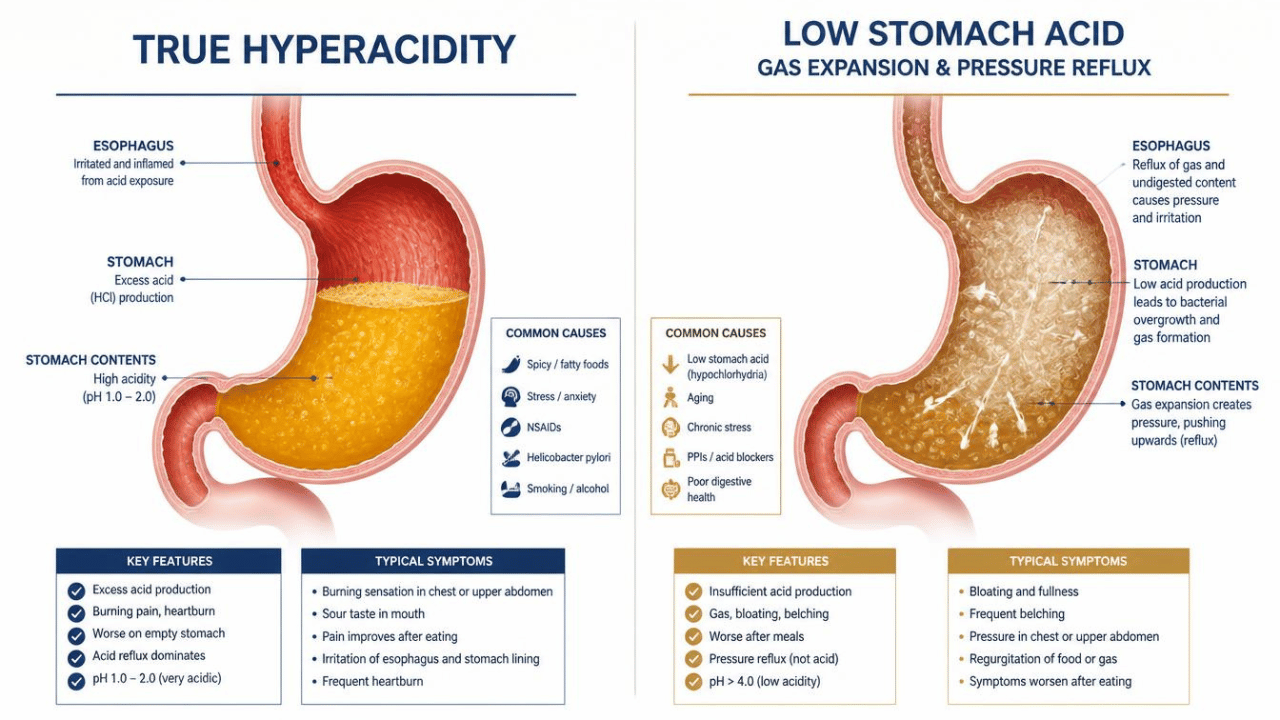
When stomach acid levels drop naturally with age, the stomach loses its primary chemical tool for breaking down food and suppressing bacterial overgrowth. Instead of digesting rapidly, meals sit stagnant in the upper gastrointestinal tract, fermenting into large volumes of trapped gas. This gas creates immense upward intra-gastric pressure, forcing the lower esophageal sphincter (LES) open and pushing small amounts of acid upward.
Understanding how low stomach acid triggers this cycle of bloating, fermentation, and false reflux is the key to breaking free from post-meal distress and restoring true digestive efficiency.
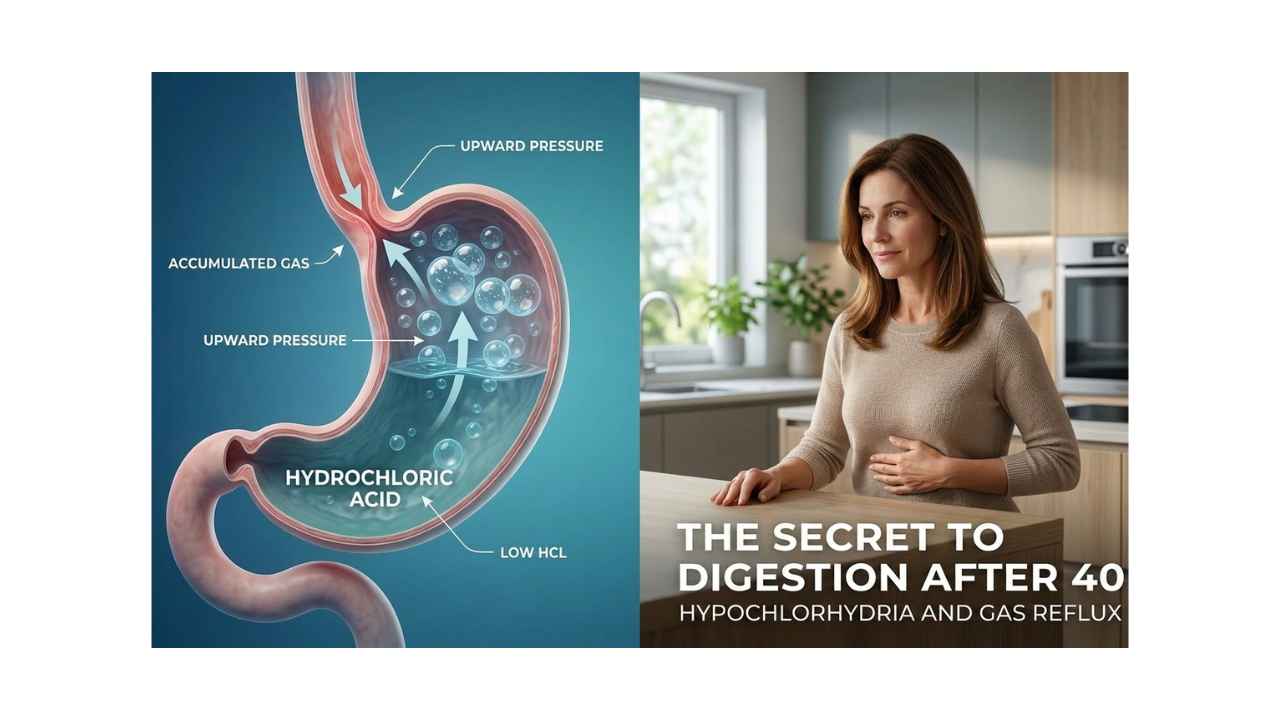
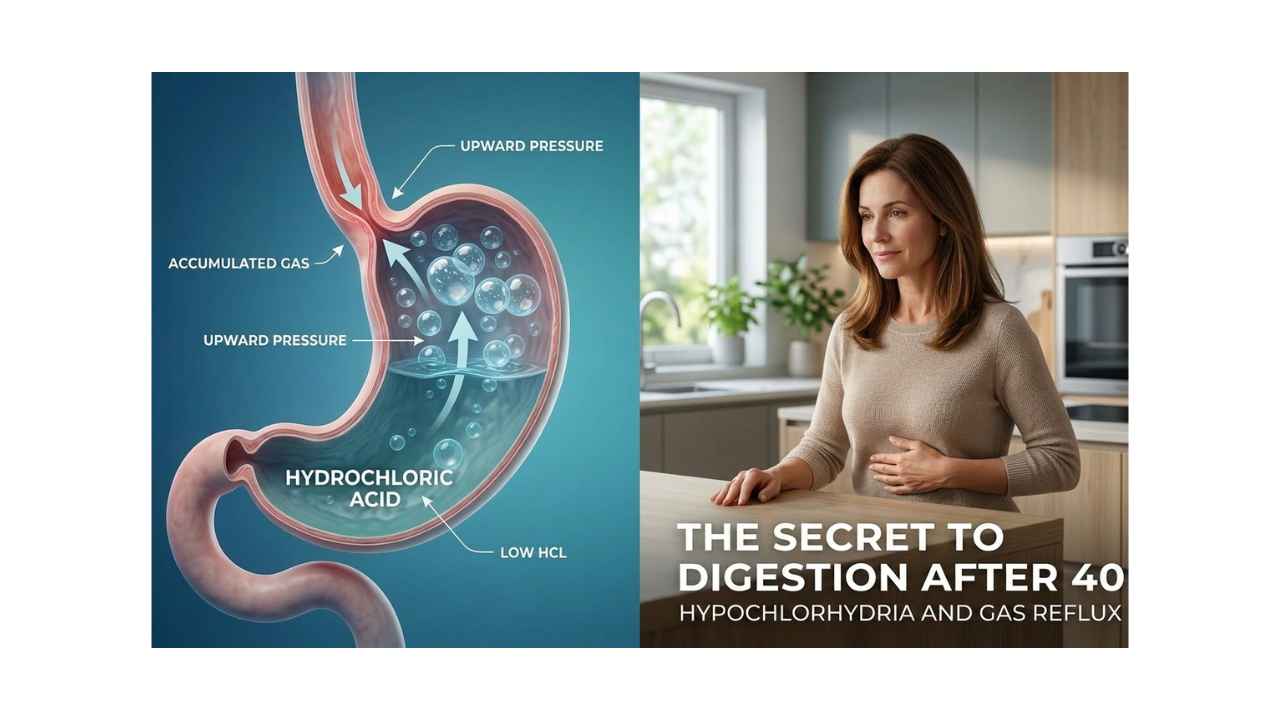 Alt Text: Medical editorial split image showing microscopic gas expansion in low acid stomach alongside a woman feeling upper chest relief.
1. The Aging Stomach: Why HCl Secretion Declines After 40
Hydrochloric acid (HCl) is produced by specialized parietal cells lining the stomach wall. In a youthful stomach, HCl creates an intensely acidic environment (pH 1.5 to 2.0). This extreme acidity serves three vital physiological functions:
- Activating Digestive Enzymes: HCl turns inactive pepsinogen into pepsin, the primary enzyme responsible for breaking protein into digestible peptide chains.
- Sterilizing Ingested Food: Strong acid acts as a chemical barrier, killing harmful bacteria, yeast, and parasites before they reach the delicate small intestine.
- Triggering Downward Motility: Acidic stomach contents (chyme) signal the gallbladder to release bile and the pancreas to secrete digestive enzymes, while triggering stomach muscle contractions to empty contents downward.
As the body ages, parietal cell activity steadily diminishes. Chronic stress, nutrient deficiencies (particularly zinc and B vitamins), and hormonal shifts during perimenopause further reduce the stomach’s capacity to secrete HCl. By age 50, average stomach acid secretion drops significantly, leaving stomach pH elevated at an inefficient 3.0 to 5.0.
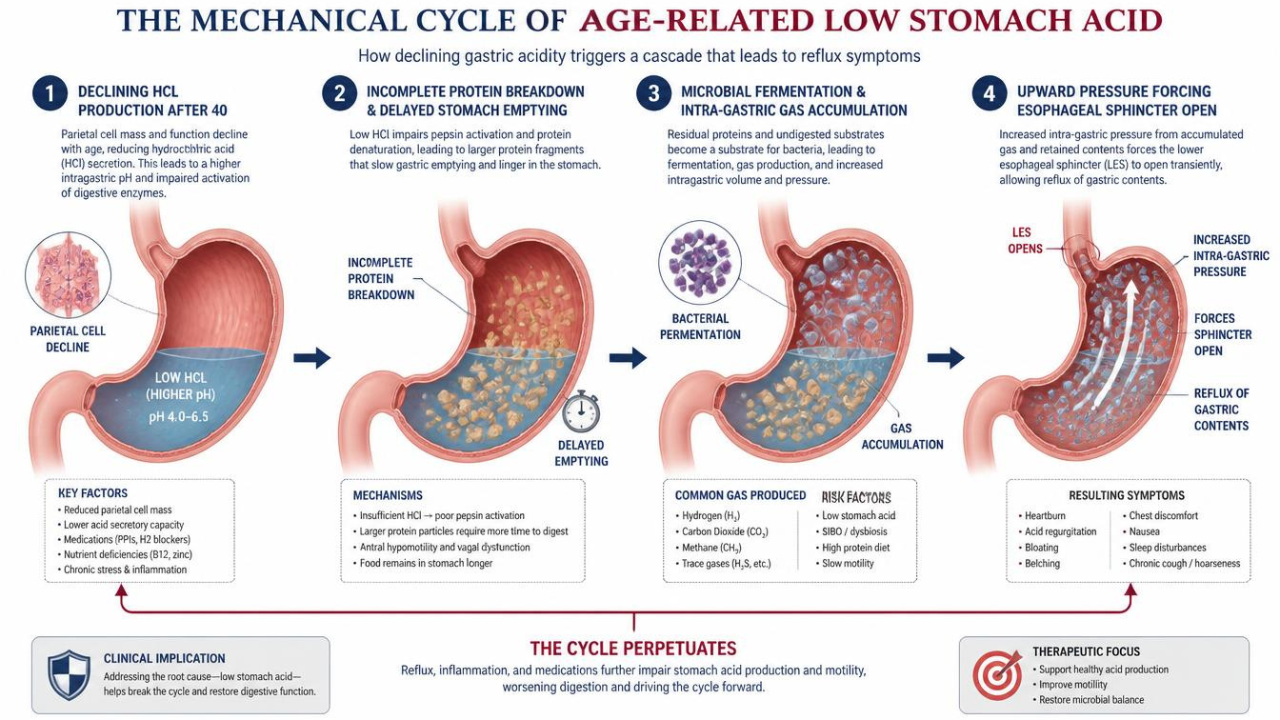
Alt Text: Clinical diagram illustrating the mechanical cycle of age-related low stomach acid leading to gas pressure and esophageal reflux.
2. The Gas Pressure Cascade: How Low Acid Causes "False Reflux"
When gastric acidity is insufficient, a predictable cascade of digestive failure occurs:
- Stagnant Chyme & Food Delay: Without adequate HCl to trigger pepsin activity and antral muscular contractions, food remains trapped in the stomach for hours instead of moving into the small intestine within 60 to 90 minutes.
- Microbial Fermentation: The warm, non-acidic stomach environment becomes a ideal breeding ground for bacteria. These microbes feast on undigested carbohydrates and proteins, producing substantial amounts of hydrogen and carbon dioxide gas.
- Intra-Gastric Pressure Expansion: As gas accumulates, it exerts physical pressure against the stomach walls, causing severe upper abdominal tightness, visible distension, and continuous burping.
- Forcing the LES Open: The lower esophageal sphincter (LES) is a muscular valve designed to keep stomach contents contained. High intra-gastric gas pressure physically forces this valve open, allowing micro-droplets of acid and gas to escape into the esophagus.
Even though total acid volume is abnormally low, any acid contacting the esophagus causes sharp burning sensations. Taking acid suppressants in this scenario temporarily numbs the burn, but further lowers stomach acid—worsening the underlying fermentation and gas expansion.
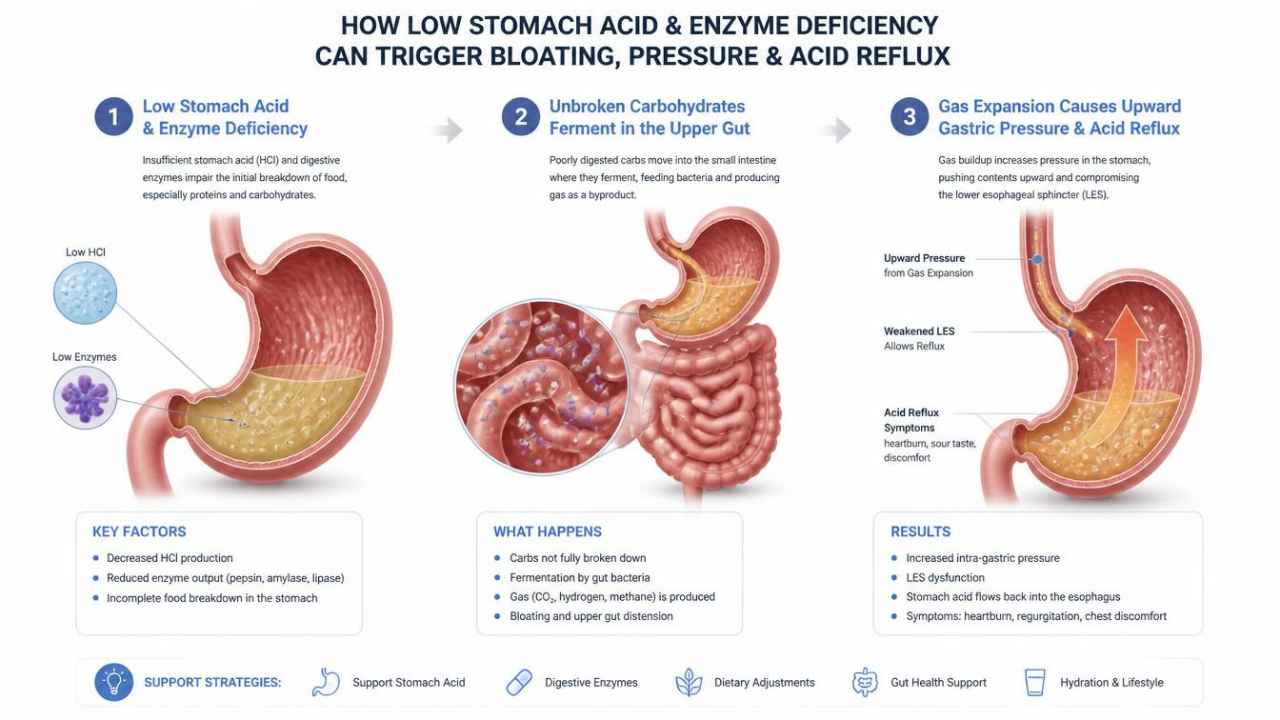
Alt Text: Side-by-side medical comparison showing true hyperacidity versus low stomach acid causing intra-gastric gas pressure reflux.
3. Hypochlorhydria, Nutrient Malabsorption, and SIBO
The downstream consequences of low stomach acid extend far beyond post-meal discomfort:
- Poor Protein and Mineral Extraction: Iron, calcium, magnesium, zinc, and Vitamin B12 require high acidity to be freed from food matrices for absorption. Chronic low acid frequently manifests as fatigue, brittle nails, and muscle weakness.
- Small Intestinal Bacterial Overgrowth (SIBO): Without a strong acid barrier at the stomach gateway, bacteria from food or the lower bowel populate the small intestine. This leads to intense fermentation within 30 minutes of eating complex starches or healthy plant fibers.
- Pancreatic and Bile Insufficiency: The pancreas and gallbladder rely on strong stomach acid entering the duodenum as their signal to release lipase, protease, and bile acids. Low HCl results in sluggish bile secretion and enzyme deficits throughout the lower digestive tract.
Alt Text: Flowchart demonstrating how supplemental digestive enzymes and botanical prokinetics relieve intra-abdominal pressure and promote downward gastric transit.
4. Restoring Stomach Chemistry: Enzymes, Prokinetics, and Catalytic Support
Addressing age-related hypochlorhydria requires restoring both chemical digestion and mechanical movement without relying on aggressive acid blockers:
- Broad-Spectrum Digestive Enzymes: Plant and microbial enzymes function effectively across wider pH ranges (pH 2.0 to 8.0). Taking targeted proteases, lipases, and amylases with meals compensates for missing gastric acid and native pepsin, pre-digesting food rapidly before fermentation can start.
- Prokinetic Botanicals for Gastric Clearance: Extracts like Ginger Root and Artichoke Leaf stimulate natural gastric antral contractions and bile release, ensuring that digested chyme moves smoothly downward into the duodenum rather than stagnating in the stomach.
- Reducing Intra-Abdominal Gas Pressure: By eliminating the undigested substrate that feeds gas-producing bacteria, intra-gastric pressure drops, allowing the LES valve to remain securely closed.
Frequently Asked Questions (FAQ)
1. How do I know if my heartburn is caused by low stomach acid or high stomach acid?
True high stomach acid is uncommon after age 40. Heartburn accompanied by severe upper abdominal bloating, heavy fullness for hours after eating, burping, and undigested food in stool strongly points to low stomach acid (hypochlorhydria).
2. Can taking antacids or PPIs make low stomach acid bloating worse?
Yes. Antacids neutralize the small amount of acid remaining, further slowing down protein breakdown and gastric emptying. This increases internal fermentation, gas buildup, and long-term bloating.
3. Why does low stomach acid cause burping and chest pressure?
When food sits undigested, bacteria ferment carbohydrates into gas. This gas accumulates in the top part of the stomach (fundus), expanding and pressing upward against the diaphragm and lower esophageal sphincter.
4. How does age lower hydrochloric acid production?
With age, the parietal cells in the stomach mucosa undergo natural atrophy. Lower metabolic rates, chronic stress, and micronutrient deficiencies (such as zinc and B vitamins) further reduce acid secretion.
5. What is the relationship between low stomach acid and SIBO?
Stomach acid is the primary sterilizing agent for ingested food. When acid is low, bacteria survive the stomach and colonize the small intestine, leading to Small Intestinal Bacterial Overgrowth (SIBO).
6. Can perimenopause cause low stomach acid?
Yes. Fluctuations in estrogen and progesterone alter mucosal lining integrity and vagal nerve signaling, directly reducing gastric juice output and gastric motility.
7. How do digestive enzymes help if I have low stomach acid?
Supplemental microbial and plant enzymes do not require an extremely acidic environment to function. They break down proteins, fats, and starches in broad pH conditions, preventing food from fermenting.
8. Is low stomach acid linked to nutrient deficiencies?
Absolutly. Minerals like iron, calcium, magnesium, and zinc, as well as Vitamin B12, require adequate gastric acid to be cleaved from food proteins and absorbed.
9. Can low stomach acid cause constipation?
Yes. Sufficient stomach acid triggers the gastrocolic reflex and signals the gallbladder to release bile. Without this signal, intestinal transit slows, contributing to constipation.
10. How quickly does the stomach empty under normal conditions vs. low acid?
Under healthy acid levels, a typical meal leaves the stomach in 1.5 to 2 hours. In low-acid conditions, food can remain stagnant in the stomach for 3 to 5 hours.
11. Why do I feel extremely full after only a few bites of food?
Early satiety is a classic symptom of hypochlorhydria and delayed gastric emptying (gastroparesis-like symptoms) caused by a lack of acid and impaired muscular tone.
12. How do prokinetic botanicals like ginger and artichoke help with low acid?
Prokinetics stimulate the migrating motor complex (MMC) and gastric smooth muscles, encouraging the stomach to empty its contents downward even when acid levels are suboptimal.
13. Are raw vegetables harder to digest when stomach acid is low?
Yes. Raw vegetables require strong acid and specific enzymes like cellulase to break down dense cellulose plant walls. Without them, raw vegetables cause severe upper gas.
14. What lifestyle habits worsen low stomach acid?
Drinking large volumes of ice-cold water during meals (which dilutes gastric juices), eating under high stress (sympathetic nervous system activation), and chronic use of acid suppressants all reduce stomach acidity.
15. Can low stomach acid be reversed naturally?
Supporting gastric digestion with digestive enzymes, prokinetic botanicals, thorough chewing, and stress management helps restore optimal digestive mechanics and comfort.
Reclaim Your Digestive Balance and Comfort
Chronic bloating, upper stomach pressure, and false acid reflux do not have to dictate your daily meal choices as you age. By restoring proper chemical digestion and encouraging healthy downward gastric movement, you can put an end to uncomfortable fermentation gas at its root cause.
Recommended Reading
- Sluggish Gallbladder & Trouble Digesting Fats: Symptoms of Poor Bile Flow and How to Restore Motility – Discover the underlying causes of biliary stasis, thick biliary sludge, and clinical strategies to optimize liver bile production.
- Ox Bile vs. Digestive Enzymes for Fat Malabsorption: Which Supplement Clears Oily Bloating? – Learn how to identify whether your digestive breakdown stems from physical emulsification failure (bile salts) or chemical cleavage failure (lipase).
- Pancreatic vs. Plant-Derived Digestive Enzymes: Which Is Right for Your Digestive Profile? – Understand the essential differences in pH activation, enzyme survival, and therapeutic scope between animal pancreatin and fungal enzymes.
- How to Take Digestive Enzymes for Maximum Results: Timing, Dosages, Stacking & Common Mistakes – Master precision administration timing, dosage matching by plate composition, and fatal mistakes that ruin enzyme therapy.
keep reading
Gut Health & Supplements
DigestiStart Review: Can This Herbal Formula Help Restore Digestive Health & Relieve Bloating?
Gut Health & Supplements
The Ultimate Guide to GERD: Causes, Symptoms & Natural Relief
Gut Health & Supplements