The Science of Fat Bloating: Why Your Gallbladder and Pancreas Struggle After 40
Struggling with heavy upper abdominal bloating after eating healthy fats? Learn how age-related drops in bile and lipase cause lipid stagnation and gas pressure.
disclosure This article contains affiliate links. Purchases may earn us a commission at no extra cost to you. We only recommend products we've reviewed.
The Science of Fat Bloating: Why Your Gallbladder and Pancreas Struggle After 40
For many men and women entering their mid-40s, eating healthy fats—such as olive oil, avocados, salmon, or grass-fed beef—triggers a distinct and lingering physical distress. Within 30 to 60 minutes of finishing a meal, a heavy, dull sensation settles directly under the ribcage, often accompanied by upper belly distension, persistent nausea, and a feeling that food is sitting motionless in the stomach.
While fats are essential for hormone synthesis, cell membrane integrity, and nutrient absorption, they are also the most chemically complex macronutrient to break down. When the body’s digestive mechanics slow down with age, fat processing is usually the first system to falter.
Understanding why your gallbladder and pancreas struggle to process dietary fats after age 40 is the crucial first step toward eliminating post-meal heaviness and enjoying nutrient-dense foods again.
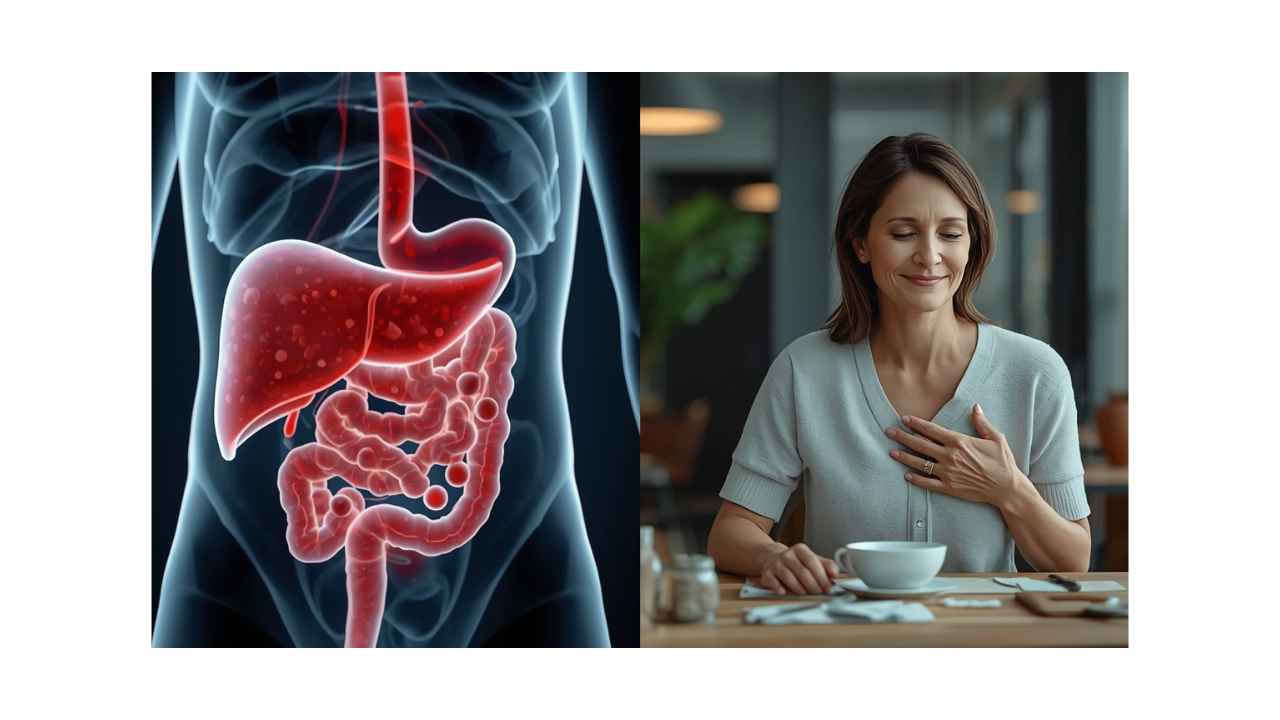
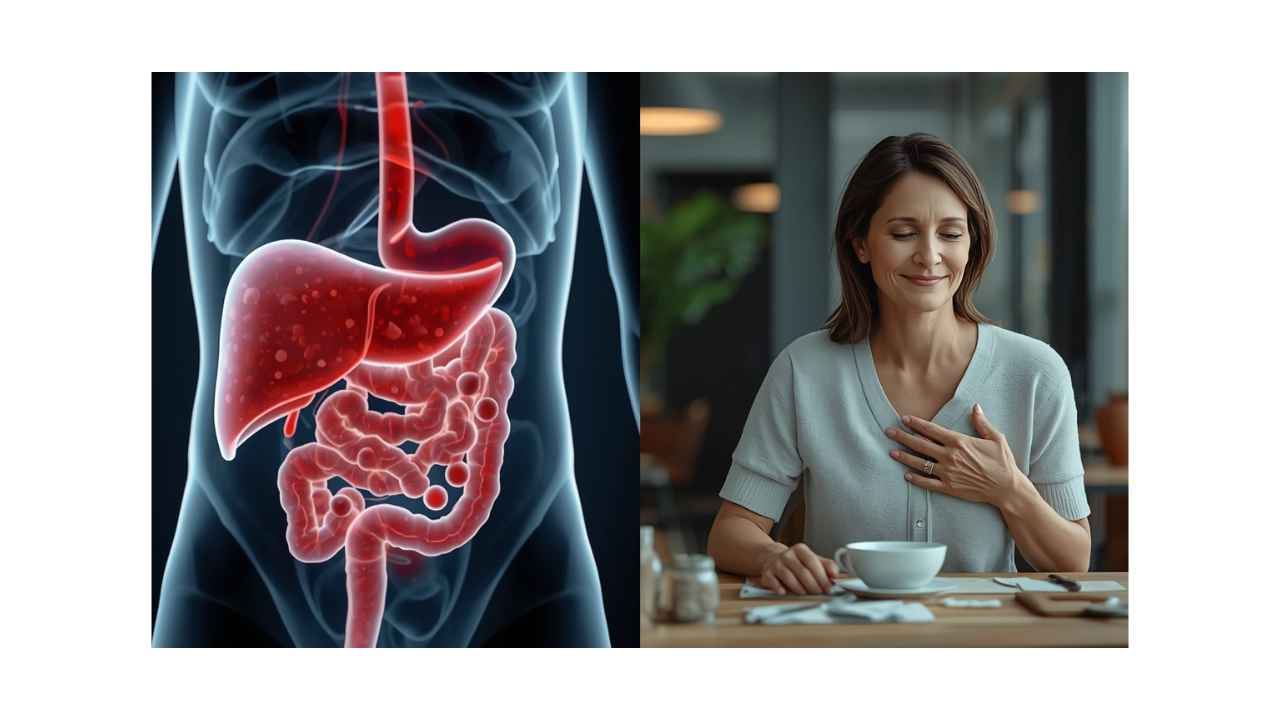
Alt Text: Medical editorial split image highlighting age-related bile and lipase decline alongside a woman experiencing upper abdominal comfort.
1. The Dual Engine of Fat Digestion: Bile and Lipase
Unlike carbohydrates and proteins, which begin breaking down in the mouth and stomach via water-soluble enzymes, dietary lipids present a unique biochemical challenge: fats do not dissolve in water. To digest them, the body relies on a coordinated two-step process:
- Bile Emulsification (The Gallbladder): Produced by the liver and stored in the gallbladder, bile acids act like a natural detergent. When fat enters the small intestine, the gallbladder contracts, releasing bile to break large fat globules into tiny microscopic droplets (micelles).
- Enzymatic Cleavage (The Pancreas): Once fats are emulsified, the exocrine pancreas secretes pancreatic lipase. Lipase attaches to the surface of the fat droplets, rapidly snipping triglycerides into free fatty acids and monoglycerides for cellular absorption.
When both systems function optimally, fats are processed smoothly, providing sustained energy without causing gastric drag.
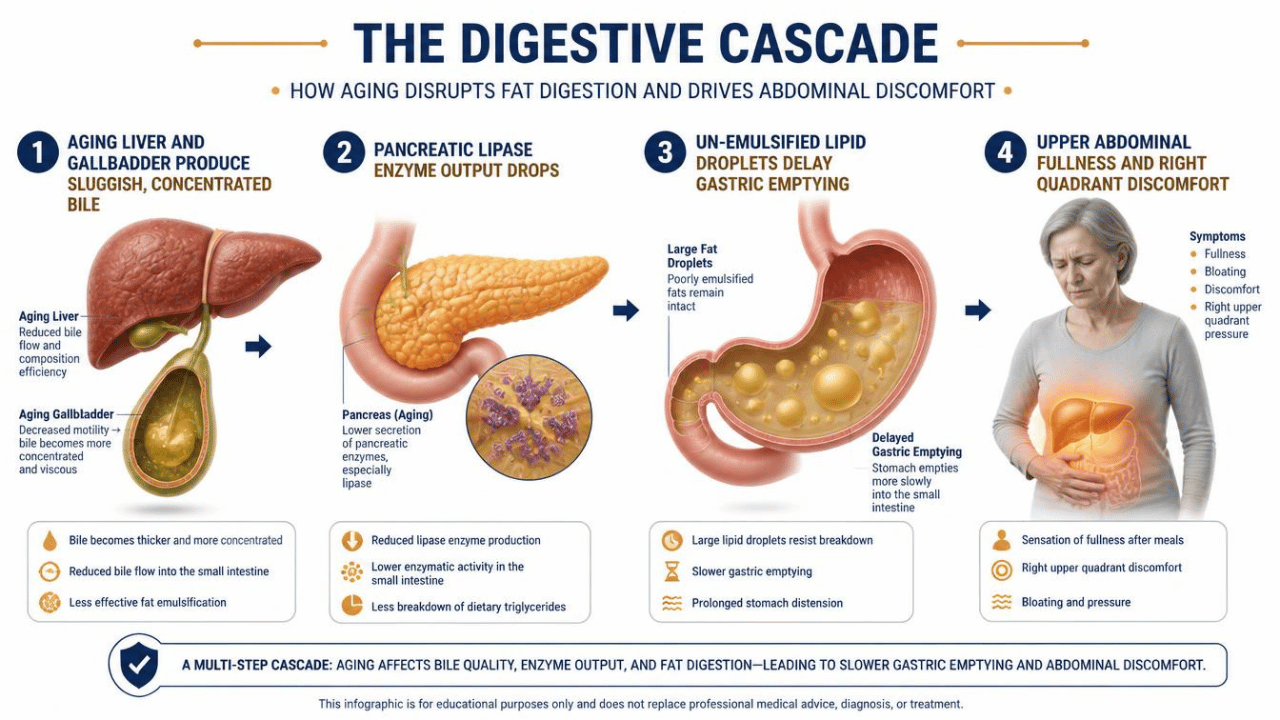
Alt Text: Clinical diagram detailing how declining bile flow and reduced pancreatic lipase output delay gastric emptying after age 40.
2. What Changes After 40: Sluggish Bile and Enzyme Deficits
As part of the natural aging process, both the liver-gallbladder axis and the pancreas experience measurable declines in functional capacity:
- Thick, Sluggish Bile: With age, the composition of bile shifts. Bile acid synthesis slows down, while cholesterol saturation rises, making bile thicker and less fluid. A sluggish gallbladder contracts less forcefully, delaying the release of bile when a fatty meal arrives.
- Pancreatic Exocrine Decline: Pancreatic tissue undergoes subtle structural changes over time, leading to a progressive reduction in enzyme synthesis—especially lipase.
- Hormonal Downregulation: Falling estrogen during perimenopause and declining thyroid output slow down smooth muscle contraction throughout the biliary tree, further reducing the speed of bile ejection.
When you consume a meal containing fats, but lack sufficient bile and active lipase, dietary lipids cannot be emulsified or cleaved efficiently.
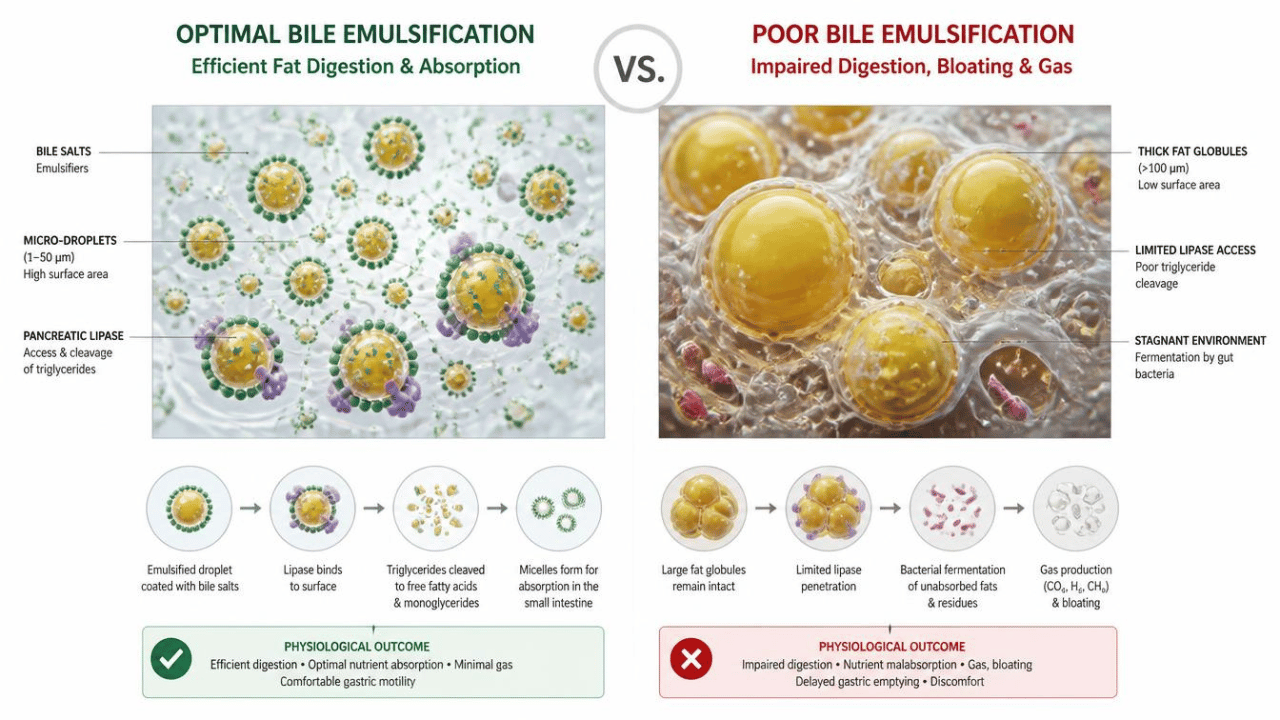
Alt Text: Side-by-side microscopic diagram comparing healthy fat emulsification with lipid stagnation and delayed gastric motility.
3. The Consequences of Lipid Stagnation: Heavy Bloating and Gas
When fats sit un-emulsified in the digestive tract, they trigger a cascade of uncomfortable symptoms:
- Delayed Gastric Emptying: The stomach senses that fats are not being broken down in the upper small intestine (duodenum). In response, it activates a feedback loop that halts stomach emptying. Food remains trapped in the stomach for 3 to 5 hours.
- Upper Abdominal "Brick" Sensation: Un-emulsified fat sitting in a stagnant stomach creates a dense, heavy pressure right under the sternum and upper right quadrant.
- Bacterial Fermentation: As trapped carbohydrates and proteins sit alongside stagnant fats in the warm stomach environment, resident bacteria ferment the surrounding food bolus, generating expanding gas bubbles that push outward against the abdominal wall.
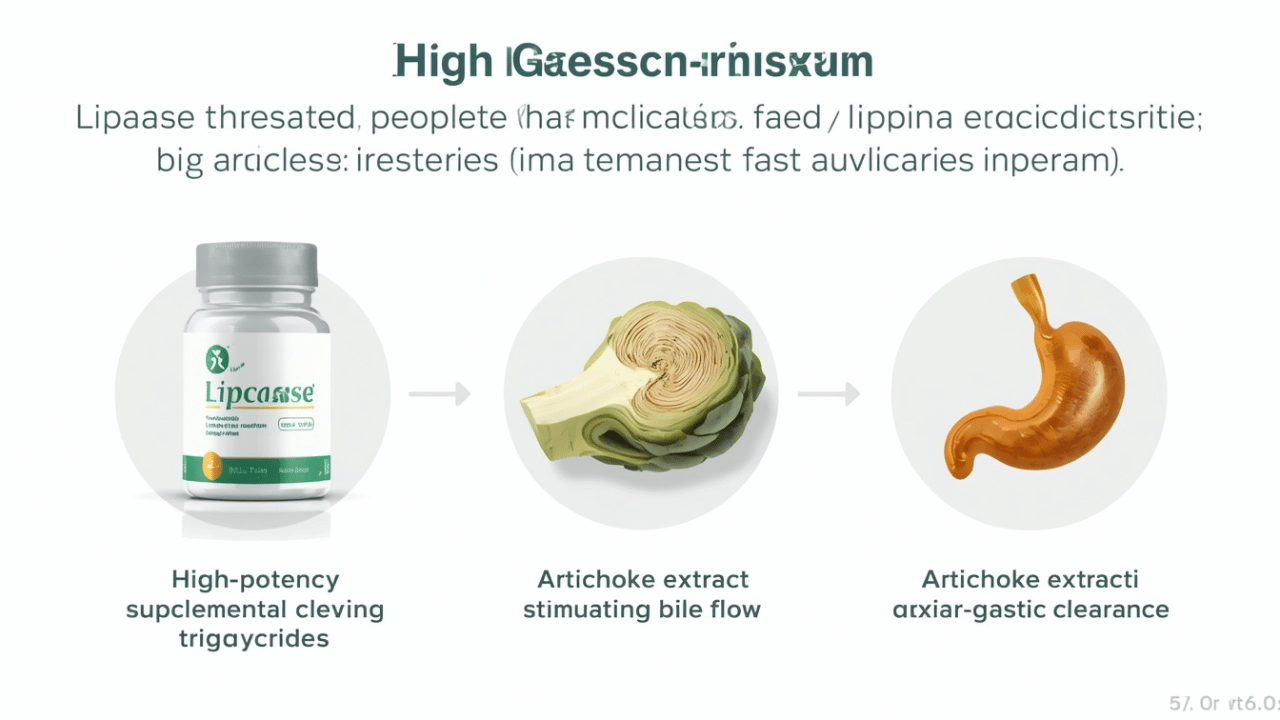
Alt Text: Flowchart illustrating how high-potency supplemental lipase and botanical artichoke extract accelerate fat breakdown and gastric clearance.
4. Breaking the Cycle: High-Potency Lipase and Cholagogue Support
Restoring effortless fat digestion requires supporting both chemical enzyme breakdown and physical bile flow:
- Supplemental Microbial Lipase: High-activity microbial lipases remain active across wide pH ranges, beginning the pre-digestion of triglycerides directly in the stomach before bile emulsification is even required.
- Artichoke Leaf Extract (Cynarin & Cynaropicrin): Artichoke is a potent natural cholagogue—it directly stimulates the liver to produce thinner, more fluid bile and encourages the gallbladder to empty completely upon meal ingestion.
- Ginger Root Extract: Speeds up antral stomach contractions, overcoming the delayed gastric emptying caused by stagnant lipid meals.
Frequently Asked Questions (FAQ)
1. Why do healthy fats like avocado and olive oil give me severe bloating?
Healthy fats still require full bile emulsification and pancreatic lipase breakdown. If bile is sluggish or lipase output is low, healthy fats stagnate in the stomach just like processed fats.
2. Where is fat bloating typically felt in the body?
Fat-induced bloating is usually felt in the upper abdomen, directly under the ribcage, and often slightly to the upper right side near the gallbladder.
3. What is the difference between bile and digestive enzymes?
Bile is a biological detergent that mechanically breaks fat into small droplets. Enzymes (like lipase) are chemical catalysts that snip those fat droplets into absorbable molecules.
4. Can you still digest fats if your gallbladder has been removed?
Without a gallbladder, bile drips continuously from the liver rather than releasing in a concentrated surge during meals. High-potency lipase supplements help break down fats in the absence of stored bile.
5. Why does fat bloating make me feel nauseous?
When un-emulsified fat delays stomach emptying, upward pressure builds in the stomach, triggering neural signals that cause mild to moderate post-meal nausea.
6. Does low stomach acid affect fat digestion?
Yes. Acidic chyme entering the duodenum is the primary trigger for the release of CCK (cholecystokinin), the hormone that signals the gallbladder to contract and the pancreas to secrete lipase.
7. Why does fat bloating worsen during perimenopause?
Fluctuating estrogen levels impair smooth muscle tone in the biliary tract and gallbladder, causing bile to become more viscous and slow to release.
8. How quickly does lipase act on a fatty meal?
When taken with the first bite of a meal, supplemental lipase begins breaking down triglycerides in the stomach within 15 to 30 minutes.
9. Can sluggish bile cause floating or pale stools?
Yes. Unabsorbed fat in the stool (steatorrhea) causes light-colored, greasy, or floating stools, indicating incomplete lipid digestion.
10. What is a cholagogue botanical?
A cholagogue is a plant extract, such as artichoke leaf, that actively promotes the discharge of bile from the gallbladder and biliary system into the duodenum.
11. Why do high-fat meals make me feel tired after eating?
Stagnant fat digestion requires immense physiological energy and delays nutrient absorption, leading to post-prandial fatigue and brain fog.
12. Are lipase supplements safe to take daily?
Yes. Supplemental digestive enzymes work locally within the gastrointestinal tract to process food and do not inhibit the body's natural endocrine or exocrine functions.
13. Should I avoid eating fats if I suffer from fat bloating?
No. Eliminating fats can lead to essential fatty acid and fat-soluble vitamin deficiencies (A, D, E, K). Supporting your bile and enzyme output allows you to digest fats comfortably.
14. How does ginger help with fat digestion?
Ginger stimulates gastric motility and antral contractions, preventing fatty food from sitting stagnant in the stomach for prolonged periods.
15. How can I differentiate fat bloating from carbohydrate fermentation?
Fat bloating causes a heavy, full "brick" feeling in the upper stomach 30–60 minutes after eating. Carbohydrate fermentation typically creates rapid gas expansion, burping, and sharp pressure lower in the gut.
Reclaim Your Energy and Digestive Freedom
You do not have to sacrifice healthy, nutrient-dense fats out of fear of post-meal heaviness and upper belly distension. By supplying your body with targeted lipase catalysts and supporting natural bile flow, you can restore fast, comfortable gastric emptying after every meal.
Recommended Articles
- Why Severe Bloating Spikes After 40: The Hidden Connection Between Hormone Drops, Enzyme Decline, and Gut Fermentation
- Low Stomach Acid After 40: How Hypochlorhydria Causes Severe Bloating, Trapped Gas, and False Reflux
- DigestiStart Review: Ingredients, Clinical Evidence, and Real User Results Analyzed
- Best Gut Health Supplements for Bloating: Why Neuromuscular Motility Outperforms Probiotics
- Ceylon Cinnamon & Glucomannan: Blood Sugar, Satiety & GLP-1 Science
keep reading
Gut Health & Supplements
DigestiStart Review: Can This Herbal Formula Help Restore Digestive Health & Relieve Bloating?
Gut Health & Supplements
The Ultimate Guide to GERD: Causes, Symptoms & Natural Relief
Gut Health & Supplements