
Best Berberine Supplement: Forms, Dosages & Label Checklist Guide
Compare the best berberine supplement forms, including HCL, Dihydroberberine, and Phytosome. Learn proper dosing, safety protocols, and label transparency.
disclosure This article contains affiliate links. Purchases may earn us a commission at no extra cost to you. We only recommend products we've reviewed.
Best Berberine Supplement: How to Choose the Right One
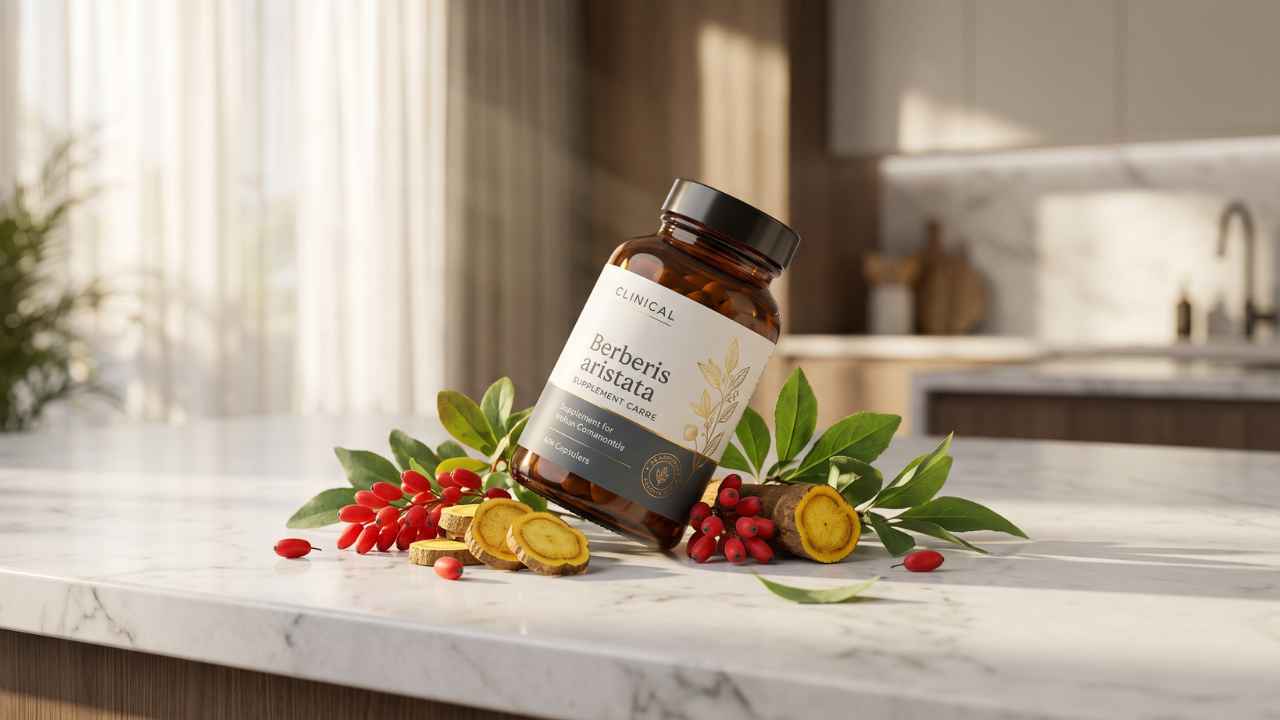
Figure 1: A clinical-grade amber supplement bottle positioned alongside natural Berberis botanical roots, highlighting raw botanical sources and refined metabolic compounds.
Berberine has become one of the most extensively researched botanical compounds for blood sugar stability, lipid management, and cellular metabolic health. Yet with dozens of brands, forms, and dosages competing for attention, selecting the right formula can be challenging. A budget-friendly option may deliver an unbuffered compound with poor intestinal absorption, while a premium label may overcharge for basic, unstandardized extracts.
Finding the right supplement requires evaluating molecular forms, bioavailability rates, and synergistic co-factors. Berberine directly influences the gut-liver axis, activating metabolic pathways and working synergistically with microbial regulators like Akkermansia muciniphila to support natural GLP-1 signaling.
What Is Berberine? Definition, Origins, and Cellular Mechanism
Berberine is a bioactive quaternary ammonium salt and isoquinoline alkaloid extracted from several medicinal plants, including Berberis aristata (Tree Turmeric), Hydrastis canadensis (Goldenseal), and Coptis chinensis (Goldthread). Characterized by its intense yellow hue, it has served as a staple in Ayurvedic and Traditional Chinese Medicine for centuries.
Modern pharmacology highlights berberine's ability to activate AMPK (AMP-activated protein kinase), the body's master cellular energy sensor. When AMPK is activated:
- Skeletal muscle cells increase glucose uptake via GLUT4 transporters without requiring extra insulin.
- Hepatic gluconeogenesis (excess sugar production in the liver) is down-regulated.
- Fat storage pathways are inhibited in favor of mitochondrial fatty acid oxidation.
- The gut microbiome undergoes positive modulation, supporting short-chain fatty acid production.
Key Clinical Benefits of Berberine
1. Glycemic Control & Insulin Sensitivity
Multiple clinical trials indicate that berberine lowers fasting blood glucose, post-prandial spikes, and HbA1c levels. By improving insulin receptor expression and slowing intestinal carbohydrate breakdown, it provides metabolic support comparable to conventional interventions.
2. Lipid and Cardiovascular Balance
Berberine supports healthy cholesterol profiles by upregulating LDL receptor expression in the liver. This promotes LDL clearance from circulation, lowers serum triglycerides, and supports optimal HDL levels.
3. Gut Microbiome Modulation
Because berberine exerts natural antimicrobial actions, it selectively suppresses dysbiotic organisms while nourishing beneficial species. Comprehensive clinical analyses, such as our evaluation of advanced metabolic formulas like LipoJaro, demonstrate how combining berberine with mucosal defenders optimizes the metabolic-gut axis.
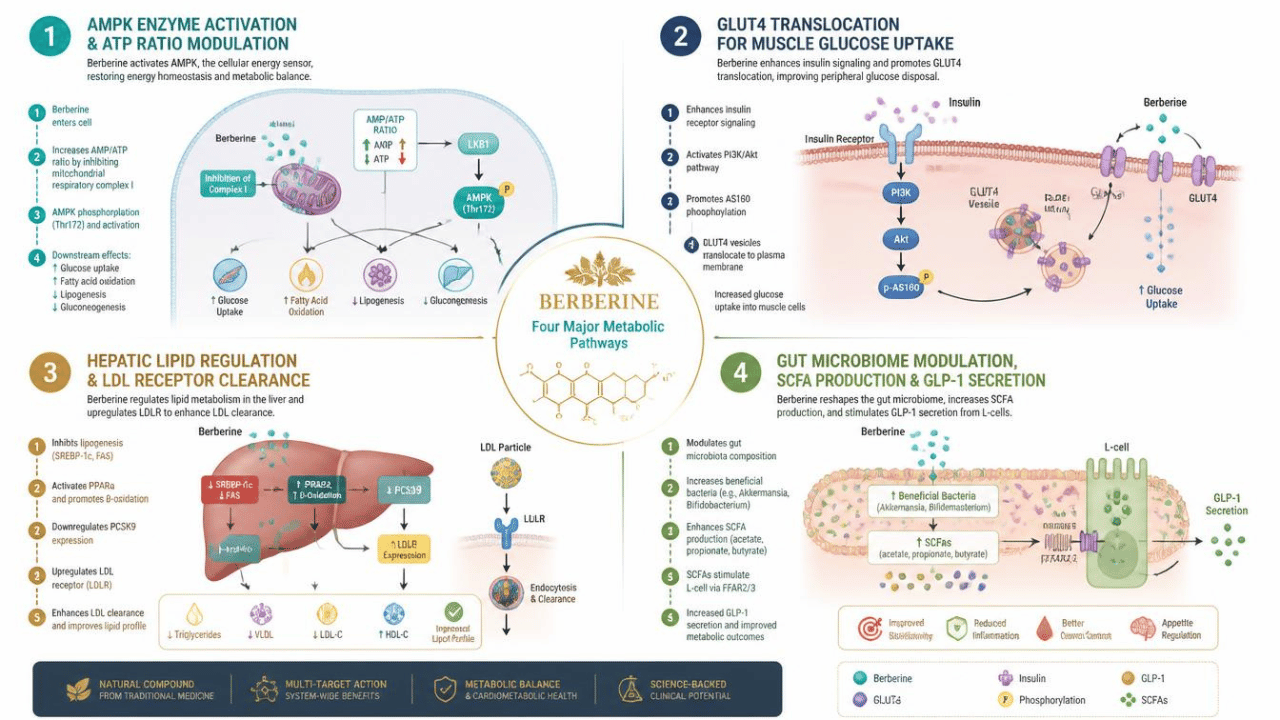
Figure 2: The four core clinical mechanisms of Berberine: AMPK activation, glucose transporter translocation, lipid regulation, and mucosal microbiome modulation.
Top Berberine Supplement Forms Explained
How well a supplement works depends directly on its molecular delivery form:
- Berberine HCL (Hydrochloride): The most common, budget-friendly, and clinically studied form. It features low oral bioavailability (under 5%), as intestinal P-glycoprotein pumps export much of it back into the digestive lumen, requiring larger daily doses (1,000–1,500 mg).
- Dihydroberberine (DHB): A hydrogenated metabolite that bypasses standard intestinal barriers. Research indicates DHB achieves up to 5 times greater bioavailability than HCL, allowing for lower doses (100–200 mg) with fewer gastrointestinal side effects.
- Berberine Phytosome: Binds berberine extract to food-grade phospholipids (typically sunflower lecithin). This delivery system improves intestinal membrane absorption compared to raw HCL.
- Berberine Liquid Tinctures: Alcohol- or glycerin-based liquid extracts. Useful for those unable to swallow capsules, but difficult to standardize for precise daily therapeutic dosing.
Synergistic Combinations: The Value of Ceylon Cinnamon
Standard berberine is most effective when combined with synergistic botanical co-factors. Pairing Berberine HCL with Ceylon Cinnamon (Cinnamomum verum) creates a dual-action mechanism.
Ceylon cinnamon contains water-soluble polyphenol polymers that mimic insulin and support cell membrane receptors, enhancing post-meal glucose disposal. You can read more about this cellular pathway in our detailed guide on berberine for weight loss and metabolic activation.
What to Look for on the Supplement Label
Use this quality checklist before choosing a berberine product:
- Third-Party Verification: Look for independent purity testing (USP, NSF, or third-party lab COAs) ensuring zero heavy metals or adulterants.
- Standardized Potency: Ensure the label explicitly states the exact extract percentage (e.g., Standardized to 97% Berberine HCL).
- Genuine Ceylon Cinnamon: If buying a combination formula, verify it uses true Cinnamomum verum, not cheap Cassia cinnamon, which contains high levels of liver-toxic coumarin.
- Absence of Unnecessary Fillers: Avoid formulas containing artificial colorings, hydrogenated oils, or excessive flow agents like magnesium stearate.
Dosage, Timing & Mitigating Digestive Side Effects
Recommended Daily Dosage
- Standard Berberine HCL: 500 mg taken 2 to 3 times daily (totaling 1,000 to 1,500 mg/day).
- Dihydroberberine (DHB): 100 mg to 200 mg taken 1 to 2 times daily.
Optimal Meal Timing
Always take berberine 20 to 30 minutes before or during meals. This ensures peak circulating concentrations match the digestive absorption of dietary carbohydrates.
Managing Gastrointestinal Adaptation
Because berberine shifts gut flora, some individuals experience transient cramping, bloating, or altered stool consistency during the first 7 to 10 days. These minor shifts are common during metabolic and digestive realignments, similar to the symptoms seen during upper digestive motility resets.
If gut discomfort is accompanied by autonomic tension, explore our clinical resources on stress-induced gut motility slowdowns and overnight abdominal distension resets. Additionally, comparing different bacterial strains in our guide to Lactobacillus species can help balance your broader digestive strategy.
Frequently Asked Questions (FAQ)
1. What is the best form of berberine to take?
Dihydroberberine (DHB) provides the highest absorption rate (up to 5x greater than standard extracts) with fewer stomach issues. Berberine HCL remains the most extensively studied and cost-effective option.
2. How much berberine should I take daily?
For Berberine HCL, the standard dose is 500 mg taken two to three times daily (1,000–1,500 mg total). For Dihydroberberine, clinical doses range from 100 mg to 200 mg per day.
3. Does berberine really help with weight management?
Yes, indirectly. Berberine activates AMPK, improves insulin sensitivity, reduces post-meal blood sugar surges, and curbs carbohydrate cravings, which supports fat loss when paired with balanced nutrition.
4. Is berberine comparable to prescription Metformin?
Clinical trials in individuals with metabolic dysfunction show berberine produces glycemic and lipid improvements similar to Metformin. However, berberine is a dietary supplement and should not replace prescribed medications without physician guidance.
5. When is the best time of day to take berberine?
Take berberine 20 to 30 minutes before your largest meals containing carbohydrates to optimize glucose disposal and blunt insulin spikes.
6. Who should avoid taking berberine?
Pregnant and breastfeeding women, infants, individuals on liver-metabolized pharmaceuticals (via CYP450 enzymes), and patients taking prescription glucose-lowering drugs without medical supervision should avoid it.
7. What makes Ceylon cinnamon a good addition to berberine?
Ceylon Cinnamon (Cinnamomum verum) contains bioactive polyphenols that support insulin signaling while containing negligible amounts of coumarin, avoiding the liver toxicity risks of Cassia cinnamon.
8. Can berberine cause digestive upset?
Yes. Mild side effects such as nausea, cramping, gas, or temporary diarrhea can occur early on due to its antimicrobial properties. Splitting doses with meals resolves most issues.
9. How long does it take for berberine to work?
Glycemic stabilization and reduced sugar cravings often appear within 2 to 4 weeks. Measurable changes in lipid profiles and body composition typically develop over 8 to 12 weeks of daily use.
10. Does berberine stimulate GLP-1?
Yes. Berberine promotes the production of short-chain fatty acids in the colon, which bind to enteroendocrine L-cell receptors to trigger natural, endogenous GLP-1 hormone release.
11. Can I take berberine continuously or should I cycle it?
Many practitioners recommend cycling berberine (e.g., 8 to 12 weeks on, followed by a 2 to 4 week break) to allow the intestinal microbiome and liver enzymes to rest.
12. Does berberine lower blood pressure?
Clinical studies show berberine can mildly reduce systolic and diastolic blood pressure by improving endothelial function and promoting vascular relaxation.
13. What is the difference between Berberine HCL and Berberine Complex?
Berberine HCL is a single isolated alkaloid salt. A complex typically pairs berberine with synergistic nutrients like Ceylon cinnamon, alpha-lipoic acid, or chromium for broader metabolic support.
14. Can berberine be taken on an empty stomach?
It is not recommended. Taking berberine on an empty stomach increases the risk of nausea, cramping, and gastrointestinal irritation.
15. What third-party testing certifications should I look for?
Look for cGMP-certified manufacturing, NSF International certification, USP verification, or verifiable third-party certificates of analysis (COA) for purity and heavy metal screening.
Recommended Reading (Related Guides)
- 📖 LipoJaro Review: Does This Microbiome & GLP-1 Metabolic Formula Actually Work?
- 📖 Berberine for Weight Loss: AMPK Activation, Natural GLP-1 & Metabolic Science
- 📖 The Ultimate Guide to Lactobacillus: Types, Gut Benefits & How to Choose the Right Strain
- 📖 Food Sitting in Stomach for Hours? Delayed Gastric Emptying Symptoms & How to Speed Up Digestion
keep reading
Gut Health & Supplements
DigestiStart Review: Can This Herbal Formula Help Restore Digestive Health & Relieve Bloating?
Gut Health & Supplements
The Ultimate Guide to GERD: Causes, Symptoms & Natural Relief
Gut Health & Supplements