The Missing Link in Chronic Constipation: Restoring Your Migrating Motor Complex
Struggling with chronic constipation, trapped gas, or SIBO? Learn how the Migrating Motor Complex (MMC) sweeps the gut and how natural prokinetics restore motility.

disclosure This article contains affiliate links. Purchases may earn us a commission at no extra cost to you. We only recommend products we've reviewed.
The Missing Link in Chronic Constipation: Restoring Your Migrating Motor Complex
For millions of adults over 40, chronic constipation is treated as a simple fiber deficiency or water shortage. Yet, despite drinking gallons of water, taking daily laxatives, and consuming high-fiber diets, many still experience sluggish transit, painful lower belly distension, and trapped gas that refuses to move.
When standard constipation remedies fail, the root cause is rarely a lack of bulk in the stool. Instead, it is a breakdown in the GI tract's internal electrical sweeping system: the Migrating Motor Complex (MMC).
Understanding how this invisible "housekeeping wave" works—and why constant grazing, stress, and low stomach acid shut it down—is the key to restoring natural, daily bowel regularity without relying on harsh laxatives.
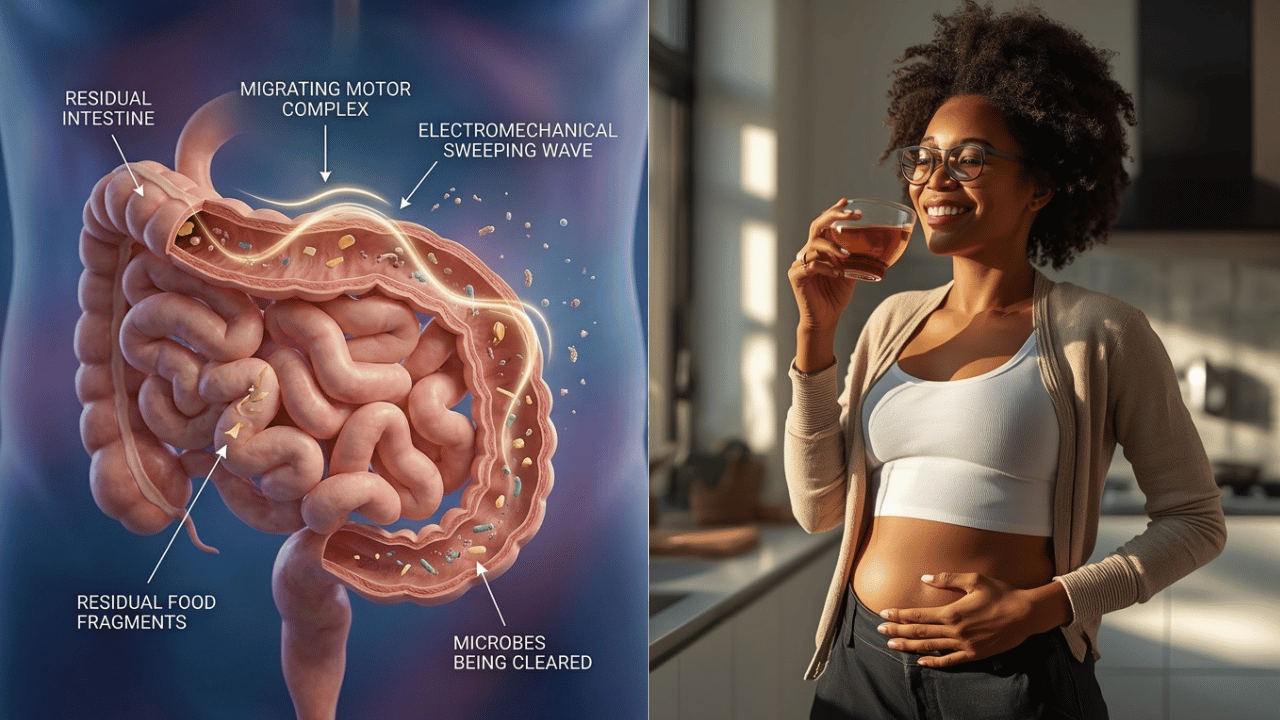
Medical editorial split image displaying the peristaltic sweeping wave of the small intestine alongside a woman experiencing digestive comfort.
1. What is the Migrating Motor Complex (MMC)?
While peristalsis moves food through your digestive tract during meal digestion, the Migrating Motor Complex (MMC) is a distinct electromechanical wave that operates only when you are fasting.
Often referred to as the gut’s "housekeeper," the MMC travels from the stomach down to the ileocecal valve every 90 to 120 minutes between meals and overnight. Its job is to sweep away residual undigested food particles, dead epithelial cells, and excess bacteria out of the small intestine into the colon.
When your MMC is working efficiently:
- Bacteria Are Kept in Check: Microbes are pushed into the large intestine, preventing Small Intestinal Bacterial Overgrowth (SIBO).
- Trapped Gas is Expelled: Trapped air bubbles are swept downstream rather than fermenting in place.
- Bowel Movements Become Predictable: Natural peristaltic tone is maintained, encouraging regular morning evacuations.
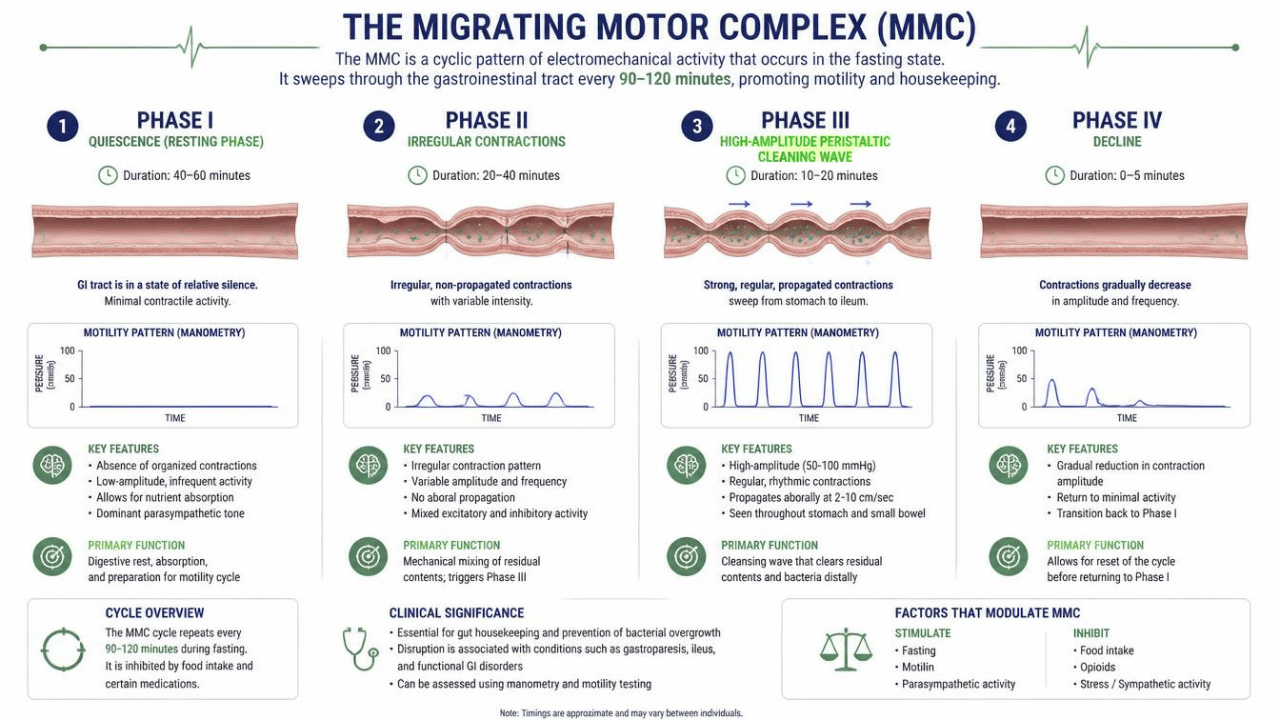
Clinical diagram illustrating the four distinct phases of the Migrating Motor Complex and the high-amplitude Phase III cleansing wave.
2. The 3 Main Saboteurs of Your MMC Wave
If the MMC is meant to run automatically, why does it stall out after age 40?
1. Continuous Snacking and Frequent Grazing
The MMC is completely suppressed by food intake. The moment you eat a snack, drink a caloric beverage, or sip coffee with milk, insulin and digestive hormones shut down the MMC, switching the gut back into active digestion. If you eat every 2–3 hours, your MMC never reaches its powerful Phase III sweeping cycle.
2. Stress and High Cortisol
The MMC is governed by the Enteric Nervous System (ENS) via the vagus nerve. Chronic stress keeps the body in a sympathetic "fight-or-flight" state, which inhibits vagal tone and halts migratory contractions.
3. Low Stomach Acid and Lack of Bile
The signaling cascade that initiates Phase III MMC waves relies on adequate stomach acid (HCL) and bile flow. When gastric acid drops after age 40, motilin secretion is delayed, leading to a sluggish housekeeper wave.
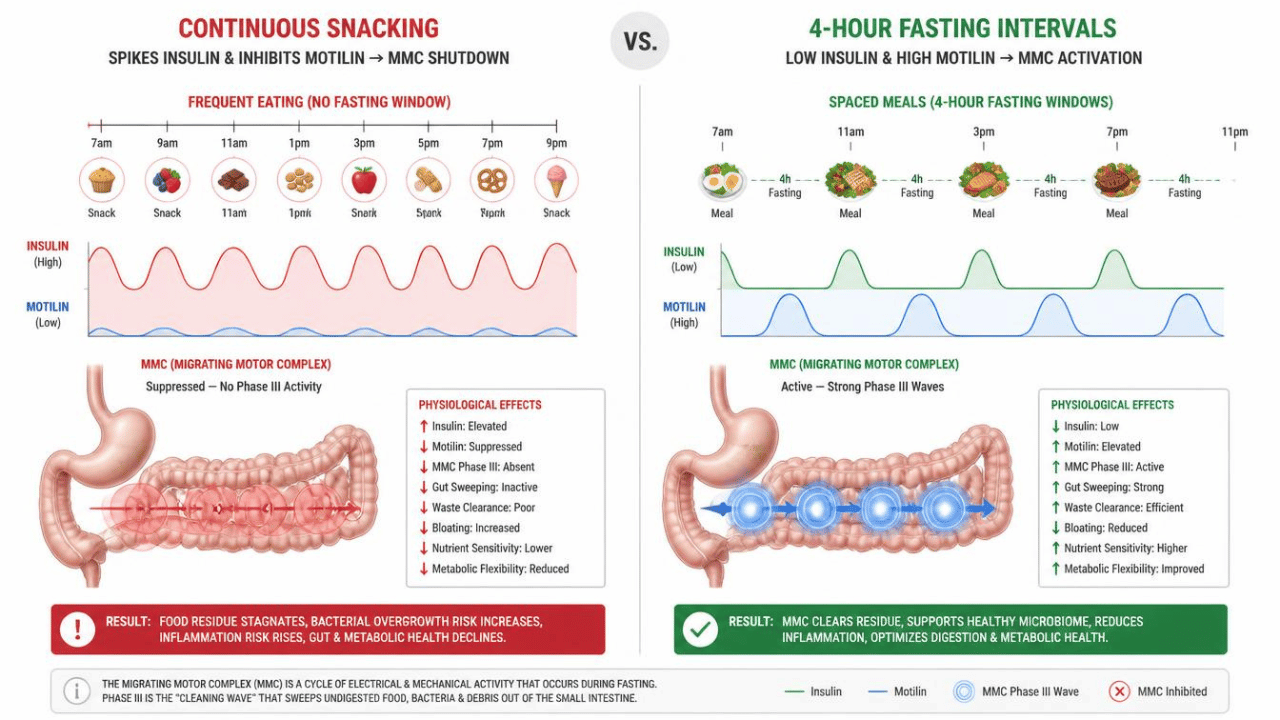
Alt Text: Medical comparison diagram contrasting continuous snacking MMC shutdown with meal spacing fasting intervals that trigger natural gut sweeping.
3. Natural Prokinetics: Re-Activating the Sweeping Wave
Unlike stimulant laxatives—which forcibly irritate the colon to compel a bowel movement—prokinetics work upstream. They stimulate the nerve receptors in the stomach and small intestine to restore the natural rhythmic motility of the MMC.
Key botanical prokinetics include:
- Standardized Ginger Extract (Gingerols & Shogaols): Accelerates gastric emptying and stimulates 5-HT4 serotonin receptors in the gut wall, triggering migratory waves.
- Artichoke Leaf Extract (Cynarin): Stimulates bile production and works synergistically with ginger to enhance small intestine transit time.
- Prokinetic Enzyme Synergies: Broad-spectrum digestive enzymes lower the digestive burden, allowing the gut to transition into the fasting state faster.
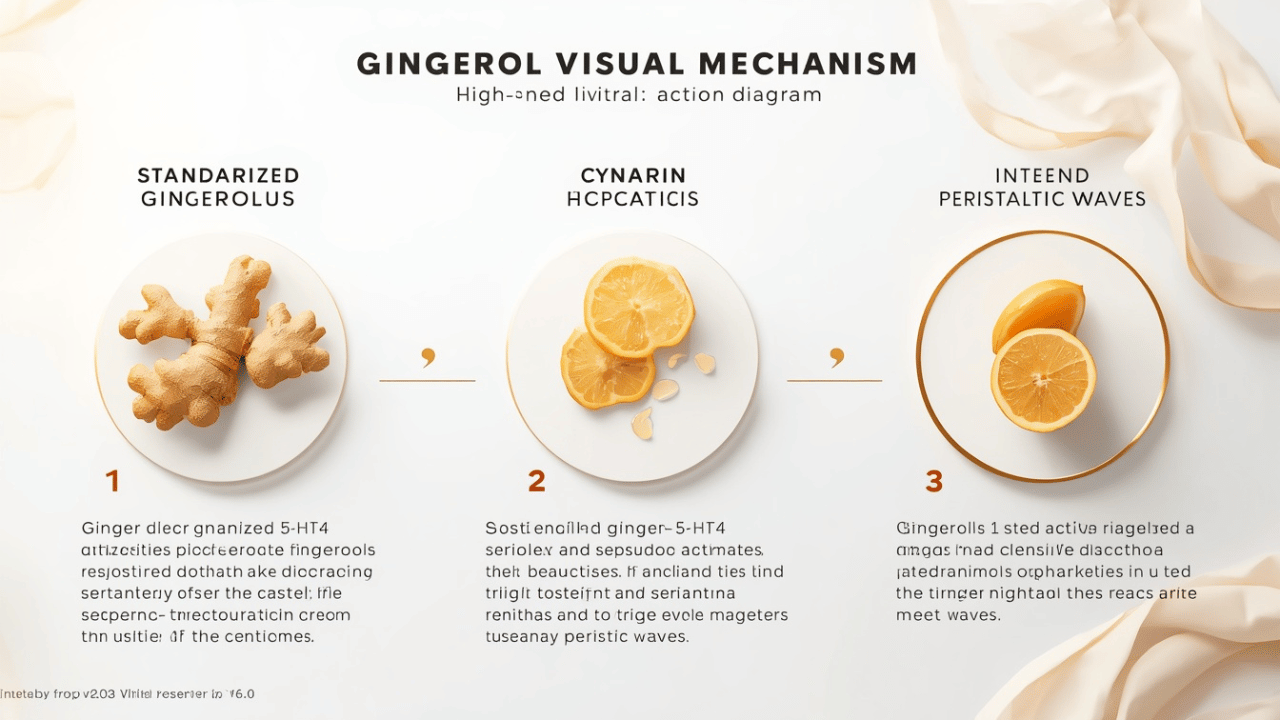 Mechanism diagram showing how botanical prokinetics like ginger and artichoke stimulate enteric serotonin receptors to trigger MMC peristalsis.
4. Protocol to Reset Your MMC for Regular Motility
Restoring your gut’s internal motility requires combining targeted supplementation with strategic timing:
- Practice 3.5 to 4-Hour Meal Spacing: Allow clear fasting windows between breakfast, lunch, and dinner so the MMC can complete a full 90-minute cycle.
- Take Natural Prokinetics Before Bed: The longest uninterrupted MMC activity occurs during nighttime sleep. Taking prokinetics before bedtime optimizes overnight gut sweeping.
- Hydrate Between Meals: Drink plain water between meals rather than with food to keep the mucosal lining hydrated without triggering digestive hormone responses.
Frequently Asked Questions (FAQ)
1. What is the difference between peristalsis and the Migrating Motor Complex (MMC)?
Peristalsis occurs during meal digestion to mix and move food. The MMC operates only during fasting state to sweep undigested debris and bacteria out of the small intestine.
2. Why does snacking prevent my stomach from clearing out?
Every time you consume calories, your gut releases digestive hormones that instantly halt the MMC sweeping wave and reset the cycle back to digestion mode.
3. Can low stomach acid cause a slow MMC?
Yes. Sufficient stomach acid triggers the release of motilin, the primary hormone responsible for initiating Phase III of the MMC cycle.
4. How does a slow MMC lead to SIBO (Small Intestinal Bacterial Overgrowth)?
Without the physical sweeping action of the MMC, bacteria migrate from the colon into the small intestine, where they feed on lingering food and produce trapped gas.
5. Are prokinetics the same as laxatives?
No. Laxatives force liquid into the colon or irritate the bowel lining. Prokinetics stimulate the enteric nervous system to restore natural, coordinated muscular contractions.
6. Does ginger help with chronic constipation?
Yes. Standardized ginger extracts act as natural prokinetics, stimulating serotonin receptors in the gut wall to speed up stomach emptying and small intestine motility.
7. Why do high-fiber diets sometimes make bloating and constipation worse?
If your MMC is stalled, adding extra fiber creates a backlog of bulk in a motionless gut, giving fermenting bacteria more fuel to produce gas.
8. When is the best time to take a natural prokinetic supplement?
Taking a prokinetic either between meals or right before bed gives the highest benefit, as it coincides with your body's natural fasting MMC windows.
9. Does fasting overnight help restore gut motility?
Yes. An overnight fasting window of 11–12 hours allows multiple complete MMC cycles to thoroughly sweep the digestive tract before breakfast.
10. How does stress stop bowel movements?
Stress activates the sympathetic nervous system, suppressing vagus nerve signals that are required to trigger MMC migratory waves.
11. Can coffee trigger an MMC wave?
Coffee can stimulate colonic peristalsis, but caloric additions (milk, sugar, creamer) instantly shut down the small intestine MMC sweeping mechanism.
12. How long does an MMC cycle take?
A full MMC cycle typically lasts between 90 to 120 minutes in a healthy fasting individual.
13. What hormone controls the Migrating Motor Complex?
Motilin is the main peptide hormone responsible for triggering high-amplitude Phase III MMC contractions.
14. Why is constipation more common after age 40?
Age-related declines in enzyme production, stomach acid, and vagal nerve tone slow down the frequency and strength of MMC sweeping waves.
15. Can digestive enzymes support MMC recovery?
Yes. By digesting food efficiently, broad-spectrum enzymes allow your stomach to empty faster, enabling your gut to enter the fasting MMC state sooner.
Restore Your Gut's Natural Rhythm
Chronic constipation and trapped gas are not inevitable signs of aging—they are signals that your internal sweeping system needs support. By spacing your meals, optimizing stomach acid, and incorporating targeted botanical prokinetics, you can reactivate your MMC and enjoy effortless, daily digestive relief.
Recommended Articles
- Why Severe Bloating Spikes After 40: The Hidden Connection Between Hormone Drops, Enzyme Decline, and Gut Fermentation
- Low Stomach Acid After 40: How Hypochlorhydria Causes Severe Bloating, Trapped Gas, and False Reflux
- The Science of Fat Bloating: Why Your Gallbladder and Pancreas Struggle After 40
- Why Probiotics Fail for Upper Abdominal Gas (And How Enzymes Clear Trapped Fermentation)
- Digestive Enzymes After Gallbladder Removal: How to Stop Bile Diarrhea and Fat Bloat
keep reading
Gut Health & Supplements
DigestiStart Review: Can This Herbal Formula Help Restore Digestive Health & Relieve Bloating?
Gut Health & Supplements
The Ultimate Guide to GERD: Causes, Symptoms & Natural Relief
Gut Health & Supplements