Why Probiotics Fail for Upper Abdominal Gas (And How Enzymes Clear Trapped Fermentation)
Experiencing severe upper bloating after taking probiotics? Discover why probiotics exacerbate trapped gas and how targeted digestive enzymes clear fermentation.

disclosure This article contains affiliate links. Purchases may earn us a commission at no extra cost to you. We only recommend products we've reviewed.
Why Probiotics Fail for Upper Abdominal Gas (And How Enzymes Clear Trapped Fermentation)
When severe bloating, upper stomach tightness, or persistent burping becomes a daily struggle, the most common advice offered by well-meaning health enthusiasts is simple: "Just take a high-potency probiotic."
Millions of adults over 40 follow this advice, buying expensive probiotic supplements containing tens of billions of colony-forming units (CFUs). Yet, instead of finding relief, many experience an immediate worsening of their symptoms—waking up with tighter distension, painful gas trapped directly under the sternum, and increased acid pressure.
This disappointing outcome is not a coincidence; it is a predictable biological response. While probiotics play a valuable role in lower bowel health, introducing billions of live bacteria into an upper gastrointestinal tract loaded with undigested food acts like throwing gasoline on a fire.
Understanding the difference between bacterial fermentation and enzymatic breakdown is the key to clearing trapped upper belly gas and restoring lasting digestive comfort.
 Figure 1: Medical editorial split image illustrating probiotic gas fermentation in the stomach alongside a woman feeling upper abdominal comfort.
1. The Probiotic Paradox: When Good Bacteria Cause Bad Gas
Probiotics are designed to colonize the large intestine (colon), where trillions of microbes naturally ferment complex fibers to produce beneficial short-chain fatty acids. However, the upper digestive tract—specifically the stomach and upper small intestine (duodenum)—is designed to remain relatively low in bacterial concentration.
When individuals over 40 experience age-related drops in hydrochloric acid (HCl) and pancreatic enzyme output, food breakdown slows down dramatically. As a result:
- Stagnant Undigested Substrates: Starches, proteins, and dietary fats remain un-hydrolyzed in the stomach and upper gut for hours.
- Feeding the Upper Gut Microbiome: Swallowing massive doses of live probiotic bacteria into an environment full of un-cleaved carbohydrates creates an immediate bacterial feeding frenzy.
- Rapid Fermentation Cascade: As these newly introduced bacteria metabolize the trapped food, they release large volumes of hydrogen, methane, and carbon dioxide gas within 30 to 60 minutes of ingestion.
Rather than soothing the digestive tract, probiotics actively fuel upper abdominal gas expansion.
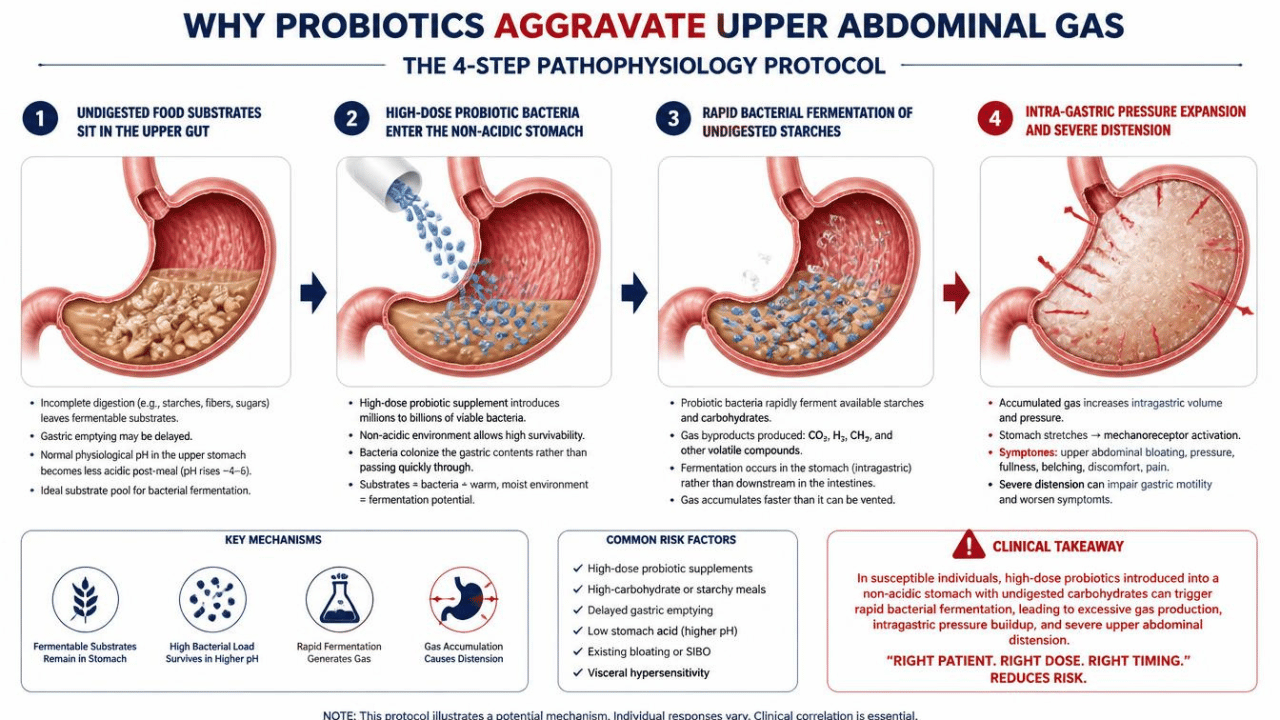
Figure 2: Clinical diagram detailing how high-dose probiotics ferment undigested food in the upper stomach, increasing intra-gastric gas pressure.
2. SIBO and the Danger of Adding Microbes to Upper Distension
A major reason probiotics fail for upper belly gas after age 40 is the high prevalence of subclinical Small Intestinal Bacterial Overgrowth (SIBO).
In a healthy system, strong stomach acid and continuous sweeping muscular waves (the Migrating Motor Complex) keep the small intestine clear of excessive bacteria. When acid and motility drop, colonic bacteria migrate upward into the small intestine.
If you have SIBO or slow gastric motility:
- The Small Intestine Is Already Overcrowded: Adding 50 billion more live organisms through probiotic capsules exacerbates the microbial imbalance.
- Upward Pressure & Reflux: The gas produced by these bacteria expands against the rigid upper abdominal wall, creating severe visible distension and pushing stomach acid upward against the lower esophageal sphincter (LES).
- Probiotic-Induced Brain Fog and Bloating: Bacterial fermentation in the small intestine can produce D-lactic acid and gas byproducts that contribute to post-meal brain fog, fatigue, and intense abdominal discomfort.
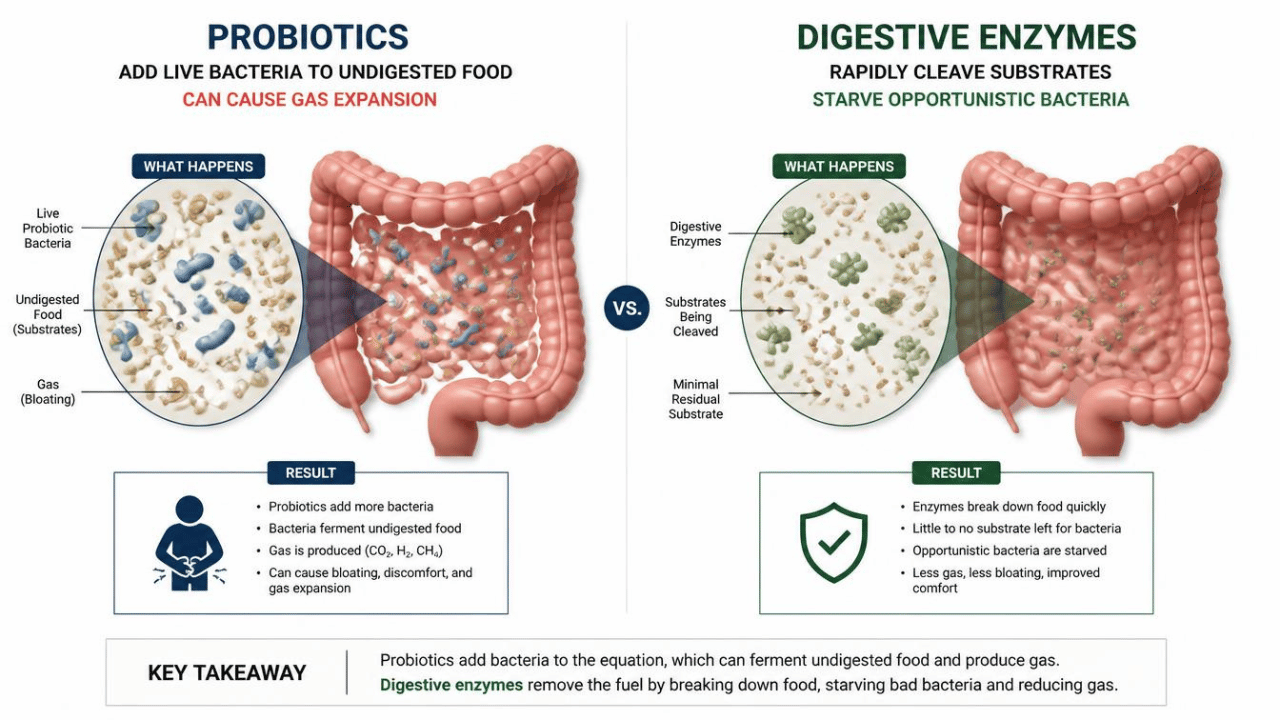
Figure 3: Side-by-side medical comparison showing how probiotics worsen upper gut fermentation while digestive enzymes starve gas-producing bacteria.
3. Enzymes vs. Probiotics: Clearing the Fermentation Substrate
To solve upper abdominal gas, the strategy must shift from adding more bacteria to eliminating the fuel that feeds them. This is where supplemental digestive enzymes excel.
Unlike probiotics, which are live living organisms, digestive enzymes are biological catalysts. They do not colonize the gut or produce gas. Instead, they chemically break down complex macronutrients into simple, absorbable units:
- Amylases and Glucoamylase: Rapidly cleave complex starches into simple glucose units before opportunistic upper gut bacteria can ferment them into gas.
- Proteases: Break dense protein chains into peptides and amino acids, preventing protein putrefaction and sulfur gas buildup.
- Lipases: Emulsify and split triglycerides, resolving post-meal heaviness and preventing delayed gastric emptying.
- Cellulase and Hemicellulase: Hydrolyze tough plant fiber cell walls, allowing you to eat healthy vegetables without triggering severe gas.
By taking targeted enzymes with your first bite of food, nutrients are absorbed high up in the digestive tract, starving gas-producing microbes and keeping the upper abdomen flat.
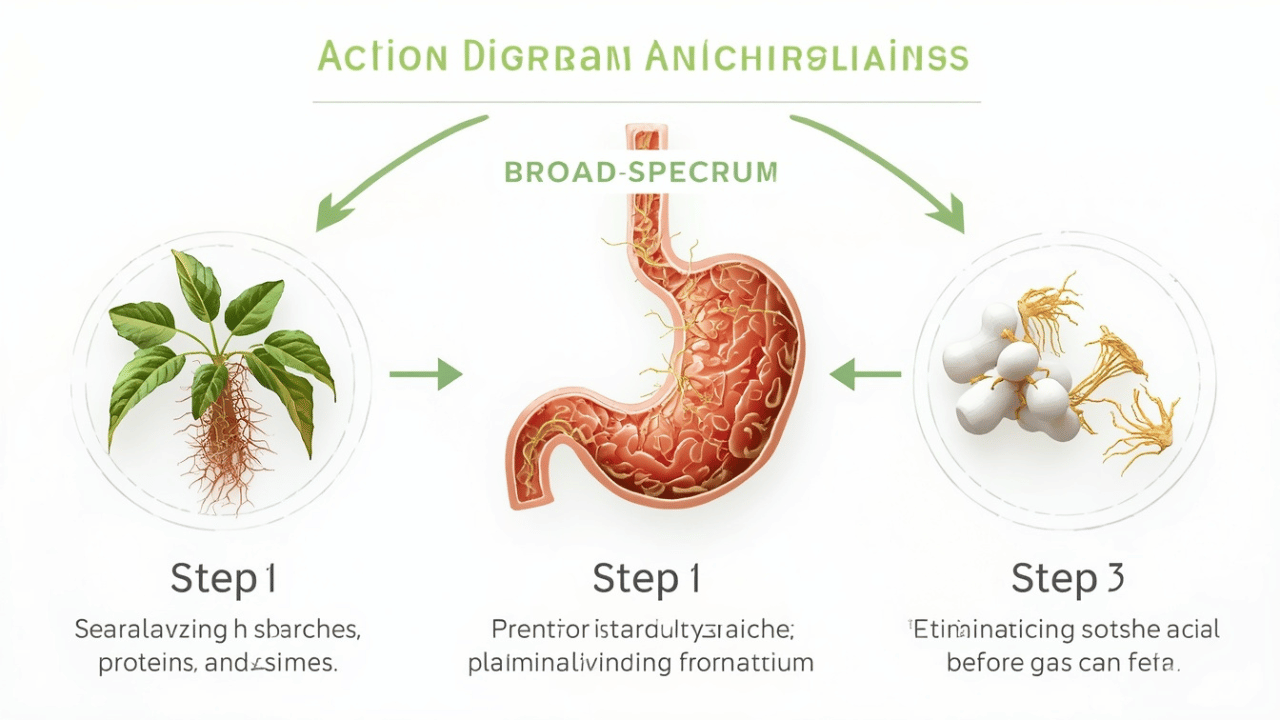 Figure 4: Flowchart demonstrating how broad-spectrum digestive enzymes rapidly hydrolyze starches, proteins, and fats to eliminate upper abdominal gas.
4. Combining Catalytic Enzymes with Botanical Prokinetics
While supplemental enzymes take care of chemical digestion, restoring the physical downward movement of the stomach is equally critical.
Combining broad-spectrum enzymes with botanical prokinetics creates a complete solution:
- Ginger Root Extract: Stimulates antral stomach contractions, accelerating gastric emptying so food does not sit long enough to ferment.
- Artichoke Leaf Extract: Promotes bile secretion and coordinates smooth muscle rhythm across the intestinal walls, sweeping residual waste out of the upper gut.
This dual-action mechanism provides immediate post-meal lightness while preventing long-term gas accumulation.
Frequently Asked Questions (FAQ)
1. Why do probiotics make my upper stomach swell up immediately after taking them?
When undigested food is present in the upper gut, live probiotic bacteria feed on those un-cleaved carbohydrates, releasing large amounts of fermentation gas within 30 to 60 minutes.
2. Should I stop taking probiotics if they cause me severe bloating?
If your bloating is concentrated in the upper abdomen and occurs shortly after eating, stopping probiotics and focusing on digestive enzymes and gastric motility is often the best approach.
3. Are digestive enzymes the same thing as probiotics?
No. Probiotics are live bacterial strains meant to populate the gut. Digestive enzymes are biological protein catalysts that break down food chemically without producing gas.
4. Can probiotics cause Small Intestinal Bacterial Overgrowth (SIBO)?
In individuals with low stomach acid or slow gut motility, high-dose probiotics can settle in the small intestine rather than reaching the colon, contributing to SIBO.
5. How do I know if my gas is in the upper gut or lower gut?
Upper gut gas occurs within 30 to 90 minutes of eating, causing burping, chest tightness, and distension above the navel. Lower gut gas develops several hours later in the lower abdomen.
6. Can I take digestive enzymes and probiotics together?
Yes, but if upper bloating is your primary symptom, focus on enzymes first to clear food fermentation before reintroducing targeted low-dose probiotics later.
7. Do digestive enzymes work immediately?
Yes. Enzymes work directly on the food ingested during that specific meal, breaking down nutrients within 15 to 30 minutes of taking them.
8. Why do probiotics fail to cure acid reflux caused by bloating?
Acid reflux from bloating is usually driven by mechanical gas pressure forcing the lower esophageal sphincter open. Probiotics add more gas pressure, whereas enzymes reduce it.
9. What enzymes are best for starches that cause gas?
Amylase, glucoamylase, and alpha-galactosidase are highly effective at breaking down complex starches and oligosaccharides before fermentation occurs.
10. How does low stomach acid affect probiotic supplement performance?
Low stomach acid allows food to sit undigested in the stomach, turning probiotic capsules into active fermentation agents inside the stomach rather than in the lower colon.
11. Are plant-derived enzymes better than animal pancreatin for gas?
Plant and fungal enzymes operate across a much wider pH range (pH 2.0 to 8.0), allowing them to begin breaking down food immediately in the upper stomach.
12. Why do raw salads cause so much bloating even when taking probiotics?
Humans lack the enzyme cellulase to break down plant cell walls. Probiotics ferment these raw fibers into gas; taking cellulase enzymes breaks them down comfortably.
13. Can prokinetic botanicals help clear trapped gas?
Yes. Botanicals like ginger and artichoke stimulate the muscular waves that sweep trapped gas and food downward into the lower bowel for elimination.
14. Will taking digestive enzymes make my body lazy?
No. Supplemental enzymes operate locally within the GI tract on ingested food and do not suppress your body's natural pancreatic or stomach secretions.
15. What is the most effective way to eliminate upper abdominal gas after age 40?
Support chemical breakdown with broad-spectrum digestive enzymes and restore physical movement with botanical prokinetics to prevent food stagnation and fermentation.
Reclaim Your Comfort and Enjoy Food Again
You do not need to tolerate painful upper belly distension, persistent burping, or probiotic-induced gas. By replacing live bacterial overload with targeted catalytic enzymes and prokinetic motility support, you can clear trapped fermentation and enjoy comfortable digestion after every meal.
Recommended Articles
- Why Severe Bloating Spikes After 40: The Hidden Connection Between Hormone Drops, Enzyme Decline, and Gut Fermentation
- Low Stomach Acid After 40: How Hypochlorhydria Causes Severe Bloating, Trapped Gas, and False Reflux
- The Science of Fat Bloating: Why Your Gallbladder and Pancreas Struggle After 40
- Digestive Enzymes After Gallbladder Removal: How to Stop Bile Diarrhea, Fat Bloat & Nutrient Deficiencies
- DigestiStart Review: Ingredients, Clinical Evidence, and Real User Results Analyzed
keep reading
Gut Health & Supplements
DigestiStart Review: Can This Herbal Formula Help Restore Digestive Health & Relieve Bloating?
Gut Health & Supplements
The Ultimate Guide to GERD: Causes, Symptoms & Natural Relief
Gut Health & Supplements